
Cubaris
Brandt, 1833
Reclined Pill Woodlice
Species Guides
2- Cubaris benitensis
- Cubaris murina(little sea isopod)
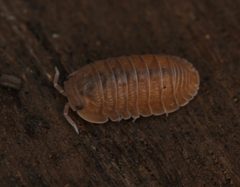
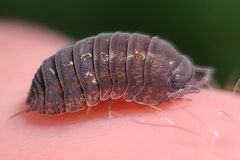
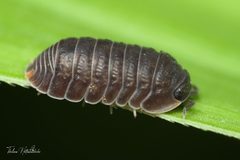
Cubaris is a of woodlice (terrestrial isopods) in the Armadillidae, established in 1833 with Cubaris murina as the type . The genus contains more than 100 described species, though it has become a wastebasket with many species placed in it that do not fit the original description. Species in this genus are capable of conglobation (rolling into a ball) and have been widely used in ecotoxicity testing due to their sensitive behavioral responses to soil contaminants. Several Cubaris species, particularly undescribed forms such as "Rubber Ducky," have become popular in the pet trade.
Pronunciation
How to pronounce Cubaris: //kjʊˈbærɪs//
These audio files are automatically generated. While they are not always 100% accurate, they are a good starting point.
Identification
Cubaris are distinguished from other Armadillidae by their ability to conglobate (roll into a complete ball). The genus is frequently confused with Nesodillo, which was synonymized with Cubaris in 1935 but re-established as separate in 1998; the two genera remain difficult to distinguish and likely contain misplaced species. Accurate identification to species level often requires examination of male genitalia and other morphological details. Many specimens in the pet trade labeled as "Cubaris sp." are undescribed or misidentified, with some later moved to other genera such as Nesodillo arcangelii.
Images
Habitat
Terrestrial; soil-dwelling. Specific microhabitat preferences vary by but generally require moist conditions for respiration and molting.
Distribution
Global distribution with found across multiple continents; specific ranges vary by species. Cubaris murina has been documented in laboratory in Brazil for ecotoxicity research.
Life Cycle
Cubaris murina produces approximately 25 offspring per with an average of 17 days under laboratory conditions. A single mating is sufficient for at least five successive broods without reduction in brood size. Low- cultures show significantly higher growth rates than high-density cultures.
Behavior
Conglobation (rolling into a ball) is a well-known defensive . Cubaris murina exhibits rapid avoidance behavior in response to glyphosate-contaminated soil, with significant avoidance detected at 5.12 mg/g soil within 1.5 hours—far below the 7-day LC50 of 35.5 mg/g soil. This avoidance response is highly sensitive and occurs more quickly than mortality endpoints.
Ecological Role
Cubaris murina serves as a bioindicator for soil assessment due to its sensitive behavioral responses to pollutants. Its rapid avoidance provides an early warning system for sublethal contamination levels.
Human Relevance
Widely used as a test organism in terrestrial ecotoxicity testing, particularly for assessing soil by herbicides such as glyphosate. Several , especially undescribed forms like "Cubaris sp. 'Rubber Ducky'," are popular in the pet isopod hobby, though this has led to poaching concerns and taxonomic confusion. Isopods in this are also used in bioactive vivarium systems to process waste and maintain soil health for reptile and amphibian enclosures.
Similar Taxa
- NesodilloHistorically synonymized with Cubaris (1935-1998), re-established as separate , but continue to be misplaced between the two genera. Nesodillo arcangelii was incorrectly identified as Cubaris sp. in the pet trade.
- ArmadillidiumAlso capable of conglobation; distinguished by morphological differences in body structure and male genitalia.
Misconceptions
Many isopods in the pet trade labeled as "Cubaris sp." are undescribed species or misidentifications; some have been moved to other upon proper examination. The genus has become a wastebasket , and researchers have recommended comprehensive revision.
Sources and further reading
- BugGuide
- Wikipedia
- GBIF taxonomy match
- iNaturalist taxon
- NCBI Taxonomy
- Catalogue of Life
- Bohart Museum Open House on 'Many Legged Wonders': How Many Legs Does an Isopod Have? | Bug Squad
- Reproduction of Cubaris murina (Crustacea: Isopoda) under laboratory conditions and its use in ecotoxicity tests
- Behavior of Cubaris murina Brandt (Crustacea: Isopoda) in Soil Contaminated With Glyphosate: Avoidance Tests in Laboratory
- Behavior of Cubaris murina Brandt (Crustacea: Isopoda) in Soil Contaminated With Glyphosate: Avoidance Tests in Laboratory
- Behavior of Cubaris murina Brandt (Crustacea: Isopoda) in Soil Contaminated With Glyphosate: Avoidance Tests in Laboratory