
Platorchestia platensis
(Krøyer, 1845)
sand flea
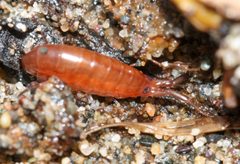
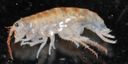
Platorchestia platensis is a talitrid amphipod commonly known as a sand flea, inhabiting sandy beach environments. It is a laterally compressed crustacean adapted for jumping and burrowing in intertidal zones. The has been documented across Atlantic and Mediterranean coastal regions, including the Azores and Wadden Sea. It plays a role in beach dynamics as a and prey item for shorebirds.
Pronunciation
How to pronounce Platorchestia platensis: /platoˈr.kɛs.ti.ə plaˈtɛn.sɪs/
These audio files are automatically generated. While they are not always 100% accurate, they are a good starting point.
Identification
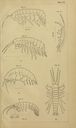
Distinguished from Orchestia by the rounded or weakly cleft and details of urosome structure. Differs from Talitrus saltator by preference (more supralittoral) and morphological details of and gnathopods. Presence in sandy beach drift line habitat helps separate from marsh-dwelling talitrids. Examination of uropod 3 rami and palp structure may be required for definitive identification.
Images
Appearance
Laterally compressed body typical of amphipods, with seven pairs of thoracic legs. Uropods and well-developed; second antennae elongated in males. Coloration generally pale to grayish, blending with sand substrate. Body length typically under 15 mm. rounded or weakly cleft. Gnathopods sexually dimorphic, with males possessing enlarged second gnathopods.
Habitat
Supralittoral zone of sandy beaches, particularly the drift line and upper beach areas where decaying organic matter accumulates. Found in moist sand beneath wrack deposits and debris. Tolerates desiccation better than fully aquatic amphipods. Occurs in temperate to subtropical coastal regions.
Distribution
Atlantic coasts of Europe, Mediterranean Sea, Black Sea, and Azores (Flores, Pico, São Miguel, Santa Maria). Recorded from the Wadden Sea. Introduced reported in other regions including parts of the Americas and Pacific islands.
Seasonality
Active year-round in suitable climates; peak surface activity during night and following tidal inundation or rainfall. densities fluctuate seasonally with wrack availability and temperature.
Diet
: feeds on decaying macroalgae (wrack), plant debris, and associated microorganisms in beach drift line.
Life Cycle
Direct development without larval stages; brooded in female marsupium until hatch as miniature . Multiple per year in favorable conditions. Life span generally under one year.
Behavior
surface forager, remaining buried in sand during daytime to avoid desiccation and . Exhibits saltatorial (jumping) locomotion using uropods and abdominal flexion. Aggregates under wrack patches. Shows zonation , with activity concentrated in upper intertidal and supralittoral zones.
Ecological Role
Decomposer processing beach wrack and contributing to nutrient cycling in sandy shore . Prey for shorebirds, terrestrial arthropods, and small vertebrates. Influences wrack decomposition rates and beach sediment bioturbation.
Human Relevance
Occasional nuisance when abundant on recreational beaches; harmless to humans. Used as for beach health and wrack-based studies. Serves as bioindicator for pollution in coastal environments.
Similar Taxa
- Talitrus saltatorSimilar size and but prefers lower beach zones; distinguished by cleft and more aquatic habits
- Orchestia gammarellusMarsh and rocky shore preference; differs in shape and urosome structure
- Talorchestia deshayesiiOverlapping distribution; distinguished by morphological details of and gnathopods
More Details
Nomenclature
Originally described as Orchestia platensis by Krøyer in 1845; transferred to Platorchestia following taxonomic revision of talitrid .
Invasion Biology
Has established introduced outside native range through human-mediated transport in ships' ballast and beach materials.