
Megalorchestia californiana
Brandt, 1851
California Beach Flea, long-horned beach hopper
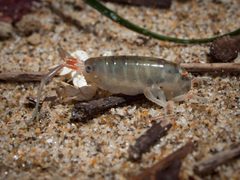
Megalorchestia californiana is a sand-hopper amphipod in the Talitridae, first described by Brandt in 1851. It is the type of the Megalorchestia and is commonly known as the California beach or long-horned beach hopper. This species inhabits sandy beaches along the west coast of North America, where it plays a role in nutrient cycling by consuming decaying organic matter.
Pronunciation
How to pronounce Megalorchestia californiana: /ˌmɛɡəˌlɔːrˈkɛstiə ˌkælɪfɔːrˈniːənə/
These audio files are automatically generated. While they are not always 100% accurate, they are a good starting point.
Identification
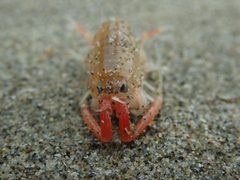
Distinguished from the congeneric Megalorchestia corniculata (short-horned beach hopper) by preference: M. californiana occurs on slightly sloping sandy beaches and retreats far up the beach, while M. corniculata inhabits steeply sloping shores and remains lower on the beach. The red of and larger size relative to some other beach hoppers aid identification.
Images
Appearance
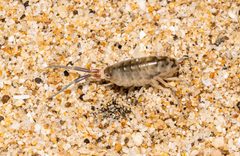
reach approximately 25 mm (about one inch) in length. The body is gray-white to ivory in color and typically semi-transparent, becoming opaque immediately prior to molting. Adult are red, while antennae are orange.
Habitat
Slightly sloping sandy beaches along ocean coastlines. Individuals retreat high up the beach, often burrowing in sand or sheltering under accumulations of dead seaweed during daylight hours.
Distribution
Native to the west coast of North America, ranging from Vancouver Island, British Columbia, Canada to Laguna Beach, California, USA.
Diet
Feeds on decaying seaweed and organic debris, including material left by beach visitors.
Behavior
forager, emerging at night or during dull weather to feed. Constructs shallow burrows or occupies existing shelters under seaweed. Males have been observed fighting for possession of existing burrows rather than excavating new ones. Retreats under sand before dawn.
Ecological Role
contributing to decomposition and nutrient cycling on sandy beaches. Consumes stranded marine vegetation and organic matter, facilitating breakdown and return of nutrients to coastal .
Human Relevance
Occasionally encountered by beachgoers; harmless to humans. May feed on organic debris left behind by visitors.
Similar Taxa
- Megalorchestia corniculataOverlapping geographic range and similar ; distinguished by preference (steep vs. gentle beach slopes) and vertical distribution on beach (lower vs. higher intertidal)
More Details
Type species status
Megalorchestia californiana is the type of the Megalorchestia, establishing the taxonomic reference for the genus.