
Megalorchestia
Brandt, 1851
sand-hoppers
Species Guides
2- Megalorchestia californiana(California Beach Flea)
- Megalorchestia corniculata(beach hopper)
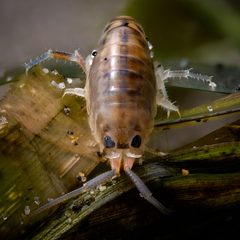
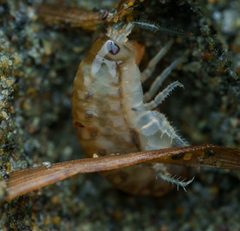
Megalorchestia is a of sand-hoppers in the Talitridae, erected by Johann Friedrich von Brandt in 1851. The genus contains seven recognized distributed along the Pacific coast of North America. Members are commonly found in coastal beach environments where they exhibit characteristic jumping locomotion.
Pronunciation
How to pronounce Megalorchestia: /ˌmɛɡəˌlɔːrˈkɛstiə/
These audio files are automatically generated. While they are not always 100% accurate, they are a good starting point.
Images
Habitat
Coastal sandy beaches; associated with supralittoral and intertidal zones of marine shorelines.
Distribution
Pacific coast of North America, from Alaska to California.
Behavior
Exhibits saltatorial (jumping) locomotion typical of sand-hoppers; activity patterns have been observed in some .
Ecological Role
Functions as a and scavenger in beach ; serves as prey for shorebirds and other coastal .
More Details
Type Species
Megalorchestia californiana Brandt, 1851 is the type of the .
Species Diversity
The comprises seven recognized : M. benedicti, M. californiana, M. columbiana, M. corniculata, M. dexterae, M. minor, and M. pugettensis.