Centruroides sculpturatus
Ewing, 1928
Arizona Bark Scorpion
Centruroides sculpturatus, commonly known as the Arizona bark scorpion, is a small, light brown native to the Sonoran Desert. It is the only scorpion in North America considered dangerously venomous to humans, with stings capable of causing severe pain, numbness, and in rare cases life-threatening in young children. The species exhibits fluorescent properties under ultraviolet light due to compounds in its . It is frequently used in educational outreach programs due to its docile handling in captivity.
Pronunciation
How to pronounce Centruroides sculpturatus: //sɛntruˈɔɪdiːz ˌskʌlp.tjʊˈreɪ.təs//
These audio files are automatically generated. While they are not always 100% accurate, they are a good starting point.
Identification
Distinguished from other North American scorpions by combination of small size, slender build, light uniform coloration, and geographic restriction to Sonoran Desert region. Most similar to other Centruroides , but C. sculpturatus is the only dangerously venomous species in its range. The striped bark scorpion (Centruroides vittatus) occurs further east and has distinct dark longitudinal stripes on the mesosoma. Under UV light, the intense blue-green fluorescence can aid detection at night.
Images
Appearance
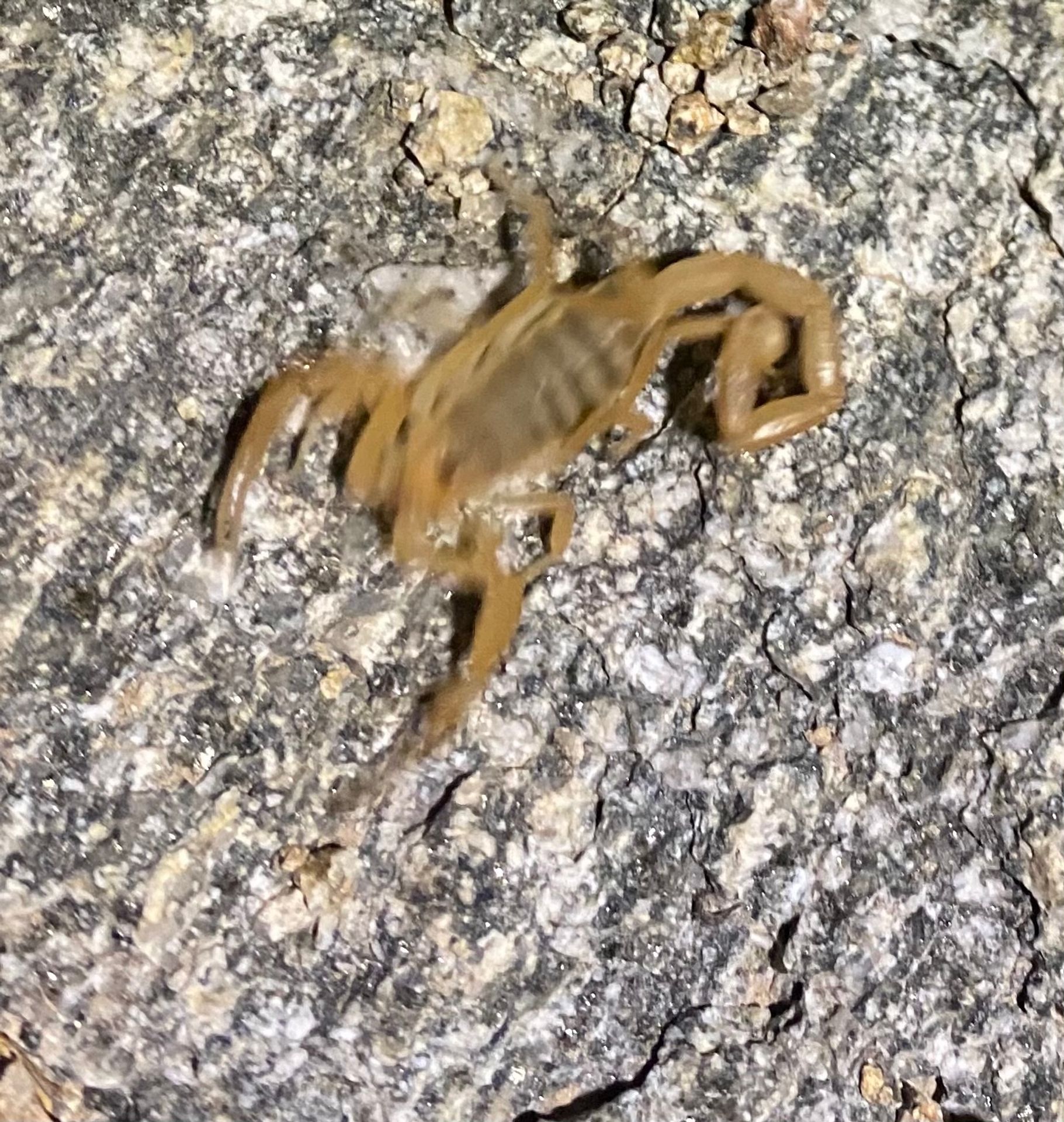
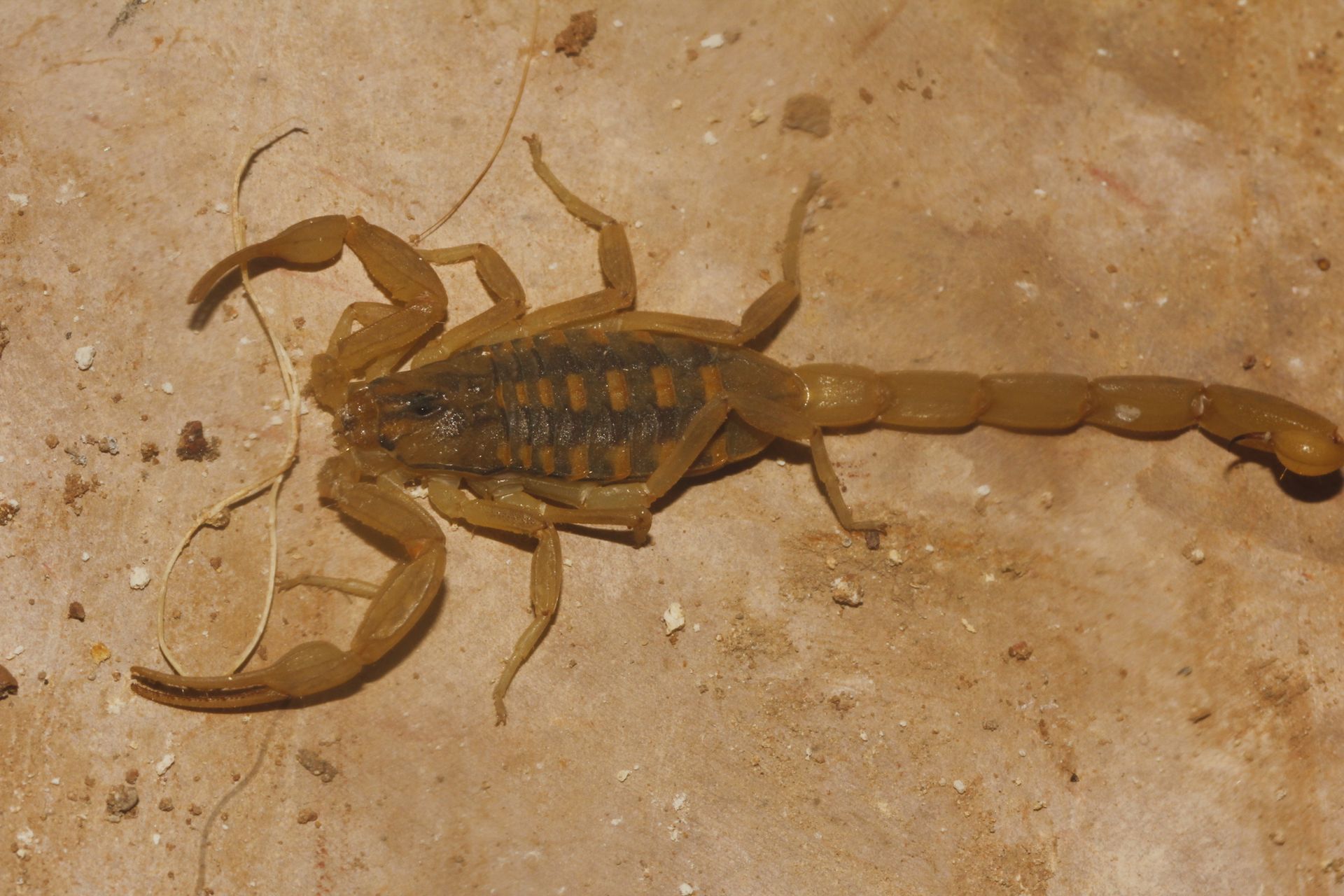
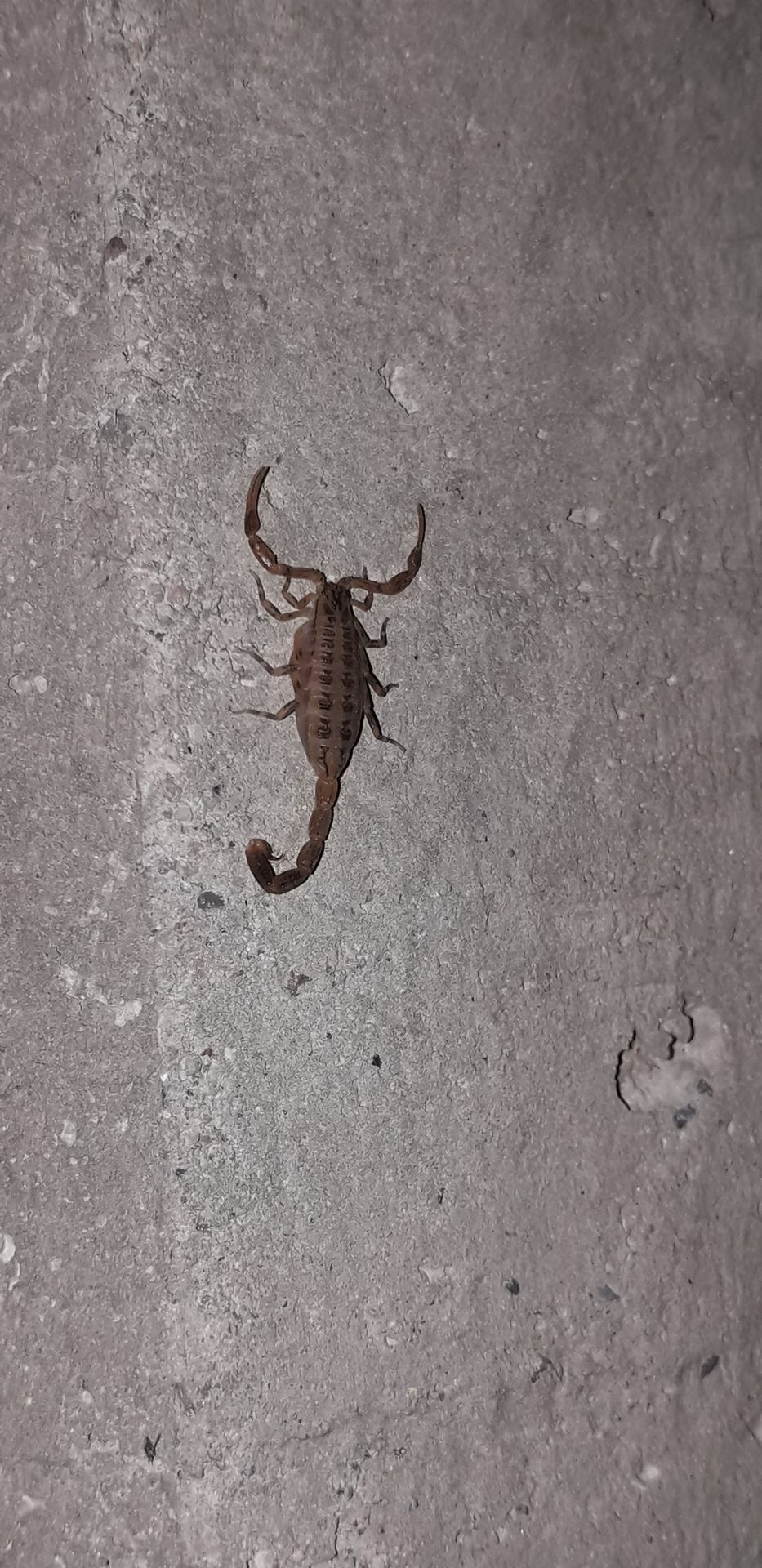
Small, slender with light brown to yellowish-tan coloration. males reach approximately 8 cm in length, females slightly smaller at up to 7 cm. (pincers) are relatively slender compared to some other scorpion . Metasoma (tail) is thin and elongated, terminating in a bulbous with stinger. contains fluorescent compounds (beta-carboline and 4-methyl-7-hydroxycoumarin) that produce blue-green glow under UV light.
Habitat
Sonoran Desert environments, particularly areas with rocky substrates and vegetation providing shelter. Often associated with riparian corridors, desert washes, and human-modified . Seeks under loose bark, rocks, and debris during daytime. Frequently enters human dwellings, especially in suburban and rural areas of its range.
Distribution
Southwestern United States and northwestern Mexico. In the U.S., documented from Arizona, western New Mexico, southern Nevada and Utah, and extreme southeastern California. Mexican distribution extends into Sonora and adjacent states.
Seasonality
Nocturnally active year-round in suitable temperatures. Activity peaks during warmer months. Emerges from daytime shelters at twilight to forage.
Diet
, feeding primarily on small arthropods including insects and spiders. Prey captured using and subdued with venom from the stinger.
Life Cycle
, with females giving birth to live young. Juveniles climb onto mother's back after birth and remain there until after first . Development includes multiple instars before reaching sexual maturity. Specific timing of reproductive events not documented in sources.
Behavior
forager that remains inactive in shelter during daylight hours. Capable of rapid movement when disturbed. In captivity, exhibits relatively docile handling , often retreating rather than stinging when prodded. Fluorescent properties of may function in whole-body light detection, potentially aiding in avoidance and timing of from shelters.
Ecological Role
of small arthropods in desert . Prey for larger vertebrates including birds, mammals, and reptiles. Specific ecological impacts not quantified in sources.
Human Relevance
Medically significant as the only dangerously venomous in North America. Stings cause severe localized pain, numbness, and potential effects; can be life-threatening to small children and sensitive individuals. Antivenom has been developed and is effective in reducing hospitalization time. Frequently encountered in human dwellings within its range. Popular in educational programs due to manageable in captivity.
Similar Taxa
- Centruroides vittatusStriped bark scorpion has distinct dark longitudinal stripes on mesosoma and occurs in more eastern and central U.S. states; venom is not dangerously toxic to humans
- Hadrurus spp.Desert hairy scorpions in Iuridae are larger, more robust, with hairy and metasoma; not dangerously venomous
More Details
Fluorescence Function
Research by Douglas Gaffin and colleagues suggests the 's entire body may act as a photoreceptor, using UV fluorescence to detect light levels and locate dark shelters for avoidance.
Antivenom Development
Development of antivenom for C. sculpturatus stings was discussed at the 2011 Medical Entomology Today conference; treatment can reduce hospitalization from days to hours for affected children.
Sources and further reading
- BugGuide
- GBIF taxonomy match
- iNaturalist taxon
- NCBI Taxonomy
- Catalogue of Life
- Bug Eric: Medical Entomology Today!
- Bug Eric: "Is it poisonous?"
- Bug Eric: April 2010
- Forgotten Foto Friday: Centruroides vittatus | Beetles In The Bush
- Scorpion glow, scorpion sting: Slenderbrown and other scorpions in Central America, Centruroides spp. — Bug of the Week
- A face only a mother could love | Beetles In The Bush