Centruroides hentzi
(Banks, 1900)
Hentz striped scorpion
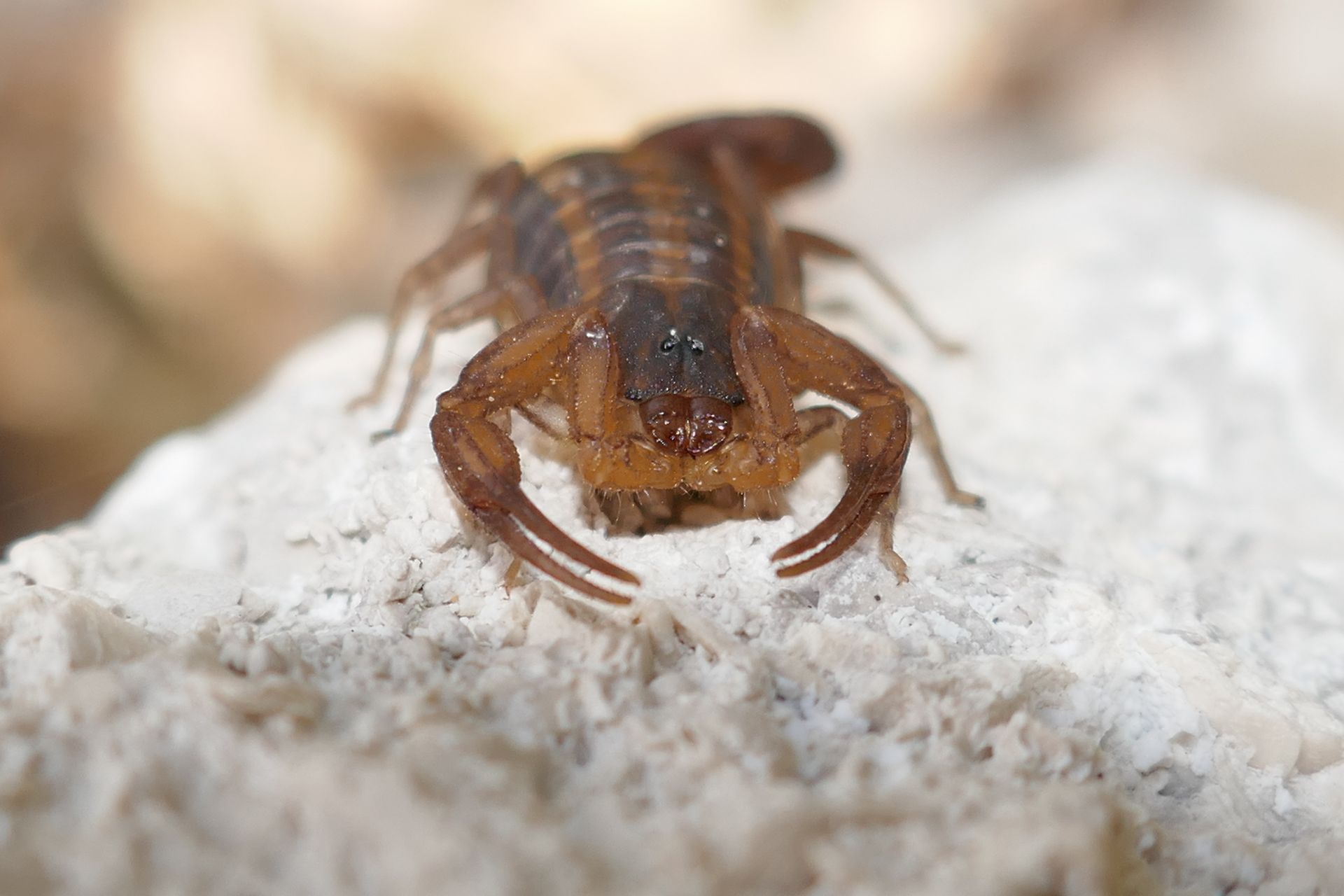
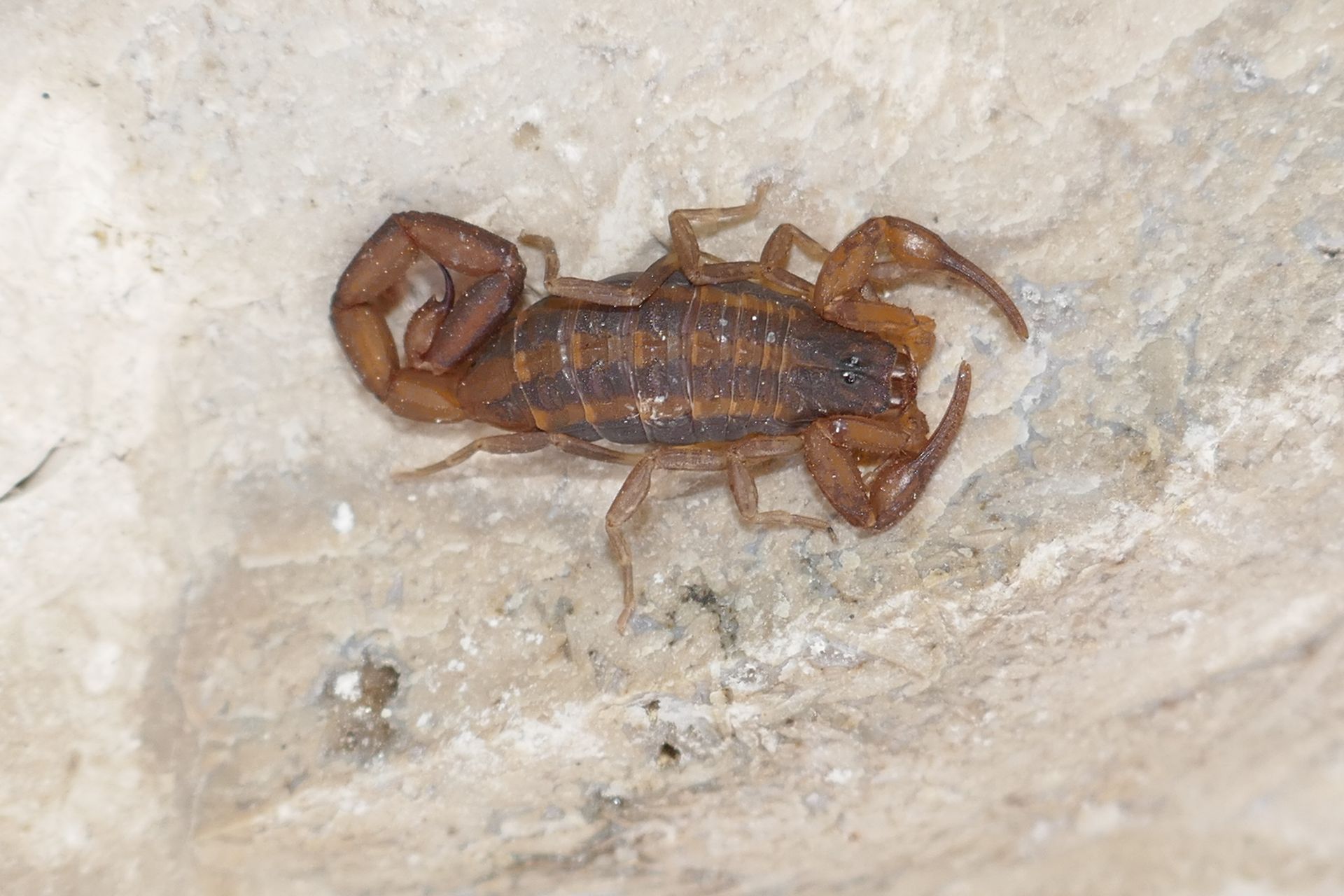
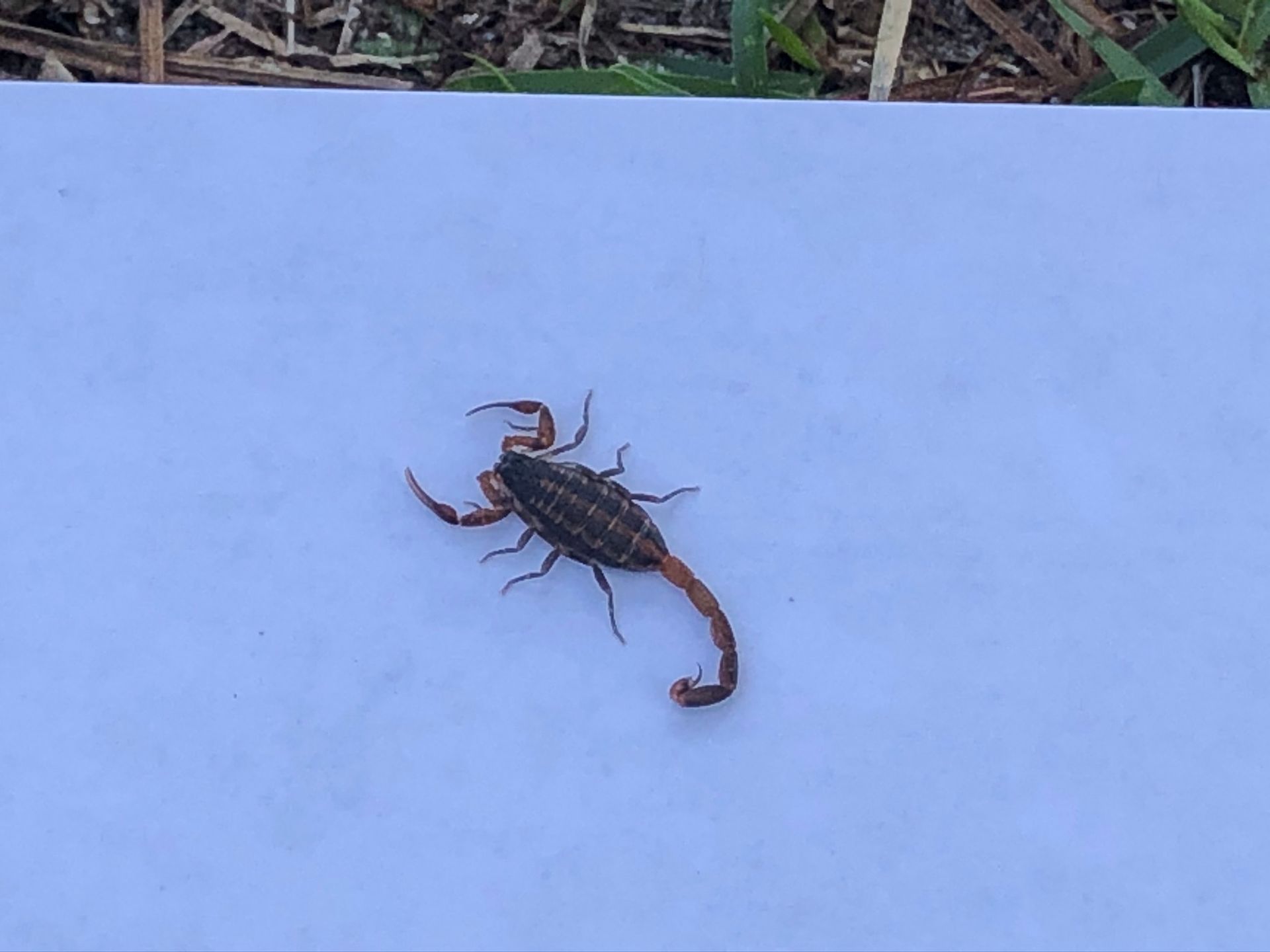
A small bark scorpion native to the southeastern United States, primarily found in Florida, southwestern Alabama, and Georgia's coastal plain. is pronounced: males average 37 mm with 18 pectinal teeth and elongated metasomal segments, while females average 38.9 mm with 17 pectinal teeth and shorter, rounded tail segments. The exhibits altricial development with maternal care; one observed female produced an initial of 20 scorplings and a second brood without further mating, suggesting sperm storage or . Stings to humans are painful but not medically significant.
Pronunciation
How to pronounce Centruroides hentzi: //sɛnˌtruːɔɪˈdiz ˈhɛnt.si//
These audio files are automatically generated. While they are not always 100% accurate, they are a good starting point.
Identification
Distinguished from sympatric Centruroides by the uniformly light mottled brown with yellow stripe and radiating lines anteriorly and laterally. and legs show brown marbled reticulation; leg undersides pale and unmarked. Males have slender bodies with long metasomal segments; females larger with short, rounded tail segments. Pectinal tooth count differs between sexes (18 in males, 17 in females).
Images
Habitat
Occupies pine flatwoods, sandhills, maritime forests, and xeric hammocks in Georgia; prefers well-drained sandy soils with abundant ground cover including leaf litter, fallen logs, and debris. Frequently found under logs, stones, tree snags, and ground litter; also under bark on standing dead trees up to 6 meters above ground and at bases of live Pinus elliottii and Pinus palustris. Common invader of households and constructed environments.
Distribution
Native to southeastern United States: Florida, southwestern Alabama, and Coastal Plain of southern Georgia including barrier islands. Also recorded in lower Piedmont of Georgia. Present in North Carolina and South Carolina due to accidental human importations.
Diet
Feeds on insects including , , and crickets.
Life Cycle
Exhibits altricial development: scorplings initially remain with mother, then disperse. Fluorescence under ultraviolet light emerges as developmental milestone. One observed female produced initial of 20 scorplings (first recorded documentation for ); same female produced second brood without further mating, with at least one cannibalized and remainder dispersing prematurely.
Behavior
; seeks shelter under cover objects during daytime. Shows affinity for mesic to xeric environments with structural complexity.
Human Relevance
Stings are painful and cause discomfort but lack long-lasting effects or severe medical consequences. Frequently enters human dwellings. in North Carolina and South Carolina result from accidental human transport.
Similar Taxa
- Centruroides gracilisFlorida bark scorpion; sympatric in Florida; distinguished by different coloration and pattern
- Centruroides guianensisGuiana striped ; sympatric in Florida; distinguished by different coloration and pattern
- Centruroides vittatusStriped bark scorpion; occurs in adjacent regions to the west; natural range bounded by Missouri and Mississippi Rivers with human introductions beyond
Sources and further reading
- BugGuide
- Wikipedia
- GBIF taxonomy match
- iNaturalist taxon
- NCBI Taxonomy
- Catalogue of Life
- A face only a mother could love | Beetles In The Bush
- The Distribution and Habitat ofCentruroides hentzi(Banks) (Scorpiones, Buthidae) in Georgia
- Observation of brood size and altricial development in Centruroides hentzi (Arachnida: Buthidae) in Florida, USA