Tolus appalachius
Goodnight & Goodnight, 1942
Appalachian Cave Harvestman
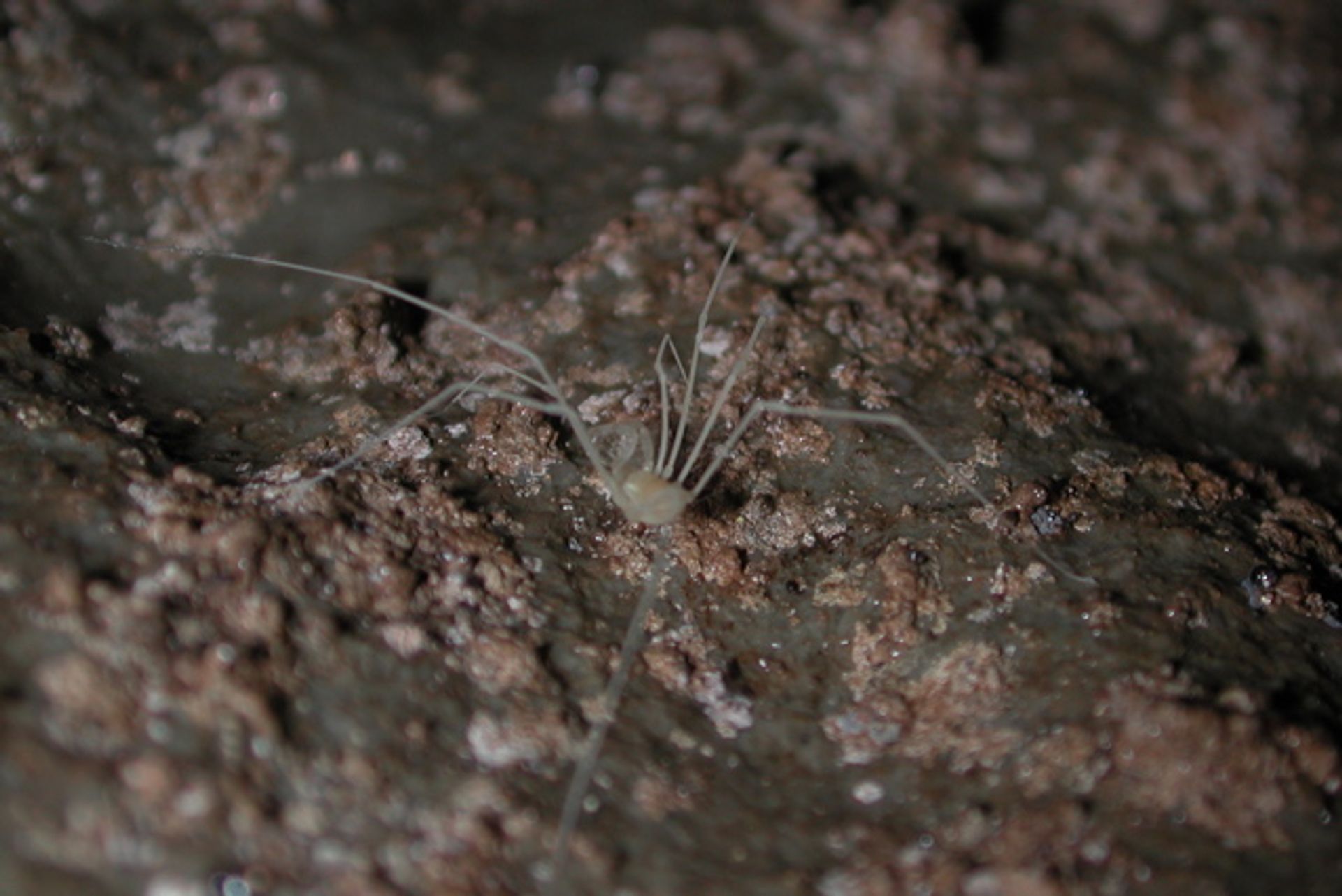
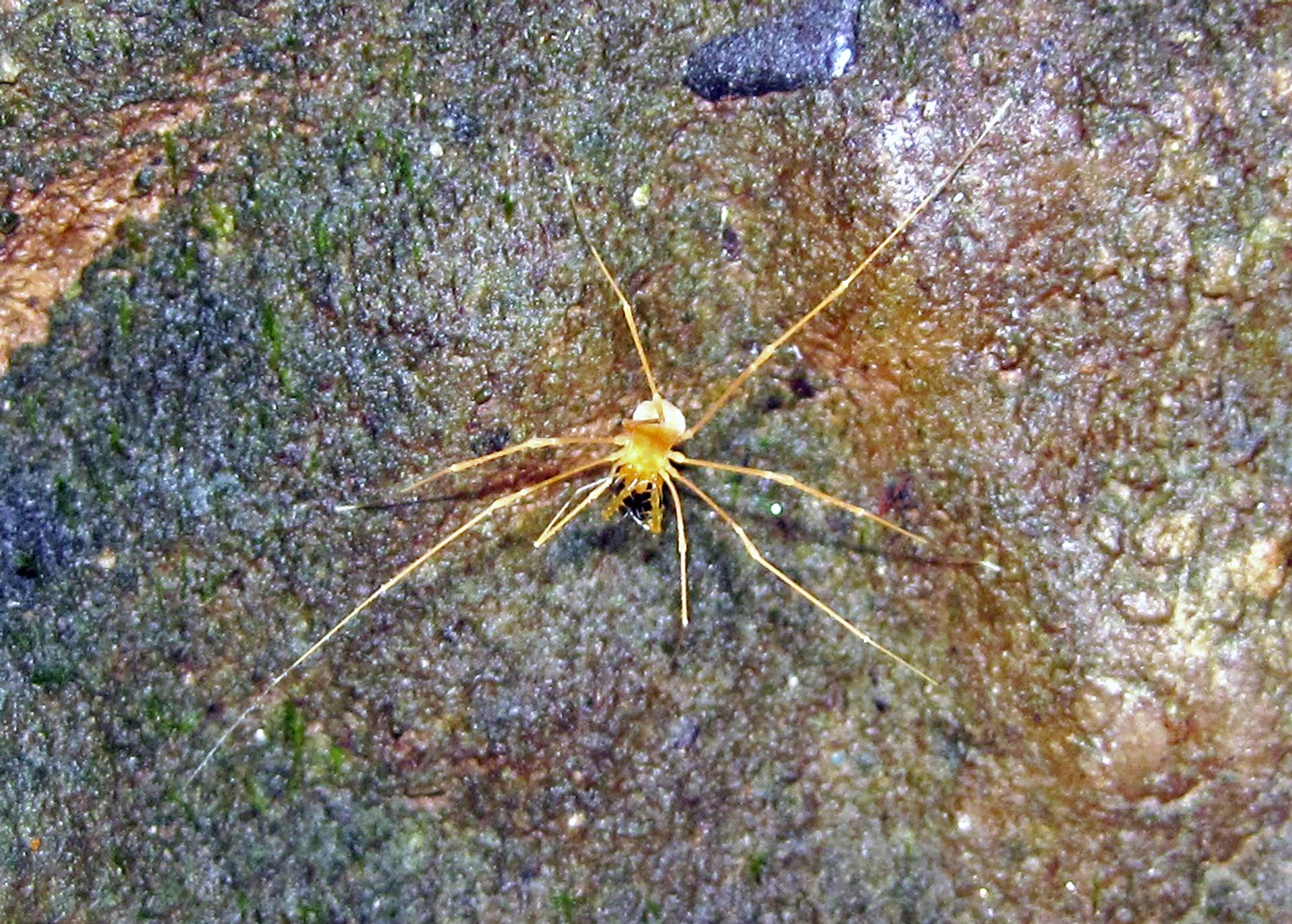
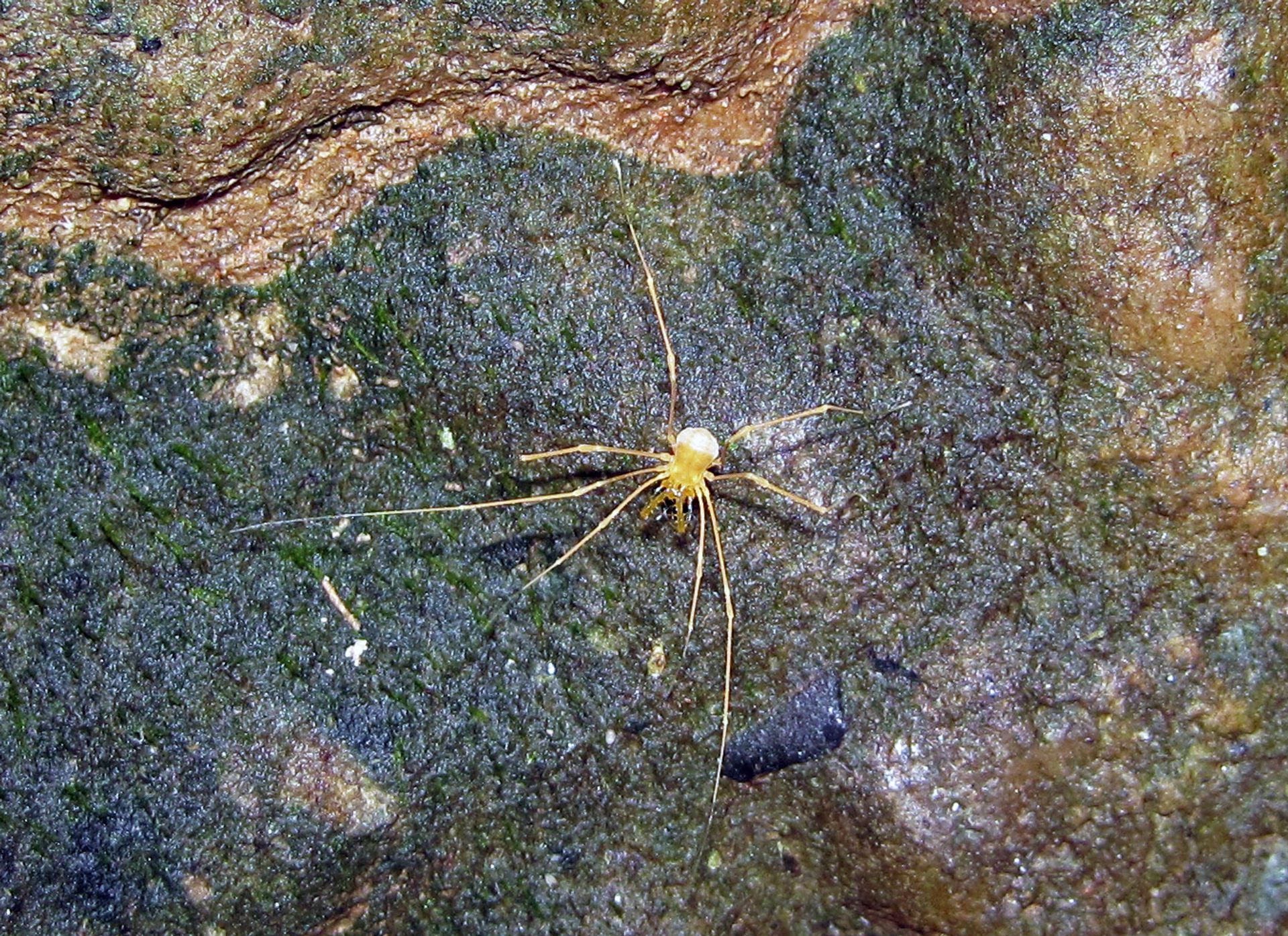
Tolus appalachius is a small, eyeless cave-dwelling harvestman to Tennessee. It is the sole described in the Tolus. First described in 1942, this troglobitic arachnid is known from only a handful of cave systems in the Appalachian region. Its highly restricted distribution and specialized subterranean make it vulnerable to environmental disturbances.
Pronunciation
How to pronounce Tolus appalachius: /ˈtoʊ.ləs əˈpæl.əˌkiː.əs/
These audio files are automatically generated. While they are not always 100% accurate, they are a good starting point.
Identification
Distinguished from other Laniatores by combination of: complete eyelessness (true troglobite), small body size, and occurrence exclusively in Tennessee cave systems. Differs from surface-dwelling phalangodids in reduced pigmentation and elongated appendage proportions. Separation from other cave harvestmen (e.g., Bishopella, Hesperonemastoma) requires examination of male genitalia (distitarsus of II structure) and ; expert determination typically necessary.
Images
Appearance
Small-bodied harvestman with elongated, slender appendages. absent or highly reduced, consistent with troglobitic . Body coloration pale to translucent, lacking pigmentation typical of surface-dwelling relatives. and elongated relative to body size. Detailed morphological descriptions from original note texture on .
Habitat
Strictly subterranean; recorded from limestone cave systems. Microhabitat includes moist rocky substrates, cave walls, and breakdown areas in twilight and deep cave zones. Requires stable high humidity and constant temperature regimes. No surface known.
Distribution
to Tennessee, United States. Documented from cave systems in eastern Tennessee within the Appalachian physiographic province. Precise cave localities are restricted information due to conservation sensitivity.
Ecological Role
Presumed and microbivore within cave , contributing to nutrient cycling in energy-limited subterranean . Likely prey for cave-adapted including spiders and salamanders. Specific ecological interactions undocumented.
Human Relevance
Subject to conservation concern due to extreme range restriction and vulnerability. Cave systems threats from groundwater pollution, urbanization, and recreational caving disturbance. Not of economic or medical importance.
Similar Taxa
- Bishopella laciniosaOverlapping geographic range in Tennessee caves; distinguished by presence of and different structure
- Hesperonemastoma spp.Co-occurring cave harvestmen in Appalachian region; differ in body proportions and tarsal claw
- Other Phalangodidae generaSurface-dwelling relatives possess , pigmentation, and shorter leg proportions; separation definitive
More Details
Taxonomic history
Tolus erected by Goodnight & Goodnight in 1942 with description of T. appalachius from Tennessee cave specimens. No additional have been described despite nearly a century of cave arachnid surveys in eastern North America, suggesting either genuine monotypy or undersampling of cryptic diversity.
Conservation status
Not formally assessed by IUCN or NatureServe, but qualifies as vulnerable under criteria of restricted range and single-site . Tennessee Natural Heritage Program tracking status recommended given observation count of only 27 records.
Research needs
Critical gaps include genetics across cave systems, precise requirements, reproductive , and phylogenetic relationships within Phalangodidae. Molecular data may reveal cryptic currently masked under T. appalachius.