
Phalangodidae
Simon, 1879
Phalangodid Harvestmen
Genus Guides
15Phalangodidae is a of small harvestmen in the suborder Laniatores, containing approximately 30 and more than 100 described . Members are characterized by armed with prominent spines and body lengths generally under 3 mm. The family is primarily distributed in the Holarctic region, with exceptional diversity in the western Nearctic, particularly California. Several species, especially in the genus Texella, are obligate cave-dwellers exhibiting troglomorphic traits such as depigmentation and reduced .
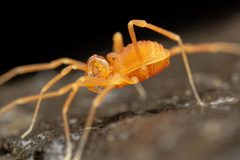
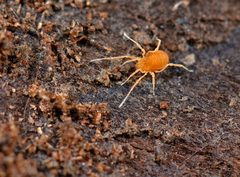
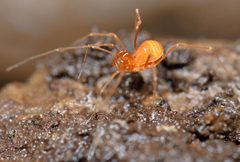
Pronunciation
How to pronounce Phalangodidae: /fəˌlæŋˈɡoʊdɪˌdiː/
These audio files are automatically generated. While they are not always 100% accurate, they are a good starting point.
Identification
Distinguished from the superficially similar Phalangiidae (suborder Eupnoi) by phylogenetic placement in Laniatores and the presence of large pedipalpal spines. Within Grassatores, the combination of minute body size, pedipalpal spine armature, and Holarctic distribution helps separate Phalangodidae from related families. Cave-dwelling may be confused with other troglobitic Laniatores but can be identified by geographic range and pedipalpal .
Images
Habitat
Diverse including surface leaf litter, soil, and rock crevices; numerous are obligate cave-dwellers (troglobites) in karst formations. Cave-dwelling species exhibit extremely restricted microhabitat preferences within limestone cave systems.
Distribution
Holarctic distribution with strong toward western Nearctic, especially California (~50 in four ). Approximately 10 species in eastern Nearctic. Palearctic representation is sparse: one species each in Canary Islands and Japan, approximately 20 species in Mediterranean region. Notable concentration in central Texas karst (genus Texella).
Human Relevance
Several Texella from central Texas karst are federally endangered, making the significant for conservation and cave protection. These species serve as flagship for karst conservation and have been used to validate regional karst fauna region (KFR) boundaries through genetic studies.
Similar Taxa
- PhalangiidaeDifferent suborder (Eupnoi vs. Laniatores); lacks prominent pedipalpal spines; generally larger body size; different leg proportions
More Details
Etymology
The type Phalangodes derives from Ancient Greek φάλαγξ (phalanx), referring to rows of soldiers in formation—an allusion to the rows of pedipalpal spines characteristic of the .
Phylogenetic Position
appears relatively basal within Grassatores, though relationships to other Grassatores families remain unresolved. Largely monophyletic except for anomalous Guerrobunus and Glennhuntia.
Troglomorphy
Cave-dwelling exhibit varying degrees of troglomorphy, including depigmentation and reduction. In Texella species, level of troglomorphy correlates with genetic clades and karst fauna region boundaries.