
Texella
Goodnight & Goodnight, 1942
cave harvestmen, Texella harvesters
Species Guides
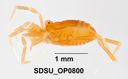
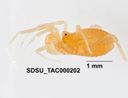
1Texella is a of armored harvestmen (Opiliones: Phalangodidae) containing more than 20 described . The genus is to cave and karst systems of central Texas, where species exhibit varying degrees of troglomorphy. Several species, including T. reyesi and T. reddelli, are federally endangered due to extreme restriction. Genetic studies reveal strong structuring aligned with geologic karst fauna regions.
Pronunciation
How to pronounce Texella: //tɛkˈsɛl.lə//
These audio files are automatically generated. While they are not always 100% accurate, they are a good starting point.
Identification
Texella are distinguished from other phalangodid harvestmen by their association with central Texas cave systems and often reduced or eyelessness in troglomorphic . Troglomorphy levels vary among lineages and correlate with genetic clades and geographic boundaries. Specific diagnostic morphological features for the versus related phalangodids are not documented in available sources.
Images
Habitat
Cave and karst of the Edwards Formation in central Texas, near Austin. exhibit extremely restricted microhabitat preferences within these systems. Distribution follows discrete karst fauna regions (KFRs) defined by geologic barriers.
Distribution
to central Texas, USA, specifically the Edwards Plateau region near Austin. Distributed across multiple karst fauna regions (KFRs) including the Jollyville Plateau KFR. Range is fragmented by geologic barriers with restricted to individual cave systems.
Behavior
Troglomorphy varies among lineages, assessed by corneal and retinal development scoring. Distinct ecologies are implied for divergent genetic lineages based on development patterns. No surface activity patterns documented.
Human Relevance
Multiple are federally endangered due to restriction and vulnerability to groundwater pollution, urban development, and cave disturbance. Subject of conservation research to inform management of cave-dwelling .
Similar Taxa
- Other Phalangodidae generaTexella is distinguished by its strict to central Texas cave systems; other phalangodid occur in different geographic regions or types
More Details
Conservation Status
T. reyesi and T. reddelli are federally endangered; conservation studies using ultraconserved elements (UCEs) show T. reddelli is not monophyletic, with northern embedded within T. reyesi, complicating taxonomic and management decisions
Genetic Structure
Phylogenetic analyses of 51 T. reyesi specimens from 46 caves and 7 T. reddelli specimens from 5 caves demonstrate genetic structuring closely follows karst fauna region boundaries, indicating limited among cave systems