
Bishopella
Roewer, 1927
Species Guides
1- Bishopella laciniosa(Bishop's harvestman)
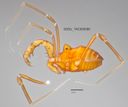
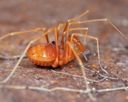
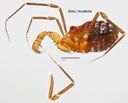
Bishopella is a of harvestmen (Opiliones) in the Phalangodidae, established by Roewer in 1927 and named in honor of arachnologist S. C. Bishop. The genus contains two described : B. jonesi, to Alabama, and B. laciniosa, distributed more broadly across the southeastern United States. Both species belong to the diverse Laniatores suborder, characterized by relatively short legs and adapted for .
Pronunciation
How to pronounce Bishopella: /ˌbɪʃəˈpɛlə/
These audio files are automatically generated. While they are not always 100% accurate, they are a good starting point.
Identification
Bishopella can be distinguished from other phalangodid harvestmen by their specific geographic distributions and subtle morphological features, though detailed diagnostic characters require examination of male genitalia and structure. B. jonesi is restricted to Alabama, while B. laciniosa occurs more widely in the southeastern United States. The lacks the extreme elongation of appendages seen in some other harvestman .
Images
Distribution
Bishopella jonesi occurs only in Alabama. Bishopella laciniosa is found in the southeastern United States.
Similar Taxa
- Other Phalangodidae generaBishopella is distinguished from other phalangodid primarily by male genitalia and geographic distribution; many phalangodids share the general body plan of small to medium-sized Laniatores with relatively short legs.
More Details
Etymology
The name honors S. C. Bishop, who described the type (B. laciniosa as Phalangodella laciniosa) together with C. R. Crosby in 1924.
Taxonomic history
The type was originally described as Phalangodella laciniosa by Crosby & Bishop in 1924 before being transferred to Bishopella by Roewer in 1927. B. jonesi was described by Goodnight & Goodnight in 1942.