
Hadrobunus
Banks, 1900
Species Guides
3- Hadrobunus grandis
- Hadrobunus maculosus(Speckled Harvestman)
- Hadrobunus
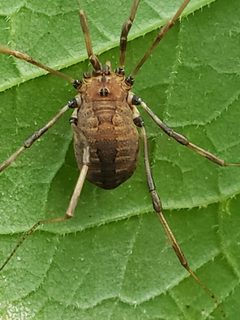
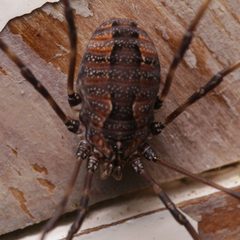
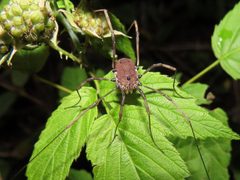
Hadrobunus is a of harvestmen (order Opiliones) in the Sclerosomatidae, established by Banks in 1900. The genus contains approximately six described distributed primarily in the eastern United States and Mexico. Species in this genus are characterized by their elongated body form and relatively large size compared to many other sclerosomatid harvestmen.
Pronunciation
How to pronounce Hadrobunus: /hædroʊˈbjuːnəs/
These audio files are automatically generated. While they are not always 100% accurate, they are a good starting point.
Identification
Hadrobunus can be distinguished from other Leiobuninae by their (spindle-shaped) body profile and relatively robust leg proportions. The is characterized by the absence of defensive (ozopores), a trait shared with related genera in Leiobuninae. Specific species identification requires examination of male structure and tarsal claw .
Images
Habitat
Eastern North American occupy deciduous forest , where they are found in moist microhabitats including leaf litter, rotting logs, and understory vegetation. Mexican species have been recorded in montane forest environments.
Distribution
Eastern United States (Vermont southward) and Mexico. Specific U.S. records include Vermont, with broader distribution across the eastern seaboard and Appalachian regions. Mexican occur in montane areas.
Similar Taxa
More Details
Taxonomic Note
count varies between sources: Wikipedia reports six described species, while some databases reference fewer. The has undergone recent taxonomic revision, with H. fusiformis and H. nonsacculatus described by Shultz in 2010 and 2012 respectively.
Nomenclatural History
Type is Hadrobunus grandis (originally described as Phalangium grande by Say in 1821). The was established by Banks to accommodate large-bodied eastern North American harvestmen previously assigned to broader European genera.