Sphodros niger
(Hentz, 1842)
Black purse-web spider, Black Purseweb Spider
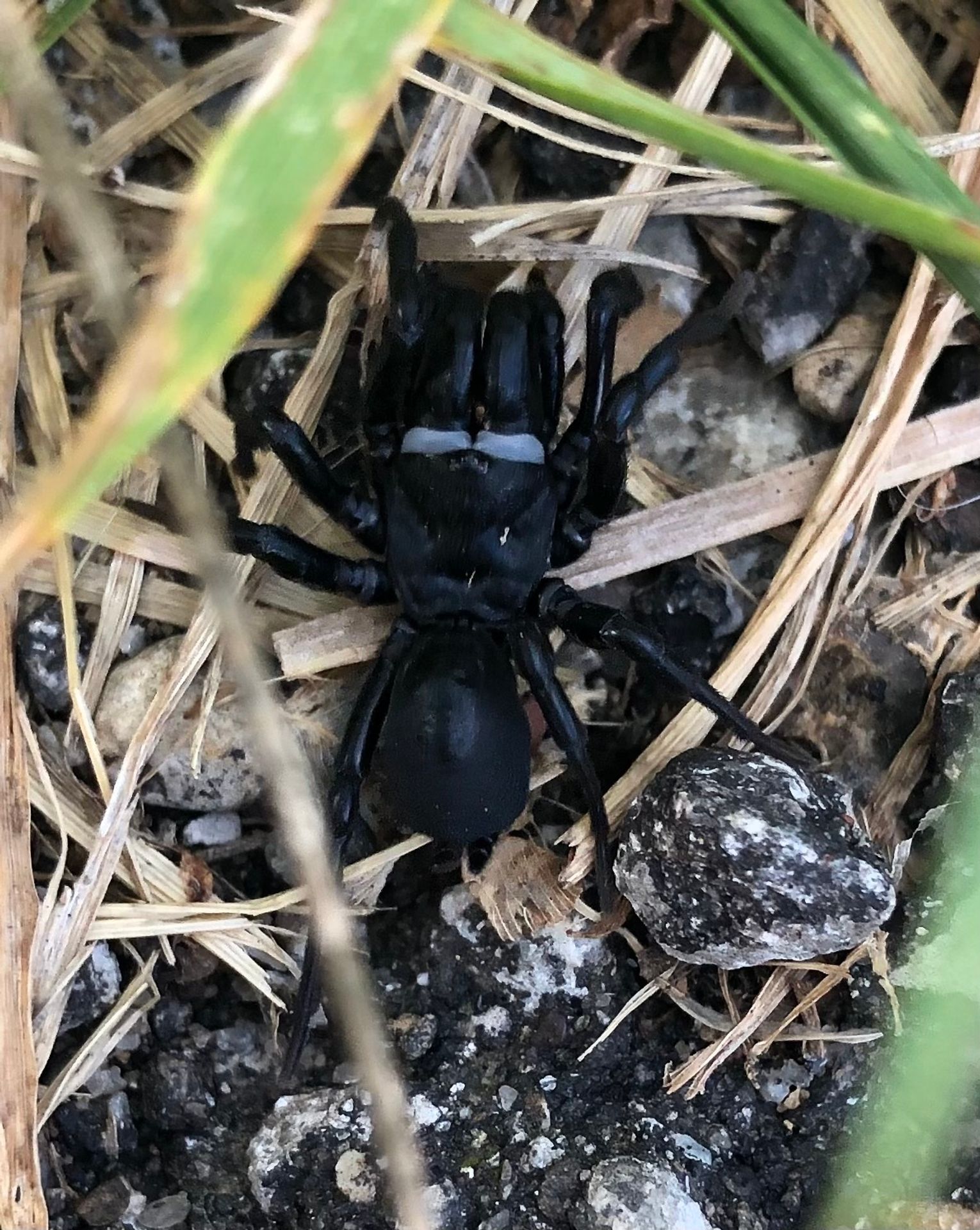
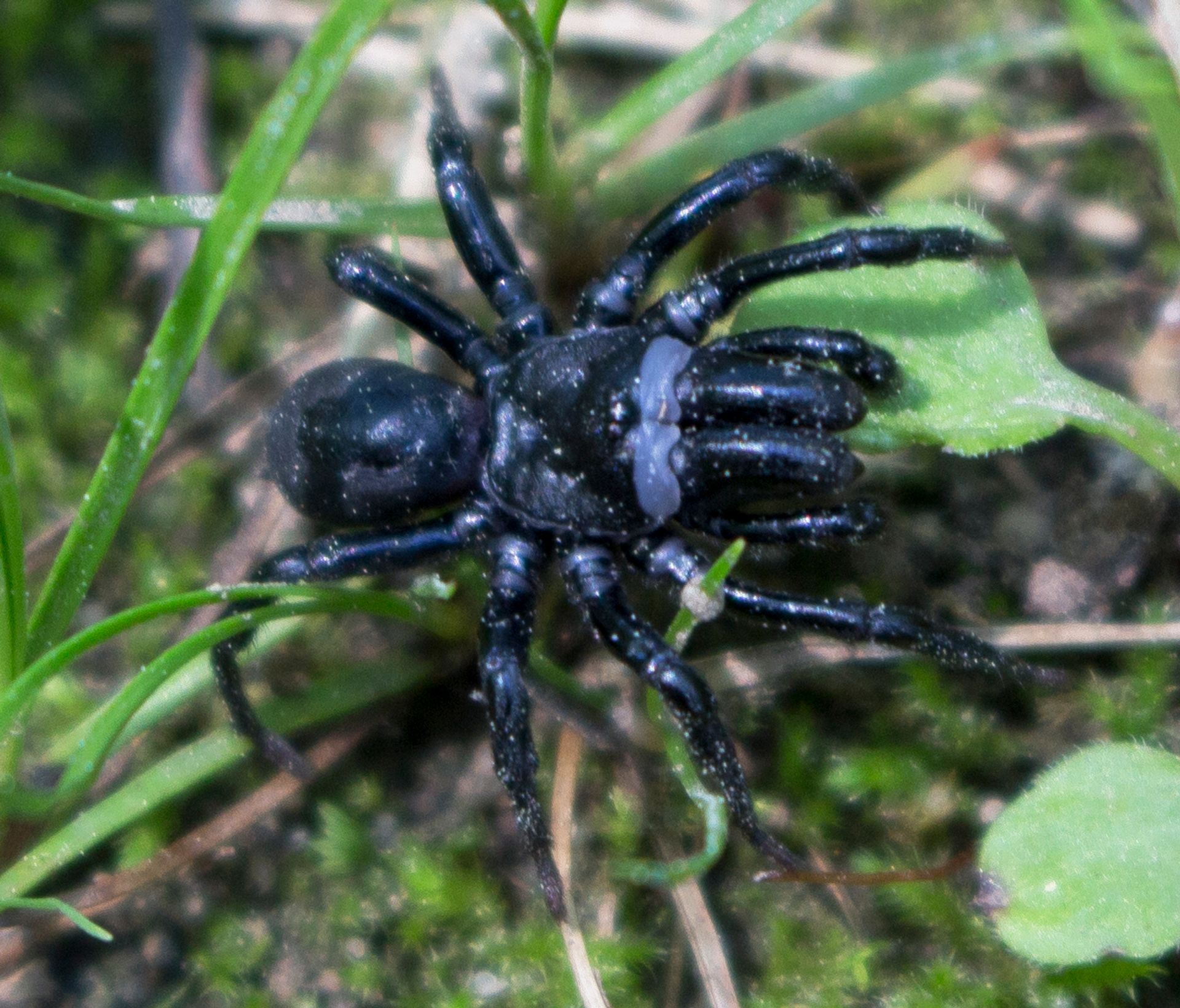
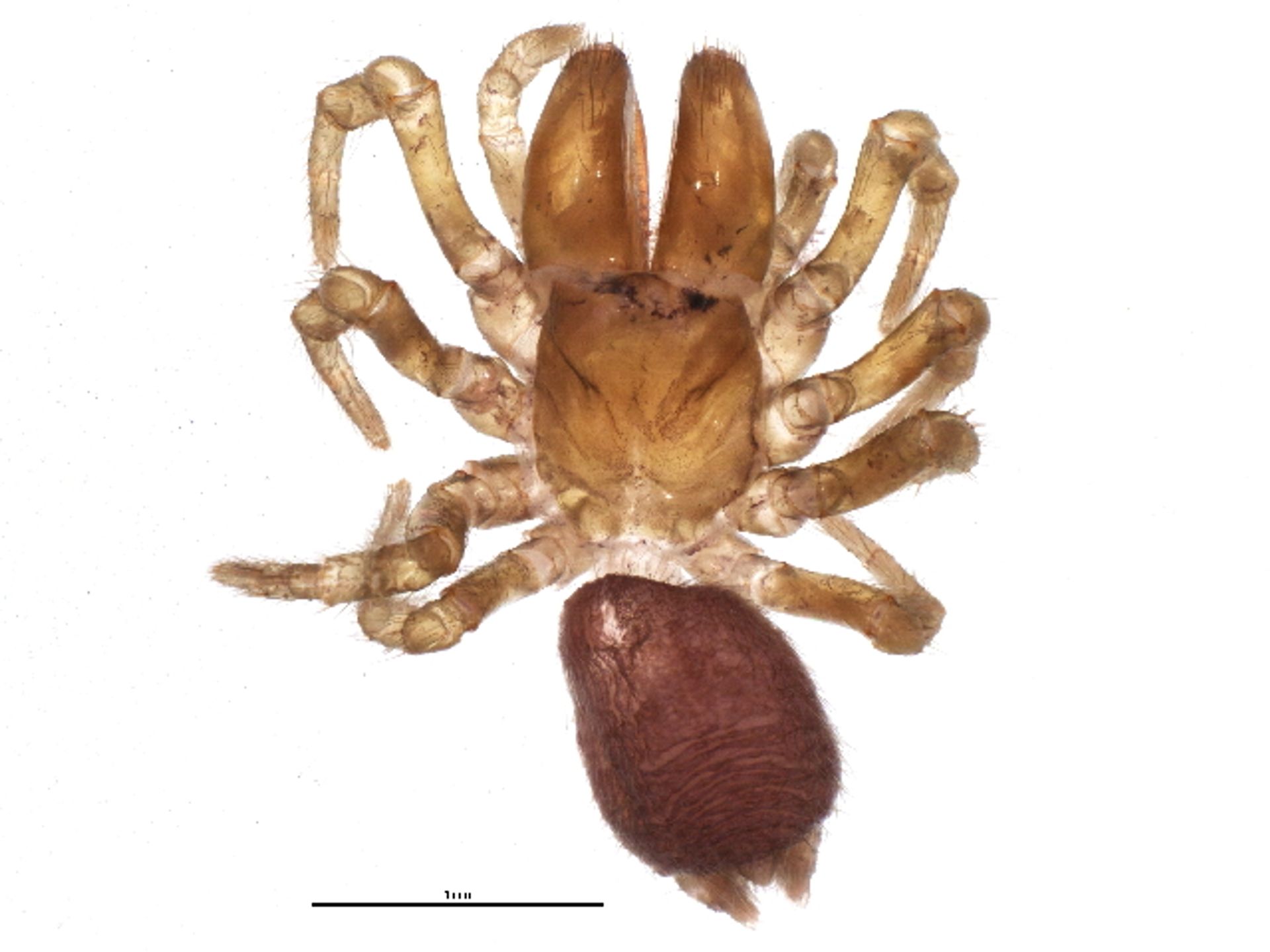
Sphodros niger is a mygalomorph spider native to northeastern North America. Males reach approximately 11 mm in body length (29 mm with legs extended) and possess distinctive chocolate-brown legs contrasting with an otherwise black body. Females were not described until 1980, 138 years after the was first named, due to their sedentary tube-dwelling . The species is listed as a special concern species in Connecticut and ranked as vulnerable in Virginia.
Pronunciation
How to pronounce Sphodros niger: //ˈsfɒdrəs ˈnaɪdʒər//
These audio files are automatically generated. While they are not always 100% accurate, they are a good starting point.
Identification
Distinguished from other Atypidae by the combination of black body with chocolate-brown legs (other may have different leg coloration). The forward-projecting and overall dark coloration separate it from other mygalomorph in its range. Males are most commonly observed due to their mate-searching .
Images
Habitat
Dry sandy or rocky woodland areas. Shows greater selectivity than many other spider . Associated with forested environments with specific soil and substrate conditions.
Distribution
Northeastern North America, including the Eastern United States and adjacent Canada. Distribution models based on 97 occurrence records (museum, literature, and citizen science sources from 1960-2015) indicate potential suitable may exist beyond currently documented range. Listed as special concern in Connecticut; ranked vulnerable in Virginia.
Behavior
Males wander in search of mates, making them more frequently observed than females. Females are sedentary, residing in silk tubes (purse-webs) constructed in soil or substrate. The exhibits cryptic habits, with females rarely leaving their tubes.
Human Relevance
Listed as a special concern in Connecticut due to apparent rarity and specificity. Subject of conservation attention in multiple US states. Not known to pose significant medical threat to humans.
Similar Taxa
- Other Sphodros speciesOther purse-web spiders in the may overlap in distribution; distinguished by leg coloration and specific preferences
- Atypus speciesOther members of Atypidae; S. niger distinguished by black body with chocolate-brown legs versus other color patterns
More Details
Taxonomic history
Females were first described in 1980 by Gertsch and Platnick, 138 years after Hentz described the from males in 1842. This delay reflects the extreme sedentary of females and the cryptic nature of their tube .
Conservation status
The ' apparent rarity in collections and specific requirements have led to protective listings in multiple states, though comprehensive data remain limited.
Sources and further reading
- BugGuide
- Wikipedia
- GBIF taxonomy match
- iNaturalist taxon
- NCBI Taxonomy
- Catalogue of Life
- Not Just Maize: Africa's Fall Armyworm Crisis Threatens Sorghum, Other Crops, Too
- Eavesdropping on Soybean Weevils: Scientists Detect Subtle Acoustic Signals
- Citizen scientists discover new plant species in the Cape Floral Kingdom | Blog
- How One Entomologist Rears Insects to Support Research and Development
- Meet the Recipients of the 2021 Black in Entomology Student Prizes
- New Study Reveals Natural Enemies of Fall Armyworm in Both Asia and Africa
- Predicting the distribution of poorly-documented species, Northern black widow (Latrodectus variolus) and Black purse-web spider (Sphodros niger), using museum specimens and citizen science data