
Atypus
Latreille, 1804
Purse-web Spider, Purseweb Spider
Species Guides
1- Atypus karschi(Karsch's Purseweb Spider)
Atypus is a of mygalomorph spiders commonly known as purse-web spiders, first described by Latreille in 1804. These spiders construct distinctive silk tubes (purse-webs) that extend from underground burrows vertically along tree bases, fences, or other surfaces. The genus occurs across Eurasia and northern Africa, with 38 described as of 2025. Atypus species are , with females living 8–10 years, and conduct nearly all life activities—including , mating, and -laying—within their sealed webs. One Asian species, A. karschi, has been introduced and established in southeastern Pennsylvania, USA.
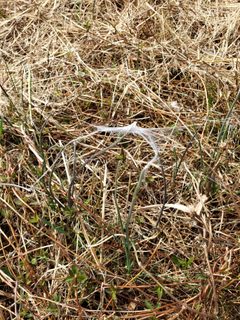
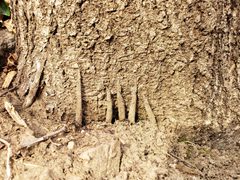
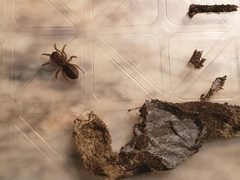
Pronunciation
How to pronounce Atypus: //ˈætɪpəs//
These audio files are automatically generated. While they are not always 100% accurate, they are a good starting point.
Identification
Distinguished from other mygalomorph spiders by the combination of three claws per leg, six with truncated pair, and the distinctive purse-web structure. The elongated prolateral and elevated cephalic region of the are additional diagnostic features. Males can be identified by sternal marginal ridges. The is distinguished from the related genus Sphodros by morphological characters of the genitalia and cheliceral features. Field identification relies on locating the characteristic vertical silk tubes attached to tree bases or other structures.
Images
Appearance
Medium to large mygalomorph spiders with three claws on each leg. Eight arranged in two rows. Six with the pair truncated (shortened). The prolateral sides of the are elongated. The cephalic region of the is elevated. Large bear long, thin fangs. Males possess marginal ridges on the sternum. Some exhibit a texture on male chelicerae and front legs, presumably functioning as a stridulatory apparatus.
Habitat
Inhabits a range of terrestrial environments from dry grasslands and heathlands to forest edges and suburban shrubbery. European show specific microhabitat preferences: A. muralis occurs almost exclusively in dry continental grasslands on calcareous agglutinate soils; A. affinis occupies dry sparse forests with Atlantic microclimates; A. piceus occupies intermediate including dry grasslands and forest fringes, also restricted to calcareous soils. The introduced A. karschi in Pennsylvania occupies diverse habitats from forests to suburban areas, with webs attached to trees, shrubs, walls, or fences.
Distribution
Eurasia and northern Africa. Three occur in Europe: A. piceus, A. affinis, and A. muralis. A. affinis extends into North Africa. The introduced of A. karschi (formerly misidentified as A. snetsingeri) is established in southeastern Pennsylvania, USA. Multiple species occur across East Asia including China, Japan, and Korea. New species continue to be described from southern China.
Seasonality
Year-round activity has been documented; and nymphs remain active even in winter. Specific seasonal patterns vary by and region. In Pennsylvania, the introduced A. karschi maintains permanent webs throughout the year.
Diet
; prey includes insects, millipedes, snails, woodlice, carabid beetles, and earthworms. Prey are captured when they walk upon the above-ground portion of the purse-web, at which point the spider stabs through the silk with its fangs and drags the prey inside.
Life Cycle
with extended lifespans. Females live 8–10 years. Males of A. karschi develop from to adulthood in 3 years, passing through 8–9 after emerging from the maternal web. Females of A. karschi develop to adulthood in 3–4 years with 9–11 post-emergent molts. females continue growing with post-adult molts and live 3+ additional years. Egg sacs and early development occur within the maternal web; juveniles emerge from the web to disperse.
Behavior
Constructs and occupies a unique purse-web—a sock-like silken tube with one end underground in a burrow and the other extending vertically above ground, attached to plant stems, tree bases, fences, or walls. The spider decorates the exterior with local materials such as grasses, mud, or bark for camouflage. Almost all occur within the sealed web: the spider stalks prey invisibly from inside, stabs through the silk with large fangs, and drags prey inside to feed. Mating and -laying also occur within the web. Defecation occurs through specialized behaviors. propensity is high under favorable conditions, though patterns result from selection rather than dispersal limitation.
Ecological Role
of soil-dwelling and surface-active including insects, millipedes, snails, woodlice, and earthworms. The purse-web structure represents a unique foraging among spiders. As long-lived, sedentary predators, they may influence local invertebrate structure. Their specific soil and microclimate requirements make them indicators of quality in some regions.
Human Relevance
Traditional medicinal use of silk in Sichuan and Tibet, where cobwebs (called Huidouba) have been consumed to manage diabetes , with some studies corroborating therapeutic effects. Historical wound treatment by peasants in the southern Carpathian Mountains, who cut open Atypus tubes and applied the inner silk lining to wounds, reportedly facilitating healing and skin adhesion due to antiseptic properties of spider silk protein. Subject of citizen science projects, particularly the "Map the Spider" initiative tracking the introduced A. karschi in Pennsylvania. Scientific interest due to their archaic phylogenetic position among spiders and unique web architecture.
Similar Taxa
- SphodrosAlso in Atypidae and constructs similar purse-webs; distinguished by morphological differences in genitalia and cheliceral features, and by geographic distribution (Sphodros is primarily North American)
- Other mygalomorph families (e.g., Nemesiidae, Cyrtaucheniidae)Share three claws and mygalomorph characteristics but lack the distinctive six with truncated pair and the unique purse-web structure; most construct different types of burrows or webs
More Details
Taxonomic history of introduced population
Specimens from southeastern Pennsylvania formerly described as A. snetsingeri (1973) were determined through molecular analysis (CO1 sequences) to be with the Asian A. karschi. The name A. snetsingeri is now a junior synonym of A. karschi, representing the first documented case of an introduced purse-web spider.
Conservation concerns
European threats from vegetation overgrowth following declines in grazing, and from landscape decalcification, particularly affecting A. muralis and A. piceus which are restricted to calcareous soils. Peripheral northern European of A. affinis show low genetic diversity and significant genetic differentiation over short distances, indicating limited successful and vulnerability to habitat fragmentation.
Sources and further reading
- BugGuide
- Wikipedia
- iNaturalist taxon
- NCBI Taxonomy
- Catalogue of Life
- Atypus snetsingeri Archives - Entomology Today
- Building a Web of Connection: Spiders, Citizens, and Scientists
- A synopsis of the genus Atypus (Araneae, Atypidae)
- New Species of the Purse-Web Spider Genus Atypus Latreille, 1804 from Southern China (Araneae, Atypidae), with the General Natural History of Atypus Spiders
- Postembryonic Development and Life Cycle of Atypus karschi DOENITZ (Araneae: Atypidae).
- On the Pattern of Distribution of Atypus kaschi DOENITZ along the base of Stone lantern
- XXXVIII.—Notes on the biology of spiders.—IX. The British species of Atypus
- Habitat use, but not dispersal limitation, as the mechanism behind the aggregated population structure of the mygalomorph species Atypus affinis
- Atypus karschi Dönitz, 1887 (Araneae: Atypidae): an Asian purse-web spider established in Pennsylvania, USA
- Conservation genetics of peripheral populations of the mygalomorph spider Atypus affinis (Atypidae) in northern Europe
- The distribution of purse‐web Atypus spiders (Araneae: Mygalomorphae) in central Europe is constrained by microclimatic continentality and soil compactness
- Atypus karschi Dönitz, 1887 (Araneae: Atypidae): An Asian purse-web spider established in Pennsylvania, USA
- Two new species of the purse-web spider genus Atypus Latreille, 1804 from China (Araneae, Atypidae).