Nesticodes rufipes
(Lucas, 1846)
Red House Spider
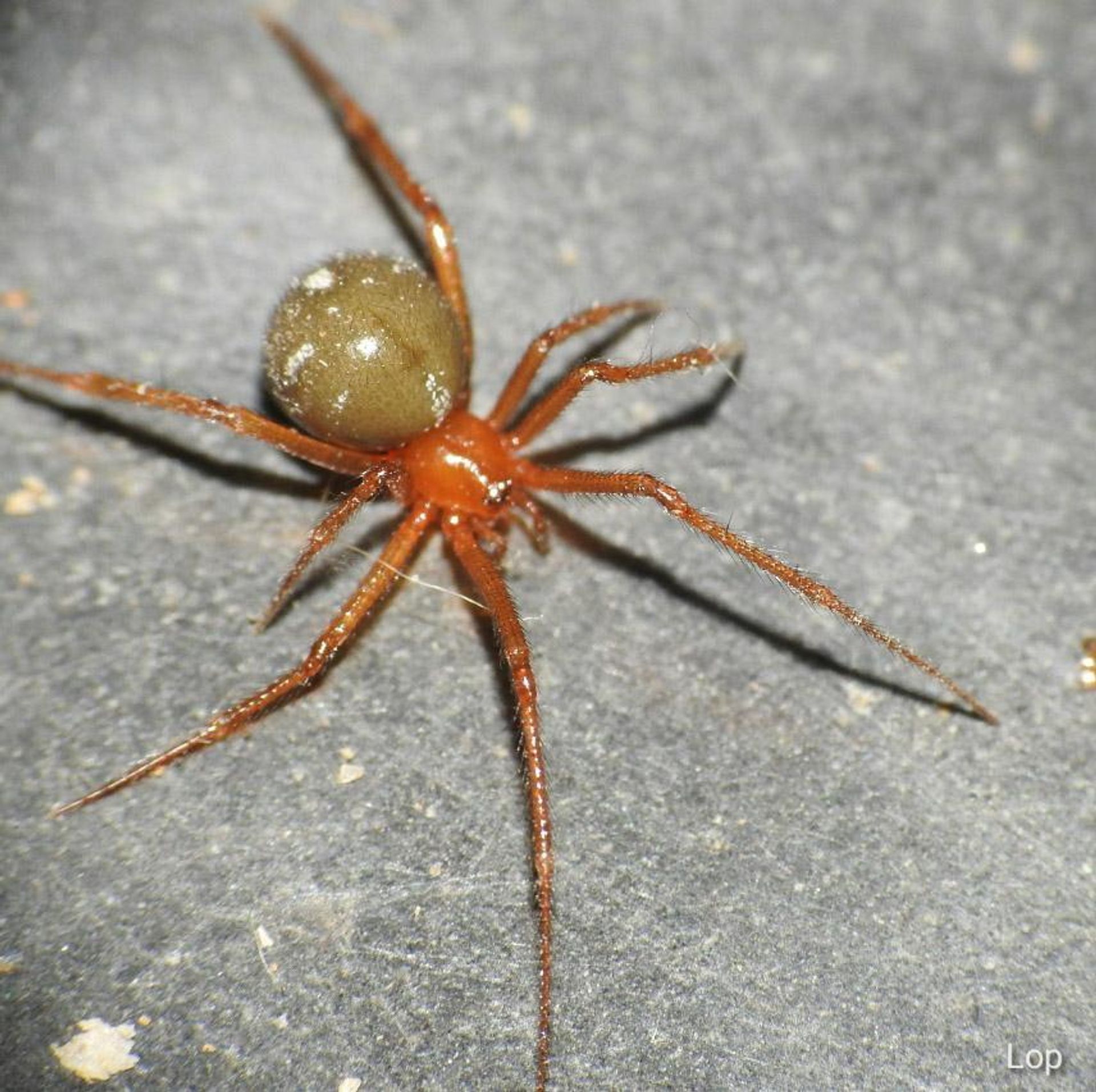
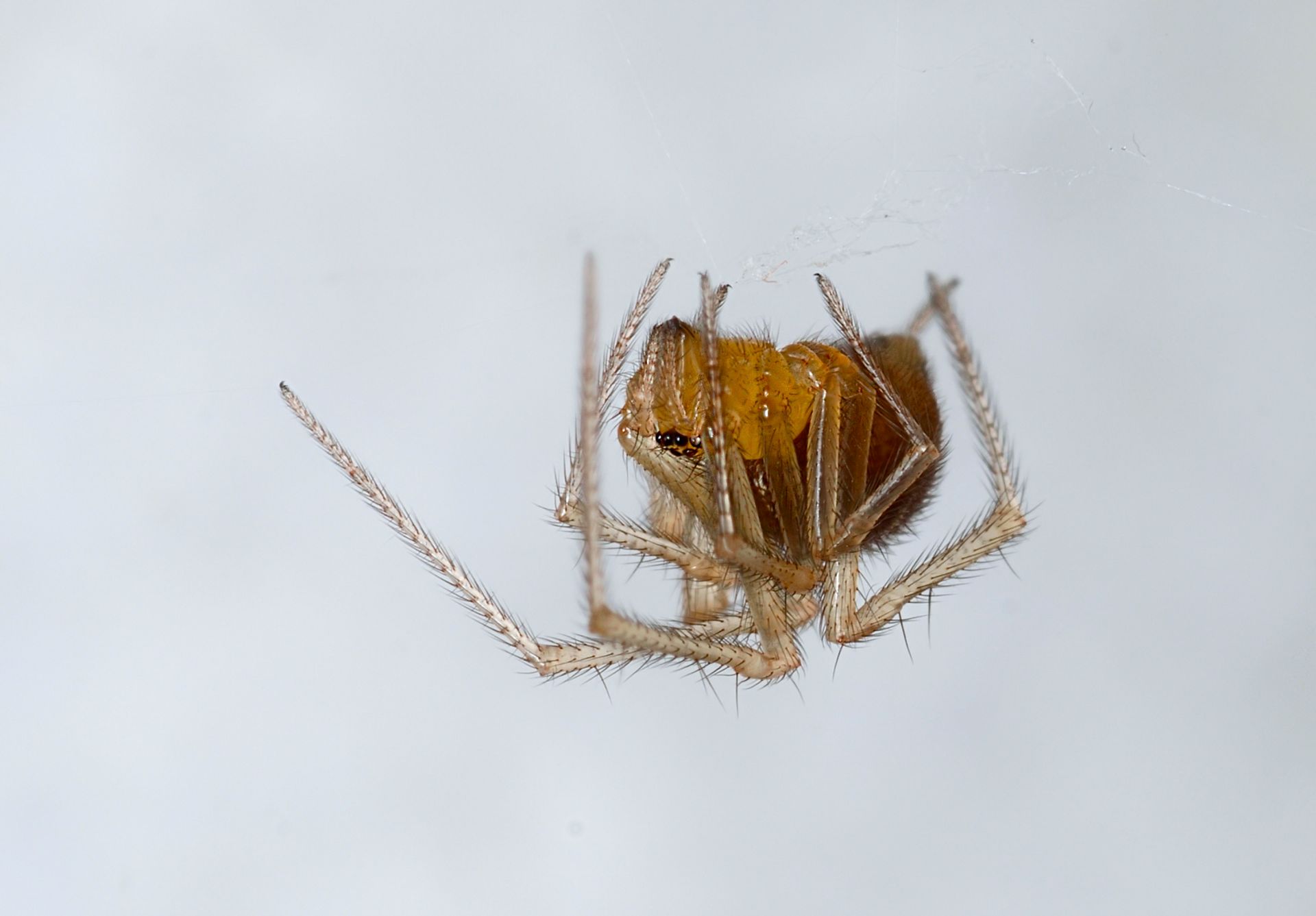
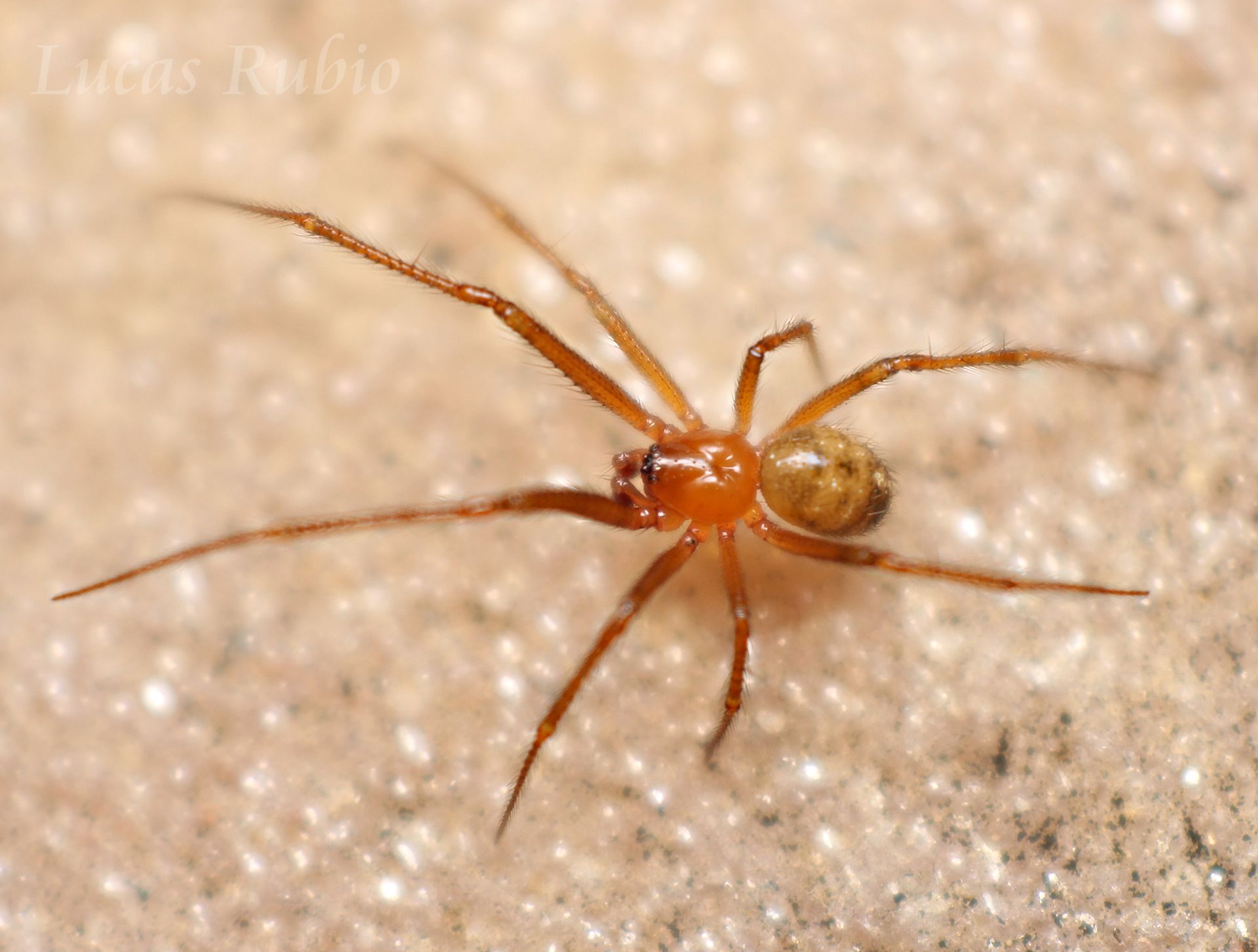
Nesticodes rufipes, commonly known as the Red House Spider, is a cobweb spider in the Theridiidae and the sole in its . It has been introduced globally and is found on multiple continents including North America, South America, and oceanic islands. The species has been studied extensively for its predatory , exhibiting a type II to prey . Research indicates that complexity significantly affects its , with reduced capture rates in more complex environments due to prey availability.
Pronunciation
How to pronounce Nesticodes rufipes: /nɛsˈtiːkəʊdiːz ˈruːfɪˌpiːz/
These audio files are automatically generated. While they are not always 100% accurate, they are a good starting point.
Images
Habitat
Associated with human-modified environments including houses and buildings; laboratory studies indicate adaptability to artificial with varying structural complexity. The has been observed in poultry house environments where it preys on houseflies.
Distribution
Native to Africa; introduced to North America, South America, and oceanic islands including the Galápagos Islands, São Miguel, and Santa Maria. Established occur in the southern United States where it has been documented displacing native black widow spiders through aggressive interactions.
Diet
Musca domestica (houseflies) has been documented as prey in laboratory studies. In natural settings, likely feeds on various small insects captured in its web.
Behavior
Exhibits a type II to prey , meaning rate increases with prey density but eventually plateaus as handling time limits further consumption. Hunger level affects predation dynamics: hungry spiders (20 days deprived) show initially lower predation than well-fed spiders (5 days deprived) due to longer handling times, but predation rates converge over extended periods. Mating experience influences subsequent reproductive and sperm release patterns. In interspecific interactions, has been observed to kill and consume brown widow spiders (Latrodectus geometricus) in 40% of laboratory pairings, while cohabitating in 50% of trials.
Ecological Role
of houseflies and potentially other small insects; may contribute to of pest flies in agricultural and domestic settings such as poultry houses. In invaded regions, participates in complex competitive and predatory interactions with native theridiid spiders including black widows.
Human Relevance
commonly found in and around human dwellings. Occasionally implicated in competitive displacement of native spider species. Serves as a subject for behavioral and ecological research on -prey dynamics, functional responses, and spider reproductive .
Similar Taxa
- Latrodectus geometricus (Brown Widow Spider)Both are theridiid spiders found in similar in the southern United States; N. rufipes has been documented killing brown widows in laboratory studies, though brown widows show higher aggression toward black widows than toward N. rufipes.
- Latrodectus mactans (Southern Black Widow)Overlapping distribution in the southern United States; N. rufipes has been observed to kill black widows in competitive interactions, though black widows are more frequently displaced by brown widows than by N. rufipes.
Sources and further reading
- BugGuide
- GBIF taxonomy match
- iNaturalist taxon
- NCBI Taxonomy
- Catalogue of Life
- Brown Widow Spiders' Aggression Likely Driver of Black Widow Decline
- Vanquished vanishing columbines: Columbine sawfly, Pristiphora rufipes — Bug of the Week
- Cicindelidae | Beetles In The Bush | Page 7
- Fungus Manipulates Ants to Die Near their Nests, Ensuring New Hosts
- Bug Eric: More Beetles from Bones
- Working with Cerceris fumipennis—Part 2 | Beetles In The Bush
- Effects of mating experience on subsequent reproductive behaviour and sperm release in the spider Nesticodes rufipes
- The role of habitat heterogeneity for the functional response of the spider Nesticodes rufipes (Araneae: Theridiidae) to houseflies
- The effect of hunger level on predation dynamics in the spider Nesticodes rufipes : a functional response study