
Hahnia glacialis
Sørensen, 1898
Hahnia glacialis is a of dwarf sheet spider in the Hahniidae, first described by Sørensen in 1898. It is among the smallest members of its family, with body lengths under 4 millimeters. The species has a Holarctic distribution, occurring in cold-adapted regions of northern North America and Eurasia. Like other hahniids, it possesses the distinctive comb-like arrangement of that gives the family its .
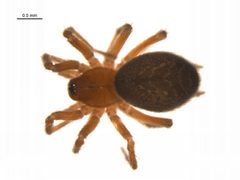
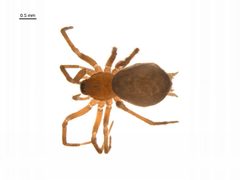
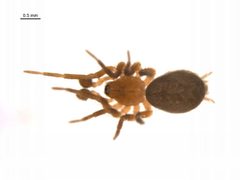
Pronunciation
How to pronounce Hahnia glacialis: /ˈhæniə ˌɡlæsiˈælɪs/
These audio files are automatically generated. While they are not always 100% accurate, they are a good starting point.
Identification
Hahnia glacialis can be distinguished from other Hahnia by geographic distribution and subtle morphological features. Members of the Hahnia are characterized by six arranged in a single transverse row across the , resembling a comb. Identification to species level requires examination of male palpal spurs, female epigynal structure, and the placement of the tracheal on the underside of the abdomen. The species epithet 'glacialis' suggests association with cold or glacial environments.
Images
Habitat
Cold-adapted regions including tundra, taiga, and alpine zones. The specific epithet and distribution pattern suggest preference for areas with cold climates, possibly including permafrost regions and areas with persistent snow cover.
Distribution
Russia (East Siberia, Far East, Kamchatka), Canada, USA, Greenland. The has a trans-Beringian distribution typical of cold-adapted Holarctic .
Similar Taxa
- Other Hahnia speciesShare the distinctive comb-like arrangement and small body size; require examination of genitalia and geographic distribution for separation
- Neoantistea speciesAlso in Hahniidae with similar small size and preferences; Neoantistea builds visible sheet webs while most Hahnia do not
- Antistea brunneaAnother small hahniid with overlapping range in northern North America; distinguished by subtle differences in arrangement and genitalia