
Amblyomma tuberculatum
Marx, 1894
gopher tortoise tick
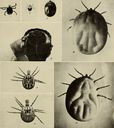
Amblyomma tuberculatum is a hard to the United States, commonly known as the gopher tortoise tick due to its intimate association with the gopher tortoise (Gopherus polyphemus). Unlike many tick species, its distribution appears more restricted than that of its primary , with environmental factors such as sand depth and soil composition playing significant roles in suitability. Laboratory studies have documented its complete , which requires a minimum of 207 days under controlled conditions.
Pronunciation
How to pronounce Amblyomma tuberculatum: /ˌæmbliˈɒmə tjuːˌbɜːrkjʊˈleɪtəm/
These audio files are automatically generated. While they are not always 100% accurate, they are a good starting point.
Images
Habitat
Deep sandy soils associated with gopher tortoise burrow systems; a 2011 study found A. tuberculatum only at sites with mean sand depth exceeding 100 cm and topsoil sand composition greater than 94%. The occupies burrow aprons with sand composition exceeding 92.4%. These specific requirements explain why only 23% of gopher tortoise harbor this despite presence.
Distribution
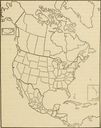
Southeastern United States, with confirmed records from Alabama, Georgia, Mississippi, and other states within the range of the gopher tortoise. Distribution is more restricted than that of its Gopherus polyphemus.
Diet
; females have been observed to ingest at least 2,160 mg of blood during engorgement on gopher tortoises.
Host Associations
- Gopherus polyphemus - primary and nymphal stages commonly collected from gopher tortoises; up to 19 individuals recorded from a single tortoise. Laboratory colonies maintained using tortoises as .
- rabbits - laboratory Larvae and nymphs successfully engorged on rabbits in laboratory studies, though natural occurrence on this in the wild has not been documented.
Life Cycle
Complete with four stages: , larva, nymph, and . Eggs hatch at constant temperatures between 21.1–32.2°C. Larvae engorge in 9–13 days and to nymphs in a minimum of 20 days. Nymphs engorge in 10–37 days and molt to adults in a minimum of 19 days. The entire requires a minimum of 207 days under laboratory conditions. Larvae can survive subfreezing temperatures of −1°C for up to 46 days.
Similar Taxa
- Amblyomma americanumBoth are Amblyomma found in the southeastern United States, but A. americanum (lone star ) has a white scutal spot in females and feeds on a wide variety of mammalian including humans, whereas A. tuberculatum is specialized on gopher tortoises and has a more restricted distribution.
- other Amblyomma speciesA. tuberculatum can be distinguished by its specific association with gopher tortoise burrow systems in deep sandy soils; other in the lack this specialized requirement and association.
More Details
Reproductive output
Laboratory-reared females produced up to 9,353 each after engorgement on tortoises.
Conservation context
The gopher tortoise is a federally threatened in parts of its range; the 's dependence on this and specific sandy conditions makes it vulnerable to habitat loss and gopher tortoise declines.
Sources and further reading
- BugGuide
- Wikipedia
- GBIF taxonomy match
- iNaturalist taxon
- NCBI Taxonomy
- Catalogue of Life
- A warming world: range expansions of lone star ticks, Amblyomma americanum, and the alpha-gal they carry — Bug of the Week
- A trio of trouble – Black-legged ticks Ixodes spp., American dog tick Dermacentor variabilis, and lone star tick Amblyomma americanum — Bug of the Week
- Alpha-gal and the Lone Star Tick, Amblyomma americanum — Bug of the Week
- Time for ticks: Lone star tick, Amblyomma americanum, Blacklegged ticks, Ixodes spp., and American dog tick, Dermacentor variabilis — Bug of the Week
- A trio of trouble just in time for summer: Blacklegged ticks, Ixodes spp.; American dog tick, Dermacentor variabilis; and lone star tick, Amblyomma americanum — Bug of the Week
- defensive behavior | Blog
- Distribution and Habitat Utilization of the Gopher Tortoise Tick (Amblyomma tuberculatum) in Southern Mississippi