
Tetranychinae
Genus Guides
4- Eurytetranychus
- Oligonychus
- Panonychus(spider mites)
- Tetranychus(spider mite)
Tetranychinae is a of spider mites (Tetranychidae) containing economically significant agricultural and ornamental crop pests. The subfamily includes the Tetranychus, Eutetranychus, Oligonychus, Panonychus, Amphitetranychus, Schizotetranychus, Aponychus, Paraponychus, and Stylophoronychus. within this subfamily are phytophagous and pose serious threats to crop yield and quality. Identification relies primarily on morphological examination of male genitalia, though molecular and biochemical methods are increasingly employed for accurate species discrimination.
Pronunciation
How to pronounce Tetranychinae: /tɛtrəˈnɪkaɪniː/
These audio files are automatically generated. While they are not always 100% accurate, they are a good starting point.
Identification
identification relies heavily on morphological examination of male genitalia, particularly the . This method is complicated by the small size of specimens, limited number of diagnostic features, and the inability to identify stages or females to species. Molecular methods including , , species-specific primers, real-time , and LAMP provide alternative approaches. Biochemical methods such as analysis and MALDI-TOF MS have been successfully applied. The greatest is achieved through combined morphological and molecular approaches. Genetic incompatibility and reproductive barriers serve as supplementary species discrimination criteria through crossing experiments.
Images
Habitat
Agricultural crops, ornamental woody and herbaceous plants, and natural vegetation. Specific include apple orchards, rosaceous plantings, Quercus woodlands, and coniferous plantings in urban areas. Paleotropical of Aponychus, Paraponychus, and Stylophoronychus are mainly associated with monocotyledons, while Neotropical and North American species of these are associated with dicotyledons.
Distribution
Worldwide distribution with notable expansion into new regions. Documented in Turkey (Ankara), Russia (including Krasnodar Region with expanding urban coniferous plantings), Paleotropical region, Neotropics, and North America. Some exhibit with risk through international plant trade.
Seasonality
Active from April to October in temperate regions such as Ankara, Turkey. Weekly sampling during this period detected consistent presence of abundant .
Diet
Phytophagous; feeds on vascular plants across multiple . Specific include Malus domestica, Prunus domestica, Prunus avium, Prunus armeniaca, Prunus mahaleb, Quercus , Picea species, Abies sibirica, and various other agricultural and ornamental crops.
Life Cycle
Includes , larvae, nymphs, and . Diapausing phase present in some . Wintering sites vary by species. Morphological diagnostic features for species identification exist only in the adult stage, particularly in males.
Behavior
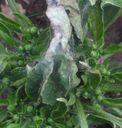
concentrate feeding on certain organs of plants, producing species-specific damage . Exhibits with documented expansion of distribution areas and increased harmfulness in new regions. Some have developed acaricide resistance.
Ecological Role
Serious agricultural pest causing significant damage to crop yield and quality. Reduces plant drought resistance and winter hardiness. Poses threat to phytosanitary status of agro- and . Some carry status due to international trade risks.
Human Relevance
Major economic pest of agricultural and ornamental crops. Requires active management through strategies. Identification challenges complicate monitoring and control efforts. International plant trade facilitates spread of with implications.
Similar Taxa
- BryobiinaeBoth are of Tetranychidae; Bryobiinae such as Bryobia rubrioculus, B. praetiosa, and Bryobia sp. co-occur with Tetranychinae in the same but lack the male aedeagal structures diagnostic for Tetranychinae species identification.
Sources and further reading
- BugGuide
- Species identification of spider mites (Tetranychidae: Tetranychinae): a review of methods
- Geographical occurrence and host associations of Aponychus, Paraponychus and Stylophoronychus species (Tetranychidae: Tetranychinae)
- Biodiversity of spider mites of Ankara, with a checklist of the Tetranychinae and first report of Schizotetranychus ibericus Reck for Turkey (Acari: Prostigmata)