
Abacion magnum
(Loomis, 1943)
crested millipede
Abacion magnum is a crested in the Abacionidae, first described by Loomis in 1943. It is native to North America and is characterized by defensive chemical secretions containing p-cresol. In captivity, it has been observed to feed on dead insects and conspecifics, indicating opportunistic scavenging .
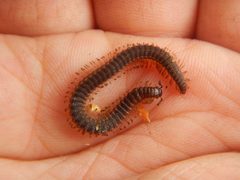
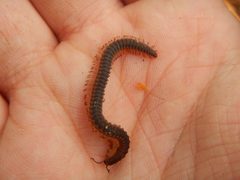
Pronunciation
How to pronounce Abacion magnum: /əˈbeɪʃiˌɒn ˈmæɡnəm/
These audio files are automatically generated. While they are not always 100% accurate, they are a good starting point.
Identification
As a member of the order Callipodida, Abacion magnum can be distinguished from other orders by its body plan and preferences. Within the Abacionidae, -level identification requires examination of and other subtle structural features. The species epithet 'magnum' suggests relatively large size compared to , though specific measurements are not documented in available sources.
Images
Distribution
North America. Specific range details within this region are not documented in available sources.
Diet
In captivity, has been observed to feed on dead insects and dead members of its own . Natural diet in the wild is unknown.
Behavior
Produces defensive secretions when disturbed. The chemical composition of these secretions has been analyzed by infrared spectrophotometry and vapor phase chromatography.
More Details
Chemical defense
Defensive secretions contain p-cresol (4-methylphenol), a phenolic compound with antimicrobial properties and characteristic odor. This represents one of the chemically characterized defense systems in the Abacionidae.
Nomenclatural history
Originally described as Spirostrephon magnum by Loomis in 1943, later transferred to the Abacion. The basionym reflects historical classification within a different group.
Sources and further reading
- BugGuide
- Wikipedia
- GBIF taxonomy match
- iNaturalist taxon
- NCBI Taxonomy
- Catalogue of Life
- California Study Warns of Growing Insecticide Resistance in Cockroaches
- Baiting Cockroaches: What New Research Says Works Best
- New, possibly arboreal rice rat species discovered in Ecuador
- From Sherborn to ZooBank: Moving to the interconnected digital nomenclature of the future | Blog
- Midget male meloid mates with mega mama | Beetles In The Bush