
Abacion
Rafinesque, 1820
Brown Crested Millipedes, Crested Millipedes
Species Guides
3- Abacion magnum(crested millipede)
- Abacion tesselatum(crested millipede)
- Abacion texensis
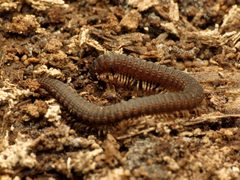
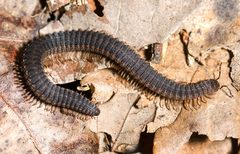
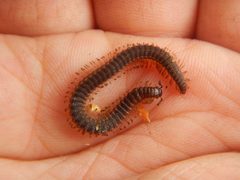
Abacion is a of large, dark brown crested millipedes in the Abacionidae, order Callipodida. The genus comprises approximately 10 described distributed in North America. Members are characterized by prominent crests on their body segments, a distinctive feature of the group. The genus was established by Rafinesque in 1820 and represents one of the more conspicuous in its range due to its size and crested appearance.
Pronunciation
How to pronounce Abacion: //əˈbeɪʃiːɒn//
These audio files are automatically generated. While they are not always 100% accurate, they are a good starting point.
Identification
Distinguished from other callipodid millipedes by the presence of six primary crests between pore crests specifically on body ring 12. The combination of large size, dark brown coloration, and crested body segments separates Abacion from non-crested millipede . Within the Abacionidae, -level identification requires examination of additional morphological characters not specified in available sources.
Images
Appearance
Large millipedes with dark brown coloration. Body bears six primary crests between pore crests on body ring 12. The crested ornamentation is a defining structural feature of the . Overall body form is robust and cylindrical, typical of the order Callipodida.
Distribution
North America. Specific range details for the as a whole are not clearly delineated in available sources, though individual have been described from various localities across the continent.
More Details
Taxonomic History
The Abacion was established by Constantine Samuel Rafinesque in 1820. The Abacionidae was subsequently erected to accommodate this and related genera. The genus name has been conserved in for over two centuries.
Species Diversity
Approximately 10 have been described in Abacion, though species counts vary between sources (Wikipedia cites 'about 8' while other sources indicate 'about 10'). Described species include Abacion lactarium (Say, 1821), one of the older species descriptions in the , and Abacion wilhelminae Shelley, McAllister & Hollis, 2003, one of the more recent descriptions.