
Abacionidae
Shelley, 1979
crested millipedes
Genus Guides
1- Abacion(Brown Crested Millipedes)
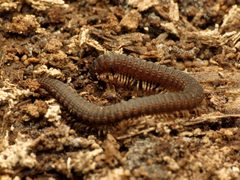
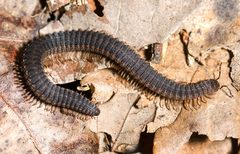
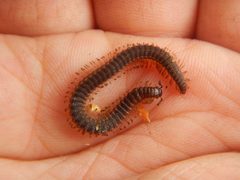
Abacionidae is a of crested millipedes in the order Callipodida, established by Shelley in 1979. The family contains at least three —Abacion, Delophon, and Tetracion—with approximately 13 described . Members of this family occur in both surface and cave , with some species showing troglobiotic adaptations including reduced pigmentation and non-functional .
Pronunciation
How to pronounce Abacionidae: //ˌæbæˈsɪoʊnɪdaɪ//
These audio files are automatically generated. While they are not always 100% accurate, they are a good starting point.
Identification
Distinguished from other Callipodida by combination of morphological characters; precise diagnostic features require examination. The three (Abacion, Delophon, Tetracion) differ in geographic distribution and preferences, with Tetracion specialized for cave environments.
Images
Habitat
Mixed: surface including forest floor and rocky areas (Abacion, Delophon), and cave environments (Tetracion). Cave occur in limestone cave systems.
Distribution
North America, with concentration in the southern Cumberland Plateau of Tennessee and Alabama, USA. The Tetracion is to this region.
Behavior
Cave-dwelling Tetracion function as scavengers within cave . are generally isolated due to the island-like nature of cave .
Ecological Role
Scavengers in cave ; contribute to nutrient cycling in subterranean . Serve as indicators of cave biodiversity and isolation.
Human Relevance
Subject of conservation concern due to isolation and vulnerability of cave . Research on Tetracion has highlighted challenges in cave biodiversity conservation, demonstrating that caves function as habitat islands supporting genetically distinct .
Similar Taxa
- Other Callipodida familiesAbacionidae distinguished by specific morphological characters and geographic distribution; other in the order occur in different regions or lack the cave-adapted found in Tetracion.
More Details
Phylogeography
Genetic studies of Tetracion reveal high divergence between , suggesting divergence several million years ago. Populations are generally isolated and genetically distinct, supporting the 'caves as islands' model for subterranean biodiversity.
Conservation significance
Research on Abacionidae has contributed to understanding cave biodiversity conservation challenges. The southern Cumberland Plateau, where Tetracion occurs, has the highest cave biodiversity of any region in North America.