
Scolopocryptops spinicaudus
Wood, 1862
Thorn-tailed Bark Centipede
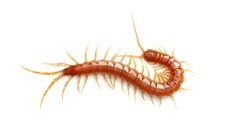
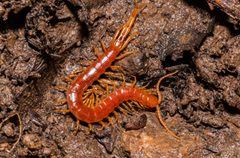
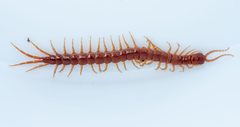
Scolopocryptops spinicaudus is a first described by Wood in 1862. It belongs to the Scolopocryptopidae within the order Scolopendromorpha. The species is known by the Thorn-tailed Bark Centipede and has been recorded across North America and parts of southern Asia including Japan. It is one of the more frequently observed centipedes in its range, with over 1,500 citizen science observations documented.
Pronunciation
How to pronounce Scolopocryptops spinicaudus: //ˌskɒl.oʊ.poʊˈkrɪp.tɒps ˌspɪ.nɪˈkɔː.dəs//
These audio files are automatically generated. While they are not always 100% accurate, they are a good starting point.
Identification
Distinguished from similar bark-dwelling by the combination of: 21 leg pairs (), spiny terminal segments of the body (caudal spines referenced in the epithet), and association with woody substrates. Differs from the closely related Cryptops in placement and subtle morphological characters of the and forcipules. Separation from other Scolopocryptops species requires examination of fine structural details including tergite and .
Images
Appearance
Medium-sized with the characteristic elongated, flattened body plan of scolopendromorphs. The name 'spinicaudus' refers to spiny or thorn-like structures on the tail (caudal) region. Like other members of Scolopocryptopidae, it possesses 21 pairs of legs as an . The body is adapted for moving through narrow spaces under bark and within decaying wood.
Habitat
Found in forested environments where it occupies spaces under loose bark, within decaying logs, and in other woody debris. The 'bark ' reflects its primary microhabitat association. Occurs in both coniferous and deciduous forest systems across its range.
Distribution
Documented from Canada, the United States, and Japan. GBIF records indicate presence in North America and southern Asia. The trans-Pacific distribution pattern suggests either natural range continuity through Beringian connections or potential cryptic requiring further study.
Behavior
that remains concealed under bark or within decaying wood during daylight hours. Movement patterns and specific hunting have not been formally documented.
Ecological Role
Functions as a in forest floor and woody debris . Contributes to nutrient cycling through consumption of small in decaying wood .
Human Relevance
Occasionally encountered by naturalists, foresters, and homeowners when bark or logs are disturbed. Not known to pose significant medical concern, though all possess venomous forcipules capable of defensive bites. Frequently photographed and documented by citizen scientists, with over 1,500 iNaturalist observations contributing to distribution knowledge.
Similar Taxa
- Cryptops spp.Similar bark-dwelling with 21 leg pairs, but placed in separate Cryptopidae; distinguished by capsule and forcipule structure
- Other Scolopocryptops species share -level characters; -level identification requires detailed examination of tergite and
More Details
Taxonomic Note
placement has varied in literature; treated here in Scolopocryptopidae following GBIF and current iNaturalist , though NCBI places it in Cryptopidae. This reflects ongoing refinement of higher-level classification.
Citizen Science Value
The high number of iNaturalist observations (1,592) makes this one of the better-documented in North America, though verified expert identifications remain important given identification challenges within the .