
Gosibius paucidens
Wood, 1862
Gosibius paucidens is a lithobiomorph in the Lithobiidae, described by Wood in 1862. It belongs to a of small to medium-sized stone centipedes characterized by 15 pairs of legs in . The has been recorded across a broad but disjunct North American range spanning from California to New Hampshire and south to the Gulf of California in Mexico. Despite its wide geographic distribution, detailed biological information remains limited.
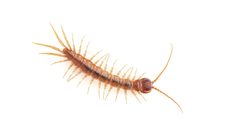
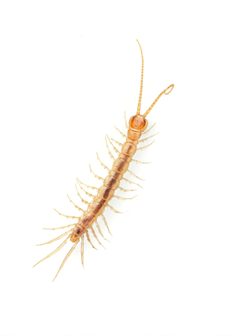
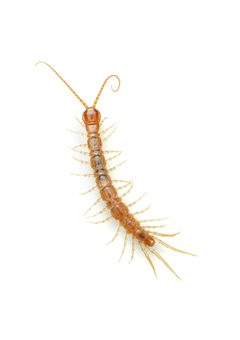
Pronunciation
How to pronounce Gosibius paucidens: /ɡoʊˈsɪbiəs ˈpaʊsɪˌdɛnz/
These audio files are automatically generated. While they are not always 100% accurate, they are a good starting point.
Identification
Distinguished from other Lithobiidae by characteristics of the Gosibius, including features of the in males and tergite structure. The "paucidens" suggests reduced tooth counts on diagnostic structures compared to . Accurate identification requires examination of forcipular , tergite patterns, and ultimate legs. Differentiation from other Gosibius and sympatric lithobiid genera such as Lithobius and Pseudolithobius necessitates taxonomic keys.
Images
Appearance
possess 15 pairs of legs, consistent with the Lithobiomorpha order. As a member of Lithobiidae, the body is dorsoventrally flattened with distinct tergites bearing paramedian . The specific epithet "paucidens" (meaning "few teeth") likely refers to reduced on the forcipules or other mouthparts, though this requires verification. Overall body size and coloration patterns are not well documented in accessible literature.
Habitat
Has been collected in diverse environments across its range, including coastal California, interior Missouri, northeastern New Hampshire, and the Gulf of California region. Lithobiid generally occupy moist terrestrial microhabitats including soil, leaf litter, rotting wood, and under stones. Specific microhabitat preferences for this are not documented.
Distribution
Recorded from USA (California, Missouri, New Hampshire) and Mexico (Gulf of California). GBIF data indicate presence across North America with disjunct coastal and interior . The broad geographic span suggests either genuine wide distribution or potential cryptic requiring further study.
Life Cycle
As a lithobiomorph, development is hemianamorphic with juveniles hatching with fewer than 15 leg pairs and adding segments through until the complement of 15 pairs is reached. Specific details on deposition, stages, or developmental timing are not documented for this .
Ecological Role
Functions as a small within soil and litter . Preys on microarthropods and other small invertebrates, contributing to nutrient cycling through and decomposition processes. Specific quantitative ecological impacts are not studied.
Similar Taxa
- Lithobius spp.Sympatric lithobiid with similar body plan; distinguished by structure, tergite patterns, and forcipular
- Other Gosibius species with overlapping ranges; require detailed examination of diagnostic characters including tooth counts and genitalia
More Details
Taxonomic note
The Gosibius was established by Chamberlin in 1912 and has undergone periodic revision. The disjunct distribution pattern (California, Missouri, New Hampshire, Gulf of California) raises questions about boundaries that may require molecular investigation.
Data limitations
Despite 88 iNaturalist observations, most biological details remain undocumented in accessible scientific literature. Published descriptions focus on morphological rather than or .