
Lithobiidae
stone centipedes
Genus Guides
13Lithobiidae is a of in the order Lithobiomorpha, commonly known as stone centipedes. Members are characterized by anamorphic development, adding leg pairs with each until reaching 15 pairs in adulthood. The family exhibits K-selected traits including slow development, long lifespans, and low reproductive output. Lithobiidae has a distribution with highest diversity in temperate regions.
Pronunciation
How to pronounce Lithobiidae: //ˌlɪθoʊˈbaɪɪdiː//
These audio files are automatically generated. While they are not always 100% accurate, they are a good starting point.
Identification
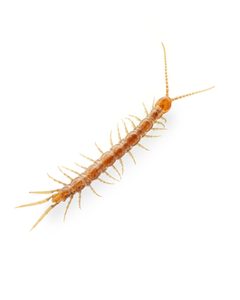
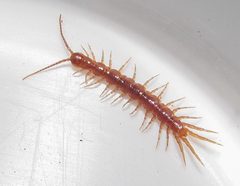
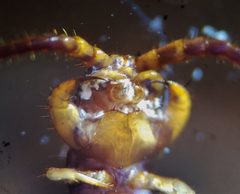
Stone centipedes possess 15 pairs of legs as , a defining trait of the . They lack , instead bearing simple or ocelli (sometimes grouped), or no eyes in exclusively subterranean . The body is typically dorsoventrally flattened. Anamorphic development distinguishes them from other groups: juveniles hatch with fewer than 15 leg pairs and progressively add segments and legs through molting until reaching the adult complement.
Images
Habitat
Primarily terrestrial, occupying moist microhabitats under stones, in leaf litter, and within decaying wood in forest . Some occur in subterranean environments including caves. Specific records include old beech stands, larch and conifer forests, calcareous meadows, alvar grasslands, and karst regions. Moisture availability appears critical for survival.
Distribution
distribution with records from Europe (including Sweden, Germany, Denmark, Poland), Asia (China, Kazakhstan, Sumatra), and North America. The occurs across diverse biogeographic regions including temperate forests, Mediterranean zones, and montane areas up to at least 1400 m elevation.
Seasonality
Spring hatching of juveniles has been documented. are active throughout the year with continuous -laying capability, though specific seasonal activity patterns vary by and latitude.
Life Cycle
Anamorphic development: juveniles hatch with incomplete leg counts and add leg pairs through successive until reaching 15 pairs at adulthood. In studied , development to sexual maturity requires approximately 2 years. Total lifespan ranges 4–6 years. are laid singly over extended periods rather than in batches. occurs as L3 or L4 larval instars. High mortality occurs in eggs and small juveniles; post-larval mortality is low except in very old individuals.
Ecological Role
Predatory arthropods in forest floor and soil . Classified as or equilibrium characterized by slow development, late , extended reproductive phase, low , long lifespan, and low post-larval mortality. are stabilized by high variability in individual development times.
Sources and further reading
- BugGuide
- Wikipedia
- GBIF taxonomy match
- iNaturalist taxon
- NCBI Taxonomy
- Catalogue of Life
- Pensoft Editorial Team | Blog - Part 84
- The cyber-centipede: From Linnaeus to big data | Blog
- Life cycle of lithobiidae ? with a discussion of the r-and K-selection theory
- Новые данные о Australobius magnus (Trotzina, 1894) (Chilopoda: Lithobiomorpha: Lithobiidae из Южного Казахстана
- Lithobius borealis Meinert and L. lapidicola Meinert in Sweden (Chilopoda: Lithobiidae)
- A review of the Chinese species of Bothropolys Wood, 1862 (Chilopoda: Lithobiomorpha: Lithobiidae)
- Discovery of the subgenus Lithobius (Sigibius) Chamberlin, 1913 (Chilopoda: Lithobiomorpha: Lithobiidae) in East Asia: A review the Chinese species
- A new species of the genus Australobius Chamberlin, 1920 (Lithobiomorpha, Lithobiidae) from southwestern China.
- A new species of Bothropolys Wood, 1862 (Lithobiomorpha, Lithobiidae) from south-western China.