
Schendyla nemorensis
C.L. Koch, 1836
Common Schendyla
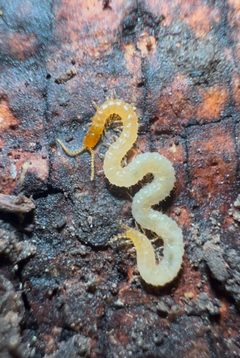
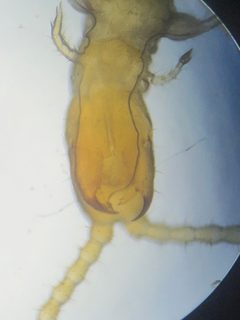
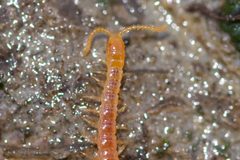
Schendyla nemorensis is a small geophilomorph in the Schendylidae, first described by Carl Ludwig Koch in 1836. It is one of the most frequently observed centipedes in its range, with over 800 iNaturalist records. The exhibits notable in leg count, with males possessing fewer leg pairs than females. It has been introduced from its native Palearctic range to Tasmania.
Pronunciation
How to pronounce Schendyla nemorensis: //skɛnˈdɪla nɛməˈrɛnsɪs//
These audio files are automatically generated. While they are not always 100% accurate, they are a good starting point.
Identification
Males possess 37–41 pairs of legs (usually 39); females possess 39–43 pairs (usually 39 or 41). This leg count dimorphism is diagnostic for the within its range. Distinguished from other Schendyla species by the specific combination of leg pair numbers and geographic distribution. The type locality near Regensburg, Bavaria, provides reference for Central European .
Images
Appearance
Elongated, worm-like body typical of geophilomorph . Maximum recorded length 28 mm. Coloration not explicitly documented in available sources. Body composed of numerous leg-bearing segments.
Habitat
Terrestrial; inhabits plant litter and soil. Found in forested environments where decaying organic matter accumulates. Associated with ground-level microhabitats in woodland .
Distribution
Principally Palearctic in native range, recorded across Europe and Northern Asia (excluding China), with presence in North Africa. Successfully introduced to Tasmania. Type locality: vicinity of Regensburg, Bavaria, southern Germany.
Behavior
Solitary. Terrestrial active in soil and leaf litter layers.
Ecological Role
in soil and litter . Contributes to decomposition processes through soil mixing and on small in forest floor .
Similar Taxa
- Other GeophilomorphaSimilar elongated body form, but Schendyla nemorensis distinguished by specific leg pair counts and Schendylidae characteristics
- Other Schendyla speciesRequire careful examination of leg pair numbers and geographic origin for separation; S. nemorensis has the documented male 37–41/female 39–43 pattern
More Details
Subspecies
Two recognized: Schendyla nemorensis fountaini Turk, 1944 and Schendyla nemorensis quarnerana Verhoeff, 1937
Taxonomic history
Originally described as Geophilus nemorensis before transfer to Schendyla; basionym reflects this history
Observation frequency
With 837 iNaturalist observations, this is among the most documented , likely reflecting both genuine abundance and detectability in disturbed