
Schendyla
Bergsøe & Meinert, 1866
Species Guides
1- Schendyla nemorensis(Common Schendyla)
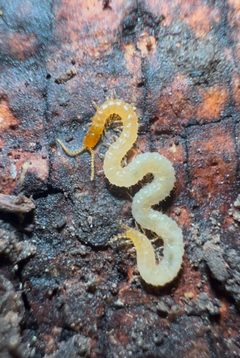
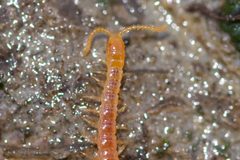
Schendyla is a of soil-dwelling in the Schendylidae, first described in 1866 by Danish entomologists Vilhelm Bergsøe and Frederik Vilhelm August Meinert. The genus comprises more than 20 distributed across the western Palearctic region. These centipedes are small to medium-sized, ranging from approximately 1 cm to 4.5 cm in length, with leg pair counts varying dramatically between species—from 29 to 57 pairs. The genus exhibits notable morphological diversity in body size and leg number, with some species like S. antici being exceptionally small (5–8 mm) with minimal leg pairs, while others like S. vizzavonae reach 45 mm.
Pronunciation
How to pronounce Schendyla: /skɛnˈdɪlə/
These audio files are automatically generated. While they are not always 100% accurate, they are a good starting point.
Identification
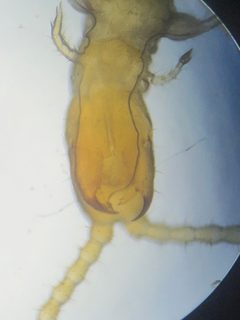
Distinguished from other geophilomorph by the combination of: (1) second maxillary claws with few spines, (2) absence of pore fields on sternites, (3) two large pores on the coxopleuron of ultimate legs, and (4) ultimate legs without functional claws or with only claws. -level identification requires examination of leg pair counts and body size, with S. antici identifiable by its extremely small size (5–8 mm) and minimal leg pairs (29–31), S. vizzavonae by its large size (45 mm) relative to leg count (≤51 pairs), and S. monoeci by its high leg pair count (51–57).
Images
Habitat
Soil-dwelling; found in forest soils including mixed dipterocarp forest and montane forest. Recorded from soil cores, humus layers, and bat guano. Occurs across elevations from lowland (200–250 m) to upper montane zones (1650–1930 m).
Distribution
Western Palearctic region (Europe and western Asia). Specific records from Denmark, Norway, and Sweden; broader distribution inferred from -level occurrence data. Individual have more restricted ranges.
Ecological Role
Principal component of soil macrofauna in forest . Contributes to soil fauna diversity across multiple forest types and elevation zones.
Similar Taxa
- MesoschendylaClosely related in the same Schendylidae; distinguished by subtle morphological differences in ultimate leg structure and distribution primarily in tropical regions (Southeast Asia) rather than Palearctic.
- Other Geophilomorpha familiesDistinguished by the unique combination of few spines on second maxillary claws, absence of sternite pore fields, two large coxopleural pores on ultimate legs, and reduced or absent ultimate leg claws.
More Details
Taxonomic history
established by Danish entomologists Vilhelm Bergsøe and Frederik Vilhelm August Meinert in 1866. Now contains more than 20 recognized .
Morphological diversity
The exhibits exceptional variation in leg pair number, with S. antici having the minimum recorded (29 pairs in males) and S. monoeci the maximum (57 pairs). This range exceeds that of most other geophilomorph genera and complicates identification based solely on leg counts.