
Strigamia branneri
Bollman C.H., 1888
Strigamia branneri is a soil-dwelling in the Linotaeniidae, described by Bollman in 1888. It belongs to the order Geophilomorpha, which comprises elongated, burrowing centipedes with high numbers of leg pairs. The is known from the United States.
Pronunciation
How to pronounce Strigamia branneri: /strɪˈɡæmiə ˈbrænəˌraɪ/
These audio files are automatically generated. While they are not always 100% accurate, they are a good starting point.
Identification
Distinguishable from other Strigamia by subtle morphological characters of the forcipules (venom claws) and , requiring microscopic examination. Accurate identification to species level generally requires reference to original description or specialized taxonomic keys for Linotaeniidae.
Images
Appearance
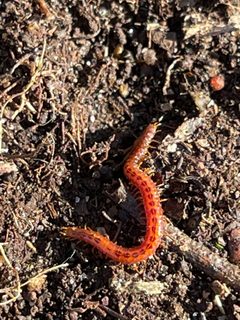
As a member of Geophilomorpha, possesses an extremely elongated, cylindrical body with numerous segments bearing one pair of legs each. Body coloration and precise segment counts for this are not documented in available sources.
Habitat
Terrestrial; soil-dwelling. Specific microhabitat preferences for this are not documented.
Distribution
United States; recorded as present in North America.
Ecological Role
Predatory soil ; contributes to decomposition processes and nutrient cycling through soil bioturbation and on small . Specific ecological studies for this are lacking.
Human Relevance
No documented direct interactions with humans. Not known to be of medical or agricultural significance.
Similar Taxa
- Other Strigamia speciesRequire examination of genitalic structures and forcipule for reliable separation; many in this are morphologically similar.
- Other Linotaeniidae generaShare the elongated geophilomorph body plan; distinguished by details of structure, forcipule , and trunk segment characteristics.
More Details
Taxonomic Note
placement varies between sources: GBIF and Catalogue of Life list Linotaeniidae, while iNaturalist lists Geophilidae. This reflects ongoing taxonomic revisions in Geophilomorpha. The authorship is sometimes cited as Bollman, 1888.
Data Limitations
This has minimal published biological data beyond original description and taxonomic records. Most aspects of its remain unstudied.