
Linotaeniidae
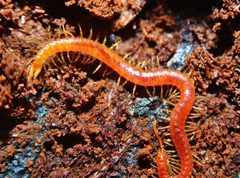
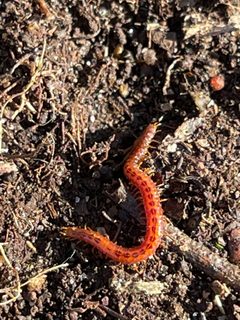
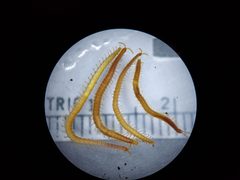
Linotaeniidae is a of soil centipedes in the order Geophilomorpha. in this family are characterized by a body that tapers toward the tip, with a single pectinate , and a short forcipular segment with a remarkably wide tergite. The number of leg pairs varies widely within and among species, ranging from 31 to 83 pairs. The family includes the Agathothus, Chileana, Diplochora, and Strigamia.
Pronunciation
How to pronounce Linotaeniidae: /ˌlaɪnoʊˈtiːnɪˌaɪdiː/
These audio files are automatically generated. While they are not always 100% accurate, they are a good starting point.
Identification
Distinguished from similar within the by: conspicuous basal denticle of the forcipular tarsungulum; paired pore areas on the part of trunk segments; and remarkably swollen ultimate pair of legs in males (in Strigamia). -level identification relies on shape of forcipular tarsungulum and denticle, average number of legs, aspect of pleuropretergite, shape of metasternite of the ultimate leg-bearing segment, and arrangement of coxal pores.
Images
Appearance
Body tapers toward the tip. bear a single pectinate . Second with coxo-sternite usually undivided; claws lack projections. Forcipular segment short with tergite remarkably wide; forcipules evidently tapering. Coxal organs open through distinct pores on the surface of the coxo-. Leg-bearing segments modest in number compared to most Adesmata .
Habitat
Soil-dwelling found in temperate regions.
Distribution
Temperate regions of the Holarctic; extends southward to the south Andes and the Indochinese region. Distribution records include Denmark, Norway, and Sweden.
Similar Taxa
- GeophilidaeLinotaeniidae has been historically treated as part of Geophilidae but is now recognized as a distinct ; differs in having a modest number of leg-bearing segments and limited variation in leg number within each .
- Araucania distinguished from Strigamia by lacking the conspicuous basal denticle of the forcipular tarsungulum, paired pore areas on trunk segments, and swollen ultimate legs in males.
- Damothus distinguished from Strigamia by lacking the conspicuous basal denticle of the forcipular tarsungulum, paired pore areas on trunk segments, and swollen ultimate legs in males.
- Zantaenia distinguished from Strigamia by lacking the conspicuous basal denticle of the forcipular tarsungulum, paired pore areas on trunk segments, and swollen ultimate legs in males.
More Details
Leg number variation
The number of leg pairs varies substantially within the , ranging from 31 pairs in Strigamia hoffmani to 83 pairs in S. epileptica, Agathothus gracilis, and Diplochora imperialis. This represents one of the widest ranges of leg pair numbers within a family.