
Goeridae
Ulmer, 1903
Armour-ballast Caddisflies
Genus Guides
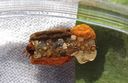
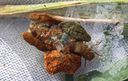
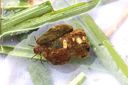
1Goeridae is a of caddisflies (Trichoptera) comprising approximately 12 and at least 160 described . Larvae are primarily lotic, inhabiting streams and rivers, with some species occupying madicolous such as wet cliff . The family is distinguished by larval case construction incorporating ballast stones for weight and stability. exhibit highly modified male genitalia and maxillary palps in some species. Goeridae has a Holarctic distribution with records from North America, Europe, and Asia.
Pronunciation
How to pronounce Goeridae: //ɡɔˈɛrɪdiː//
These audio files are automatically generated. While they are not always 100% accurate, they are a good starting point.
Identification
Larvae distinguished from other caddisfly by: (1) case construction incorporating ballast stones for weight, unlike purely organic cases of many families; (2) specific pronotal hump —nose-like versus ridgelike with distinct border relationships; (3) counts of 6 mesonotal and 8 metanotal plates in diagnostic group; (4) absence of dark-pigmented dots bordering pronotal muscle attachment spots in some . require examination of male genitalia and maxillary palp structure for species-level identification. Keys to larvae available for European Ecoregions 6 and 7 (Hellenic western Balkan and Eastern Balkan regions).
Images
Habitat
Primarily lotic freshwater environments: streams and rivers with moderate to fast current. Some inhabit madicolous —thin water films trickling over wet cliff (first reported for Goera rupicola in Japan). Larval microhabitat selection influenced by current velocity and substrate availability for case construction.
Distribution
Holarctic distribution. North America: Canada and adjacent United States. Europe: widespread including Hellenic western Balkan, Eastern Balkan regions, Bulgaria; Silo chrisiammos micro- to Greek Cyclades island of Andros. Asia: Anatolia, European Turkey, Thailand (Goera schmidi), Japan (Goera rupicola). GBIF records: Denmark, Norway, Sweden, Vermont (USA).
Host Associations
- Agriotypus armatus - Aquatic (Hymenoptera: Agriotypidae) that attacks larvae of Silo pallipes
Life Cycle
Complete (, larva, pupa, ) typical of Trichoptera. Larval stage is the , longest-lived phase in aquatic . Specific developmental timing varies by and latitude.
Behavior
Larvae construct portable cases from sand grains and small stones, incorporating heavy ballast material that increases case weight and reduces risk of displacement by current. This ballast strategy is a defining behavioral of the . Case construction represents a unique engineering solution to life in high-energy lotic environments.
Ecological Role
Larvae function as primary consumers in stream , processing organic matter and contributing to nutrient cycling. Serve as for specialized aquatic including Agriotypus armatus. Case-building activity modifies local substrate conditions and may influence sediment dynamics in microhabitats.
Human Relevance
Used as bioindicators of stream health due to specific requirements and sensitivity to water quality. Larval keys support biomonitoring programs in European Ecoregions 6 and 7. No direct economic importance; not pests or beneficial in agricultural or forestry contexts.
Similar Taxa
- BrachycentridaeAlso construct cases with mineral material, but use silk to bind materials rather than ballast stones for weight; cases typically more streamlined and less heavily weighted.
- SericostomatidaeShare some characteristics but lack the distinctive ballast-stone case construction; case materials and construction method differ.
- OdontoceridaeConstruct cases from sand grains but without the heavy ballast strategy; pronotal and patterns differ.
More Details
Etymology of common name
The 'Armour-ballast Caddisflies' refers to the larval case construction incorporating heavy stones (ballast) that function like armor to protect against physical disturbance in fast-flowing waters.
Taxonomic history
established by Ulmer in 1903; type Goera described by Stephens in 1829. Included in Limnephiloidea superfamily. Historically grouped with other 'small families' in regional revisions despite lack of close phylogenetic relationship to all grouped .
Research gaps
Larval descriptions remain incomplete for many ; only two species (Silo chrisiammos, Lithax musaca) described in detail from Balkan region as of 2017. Madicolous use newly discovered and likely underreported.
Sources and further reading
- BugGuide
- Wikipedia
- GBIF taxonomy match
- iNaturalist taxon
- NCBI Taxonomy
- Catalogue of Life
- A REVIEW OF THE GOERIDAE (TRICHOPTERA)
- The larvae of Silo chrisiammos Malicky 1984 and Lithax musaca Malicky 1972 (Trichoptera: Goeridae), including a key to the Goeridae larvae of the Eastern and Hellenic western Balkan regions
- REVISION DES TRICHOPTèRES CANADIENS : III. Les Hyalopsychidae, Psychomyiidae, Goeridae, Brachycentridae, Sericostomatidae, Helicopsychidae, Beraeidae, Odontoceridae, Calamoceratidae et Molannidae
- A new species of the genus Goera Stephens (Trichoptera, Goeridae) found in madicolous habitats in Amami-Oshima, southwestern Japan
- The Life Cycle and Spatial Distribution of the Aquatic Parasitoid Agriotypus armatus (Hymenoptera: Agriotypidae) and its Caddis Host Silo pallipes (Trichoptera: Goeridae)
- The Responses of the Aquatic Parasitoid Agriotypus armatus (Hymenoptera: Agriotypidae) to the Spatial Distribution and Density of its Caddis Host Silo pallipes (Trichoptera: Goeridae)