
Arctopsyche
McLachlan, 1868
Great Gray Spotted Sedges
Species Guides
2- Arctopsyche grandis(netspinning caddisfly)
- Arctopsyche ladogensis(Ladoga net-spinning caddisfly)
Arctopsyche is a of netspinning caddisflies in the Hydropsychidae, comprising more than 20 described . Larvae construct and maintain capture nets throughout the year to filter food from flowing water. The genus exhibits flexibility, with documented and semivoltine patterns depending on environmental conditions. Species occur in lotic across the Holarctic region.
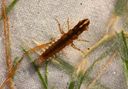
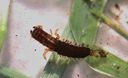
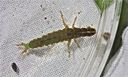
Pronunciation
How to pronounce Arctopsyche: /ɑrkˈtoʊpsɪki/
These audio files are automatically generated. While they are not always 100% accurate, they are a good starting point.
Identification
Larvae distinguished from other hydropsychid by specific capsule and net characteristics; identification requires examination of genitalia. Arctopsyche shimianensis and related have been associated with adults through (COI and 28S D2 markers), enabling larval identification where morphological descriptions are now available.
Images
Habitat
Flowing water (lotic) environments including streams and rivers. Documented from cold montane streams in Idaho and regulated large rivers in Norway. Larvae occupy rocky substrates where net construction is feasible.
Distribution
Holarctic distribution with records from North America (western United States), Europe (Norway, Palearctic region), and Asia (China). GBIF records indicate presence in Norway and Sweden.
Seasonality
period extends from early June to mid-July for A. ladogensis in Norway. Larvae present year-round with growth concentrated in summer months and little to no growth during winter.
Diet
Larvae feed preferentially on animals and diatoms, actively avoiding vascular plant detritus. No dietary differences detected among instars.
Life Cycle
Larval development consists of five instars. duration varies: (one year) documented for A. grandis in Idaho, with mixture of one- and two-year cycles (semivoltine ) for A. ladogensis in regulated Norwegian rivers. Pupae present during spring flood events. Growth is rapid in summer with early instars progressing to later instars in 30 days or less; growth ceases or slows dramatically in winter.
Behavior
Larvae construct and maintain silk capture nets throughout the year. Net dimensions with larval size ( capsule width). Larvae exhibit continuous net maintenance .
Ecological Role
Filter-feeding larvae process suspended organic matter and serve as prey for aquatic . Maximum larval densities of 547–2060 individuals per square meter of planar rock surface area have been documented, indicating substantial contribution to benthic . follows negative exponential curves.
Human Relevance
Larvae serve as important food sources for fish in trout streams. patterns relevant to fly fishing; 'Great Gray Spotted Sedges' reflects angling interest.
Similar Taxa
- HydropsycheBoth are netspinning caddisflies in Hydropsychidae; distinguished by larval capsule and net characteristics, and genitalia structure.
- ParapsycheLarvae also construct capture nets in similar ; distinguished through larval morphological features and markers as demonstrated in Chinese fauna studies.
More Details
Life cycle plasticity
Semivoltine dominance in regulated rivers represents an adaptive response to altered thermal and flow regimes, demonstrating phenotypic flexibility within the .
Taxonomic clarification
Historical confusion between A. inermis and A. ladogensis has been resolved, with A. ladogensis confirmed as Palearctic and A. inermis having a more restricted distribution.
Sources and further reading
- BugGuide
- Wikipedia
- GBIF taxonomy match
- iNaturalist taxon
- NCBI Taxonomy
- Catalogue of Life
- Clarification of the taxonomic status and distribution ofArctopsyche inermisBanks, 1943 andArctopsyche ladogensis(Kolenati, 1859) (Trichoptera: Hydropsychidae: Arctopsychinae)
- Life history and bionomics of Arctopsyche grandis (Trichoptera) in a Central Idaho stream
- Life cycle ofArctopsyche ladogensis(trichoptera) in a regulated Norwegian river
- The larvae of Chinese Hydropsychidae (Insecta: Trichoptera), Part I: Arctopsyche shimianensis, Parapsyche sp. A, and Diplectrona obscura