
Parapsyche
Betten, 1934
Species Guides
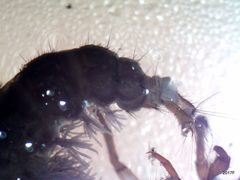
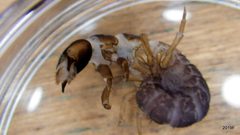
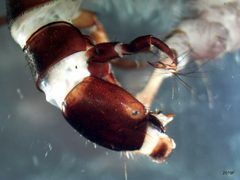
2Parapsyche is a of net-spinning caddisflies (Trichoptera: Hydropsychidae) comprising more than 20 described . Larvae construct capture nets to filter food from flowing water. The genus occurs in North America, Asia, and potentially other regions. Detailed information exists primarily for P. shikotsuensis in Japan, with less comprehensive data available for other species.
Pronunciation
How to pronounce Parapsyche: //ˌpærəˈsaɪki//
These audio files are automatically generated. While they are not always 100% accurate, they are a good starting point.
Images
Habitat
Running water environments, particularly headwater streams. Larvae inhabit riffles, wood debris, and among submerged leaves and stems of living riparian plants. Specific microhabitat preferences vary by and developmental stage.
Distribution
Western North America (at least 5 : P. almota, P. elsis, P. extensa, P. spinata, P. turbinata); northern Japan (Hokkaido: P. shikotsuensis); China (at least one undescribed species, Parapsyche sp. A); eastern North America (Vermont, USA).
Seasonality
of P. shikotsuensis emerge in early to mid-summer. Larval development continues through winter months, with early instars appearing in August and reaching fifth instar by December.
Diet
Larvae are with animal-derived food predominating. In P. shikotsuensis, gut contents contain 55-95% animal fragments and 5-45% vascular plant fragments, with seasonal and instar-specific variation in animal matter frequency.
Life Cycle
(one per year) in studied . Females deposit above or underwater on cobbles and wood debris. Larvae pass through multiple instars, with second, third, and fifth instar larvae occurring at relatively high densities in riffle .
Behavior
Larvae are net-spinners, constructing silken capture nets to filter food particles from flowing water. Larvae of P. shikotsuensis continue growth and development during winter months.
Similar Taxa
- ArctopsycheBoth belong to Arctopsychinae and share net-spinning larval ; distinguished by larval chaetotaxy and morphological characters requiring detailed examination
- HydropsycheBoth are net-spinning Hydropsychidae, but Hydropsyche belongs to Hydropsychinae rather than Arctopsychinae; larvae differ in capsule and body setation patterns
More Details
Taxonomic status
The was established by Betten in 1934. barcode libraries (mitochondrial COI and nuclear 28S D2) have been developed for identification and larval- association.
Research gaps
Most biological and ecological information derives from single studies (particularly P. shikotsuensis). -level generalizations for use, diet, and require caution pending broader comparative study.
Sources and further reading
- BugGuide
- Wikipedia
- GBIF taxonomy match
- iNaturalist taxon
- NCBI Taxonomy
- Catalogue of Life
- Parapsyche species (Trichoptera: Hydropsychidae: Arctopsychinae) of western North America
- Life History of a Net-spinning Caddisfly, Parapsyche shikotsuensis in a Headwater Stream of Hokkaido, Northern Japan.
- The larvae of Chinese Hydropsychidae (Insecta: Trichoptera), Part I: Arctopsyche shimianensis, Parapsyche sp. A, and Diplectrona obscura