
Elipsocinae
Pearman, 1936
Genus Guides
3- Clinopsocus
- Cuneopalpus(damp barklice)
- Elipsocus(damp barklice)
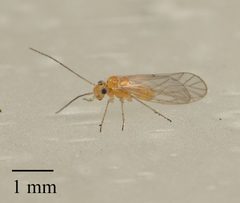
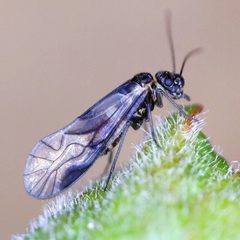
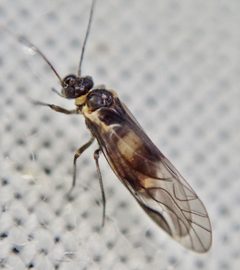
Elipsocinae is a of barklice within the Elipsocidae, order Psocodea. Members are small, soft-bodied insects found in diverse terrestrial . The subfamily was established by Pearman in 1936 and contains multiple distributed across various regions. These insects are part of the larger psocopteran group commonly known as barklice or booklice.
Pronunciation
How to pronounce Elipsocinae: /ɛˌlɪpsoʊˈsaɪni/
These audio files are automatically generated. While they are not always 100% accurate, they are a good starting point.
Identification
Elipsocinae can be distinguished from other elipsocid by features of wing venation and genital structure. Forewings have a characteristic venation pattern with reduced number of . Males possess distinctive phallosome structures useful for -level identification. Separation from other psocopteran subfamilies requires examination of wing venation, tarsal segmentation, and genital .
Images
Appearance
Small, soft-bodied insects with broad, rounded . Forewings, when present, are typically broad with reduced venation. Body usually pale to brownish in coloration. long and . Some are or .
Habitat
Found in diverse terrestrial microhabitats including leaf litter, bark crevices, and on foliage. Occurs in both forested and open environments. Many inhabit humid, sheltered locations such as under stones, in decaying wood, and among mosses.
Distribution
Widely distributed across multiple continents including Europe, Asia, Africa, and the Americas. Present in both temperate and tropical regions. Specific distribution patterns vary by and within the .
Seasonality
Activity patterns vary by and geographic location. Many species are active year-round in suitable microhabitats, with peaks often corresponding to favorable moisture conditions.
Diet
Feed on organic detritus including lichens, , fungal spores, and dead plant material.
Life Cycle
Development includes , nymphal, and stages. Nymphs resemble smaller versions of adults without fully developed wings or genitalia. Number of nymphal instars varies among .
Behavior
Gregarious tendencies observed in some . Slow-moving, cryptic habits. Winged forms may disperse by short when disturbed.
Ecological Role
Contributes to decomposition processes by consuming dead plant material and organic detritus. Serves as prey for various small and arthropods.
Human Relevance
No direct economic importance. Occasionally encountered in natural history surveys and ecological studies. Not known as pests.
Similar Taxa
- LachesillinaeAlso within Elipsocidae but differs in wing venation patterns and genital structure; Lachesillinae typically has more reduced wing venation and different phallosome .
- PerientominaeAnother elipsocid distinguished by differences in tarsal segmentation and wing shape; Perientominae often has more slender forewings.
- Psocinae in Psocidae with similar general appearance but differs in wing venation, particularly the arrangement of areola postica and nodulus; also differs in tarsal claw structure.
More Details
Taxonomic history
Elipsocinae was established by Pearman in 1936 as part of a reorganization of psocopteran classification. The has undergone various revisions, with occasionally transferred to or from related subfamilies based on morphological studies.
Research status
Many within Elipsocinae remain poorly studied, particularly in tropical regions. Identification to species level often requires microscopic examination of slide-mounted specimens.