
Diploperla
Needham & Claassen, 1925
springflies
Species Guides
1- Diploperla duplicata(two-lobed springfly)
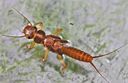
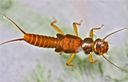
Diploperla is a of springflies ( Perlodidae) comprising five described found in eastern North America. These stoneflies inhabit stream environments where their nymphs develop as in leaf packs and riffle areas. The genus exhibits with occurring in spring.
Pronunciation
How to pronounce Diploperla: /dɪˈploʊpɜrlə/
These audio files are automatically generated. While they are not always 100% accurate, they are a good starting point.
Identification
Members of Diploperla can be distinguished from other perlodid by features of the male genitalia, including the structure of the and paraprocts. The specific epithet 'duplicata' refers to the two-lobed condition of a diagnostic structure. -level identification requires examination of genitalic characters.
Images
Habitat
Nymphs inhabit streams, specifically in leaf packs and under stones in riffle areas. They require well-oxygenated flowing water with coarse substrates.
Distribution
Eastern United States. Records include Alabama, Connecticut, Delaware, Georgia, and Illinois. distributions vary: Diploperla duplicata occurs in the northeastern US, D. robusta in the southeastern US, and D. kanawholensis is known from West Virginia.
Seasonality
emerge in spring, with D. robusta emerging March–April. Nymphal development spans approximately one year.
Diet
Nymphs are predatory, feeding on small aquatic including larvae. do not feed.
Life Cycle
(one per year). Nymphs develop for approximately one year before emerging as . are laid in streams.
Behavior
Nymphs are active that hunt within leaf packs and under stones. are short-lived and do not feed.
Ecological Role
in stream . Contributes to nutrient cycling through leaf pack processing and serves as prey for other organisms.
Human Relevance
Used as bioindicators of stream health due to sensitivity to water quality. Subject of ecological research on stream .
Similar Taxa
- IsoperlaAnother large perlodid ; distinguished by male genitalic structure, particularly
- PerlinellaOverlapping distribution and ; separated by details of male genitalia and body coloration patterns
More Details
Species diversity
Five recognized: D. duplicata (two-lobed springfly), D. janeae, D. kanawholensis, D. morgani, and D. robusta. Two species (D. janeae, D. morgani) described relatively recently (2017, 1979), suggesting ongoing taxonomic work.
Research focus
D. robusta has been subject of detailed studies; less ecological information available for other in .