
Arphia ramona
Rehn, 1902
California orange-winged grasshopper
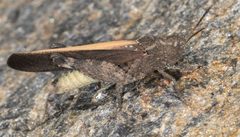
Arphia ramona, the California orange-winged , is a band-winged grasshopper in the Acrididae. It is characterized by orange hind wings that are concealed at rest but visible in . The species occurs in western North America, with a strong association with California ranging from Coast Ranges to interior locations. Males produce a crackling sound during flight through wing , a trait associated with mating .
Pronunciation
How to pronounce Arphia ramona: //ˈɑːɹ.fi.əɹəˈmoʊ.nə//
These audio files are automatically generated. While they are not always 100% accurate, they are a good starting point.
Identification
Distinguished from other Arphia by the combination of orange hind wings and California distribution. Arphia pseudonietana (red-winged ) has red rather than orange hind wings and occurs in late summer/fall rather than spring. The crackling sound () and concealed bright hind wings are characteristic of the . Seasonal separation from A. pseudonietana aids identification: A. ramona present in late winter and early spring.
Images
Habitat
Sunny, open patches of soil in grassland and open country. Found from Coast Ranges to interior California including Mt. Diablo. Occupies where bare ground is available for basking and oviposition.
Distribution
North America: California from Coast Ranges to Mt. Diablo; broader range includes Central America and western North America per distribution records. GBIF records indicate presence in California, Middle America, and North America.
Seasonality
active in late winter and early spring. begins in late winter, with activity continuing into early spring.
Diet
Feeds on leaves, flowers, and seeds of plants. Specific plant records for this are limited; diet inferred from general Acrididae feeding habits and limited observations.
Life Cycle
deposited in soil. Female produces approximately 100 eggs. Nymphs undergo multiple before reaching adulthood. stage not explicitly documented for this but likely as eggs or nymphs based on spring activity.
Behavior
Males produce a crackling noise during by rubbing forewings together (). This sound is associated with mating and serves to attract females. When disturbed, individuals make evasive flights revealing the concealed orange hind wings. Basks on sunny, open ground. Flight occurs when soil temperatures rise sufficiently.
Ecological Role
Herbivore in grassland and open . Serves as prey for vertebrate and . Contribution to nutrient cycling through herbivory and deposition of organic matter.
Human Relevance
Agricultural pest potential: feeds on leaves, flowers, and seeds. Specific economic impact not quantified. Attracted to open, disturbed ground.
Similar Taxa
- Arphia pseudonietanaRed-winged with red (not orange) hind wings; present in late summer and fall rather than spring, providing seasonal separation
- Arphia conspersaSpecklewinged with speckled forewings and usually red hind wings; occurs in spring but with different wing pattern and broader western distribution
More Details
Flight sound production
The crackling sound () produced during is made by both males and some females, though the is more prominent in males. The sound functions in mate attraction and is characteristic of band-winged grasshoppers in the Oedipodinae.
Thermoregulation
Activity patterns are temperature-dependent. Basking on open ground allows body temperature elevation necessary for and other activities.