
Poecilotettix
Scudder, 1897
Species Guides
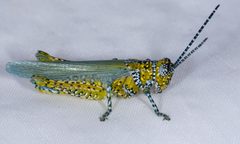
2- Poecilotettix pantherinus(Panther-spotted Grasshopper)
- Poecilotettix sanguineus(Red-lined Grasshopper)
Poecilotettix is a of spur-throated grasshoppers in the Acrididae, tribe Dactylotini. The genus contains two described : Poecilotettix pantherinus (panther-spotted ) and Poecilotettix sanguineus (red-lined grasshopper). Members of this genus are distributed in the southwestern United States and Mexico.


Pronunciation
How to pronounce Poecilotettix: //ˌpiːsɪloʊˈtɛtɪks//
These audio files are automatically generated. While they are not always 100% accurate, they are a good starting point.
Identification
As a member of the spur-throated grasshopper group, in this possess a distinct or projection on the surface of the throat (). Specific identification to species level relies on color pattern: P. pantherinus exhibits panther-like spotted patterning, while P. sanguineus displays red linear markings. The genus can be distinguished from related Dactylotini genera by a combination of genitalic and external structural features.
Images
Distribution
Recorded from the southwestern United States (Arizona, California) and Mexico.
Similar Taxa
- MelanoplusBoth belong to Melanoplinae and share spur-throated ; Poecilotettix differs in tribal placement (Dactylotini vs. Melanoplini) and specific genitalic structure.
- DactylotumBoth are in tribe Dactylotini with spur-throated characteristics; Poecilotettix are generally less vividly colored than the rainbow grasshopper (Dactylotum bicolor) and differ in pattern details.
More Details
Species diversity
The is -poor, containing only two described species: Poecilotettix pantherinus (Walker, 1870) and Poecilotettix sanguineus Scudder, 1897.
Taxonomic history
Established by Scudder in 1897, the has remained stable in its tribal placement within Dactylotini, though -level has been refined over time.