
Bradynotes obesa
(Thomas, 1872)
Slow Mountain Grasshopper, Mountain Lubber Grasshopper, Western Lubber Grasshopper
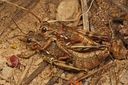
Bradynotes obesa is a large, flightless spur-throated grasshopper to western North America. It is characterized by its robust, heavy-bodied and slow, deliberate movement. The inhabits transitional zones between pine savannah and sagebrush desert in mountainous regions, particularly at lower elevations in the Big Horn and Wind River Mountains of Wyoming. It is notable for its very early spring , with present primarily in May and June, and its gregarious in localized .
Pronunciation
How to pronounce Bradynotes obesa: /bræˈdɪnoʊtiːz oʊˈbiːsə/
These audio files are automatically generated. While they are not always 100% accurate, they are a good starting point.
Identification
Bradynotes obesa is distinguished by its exceptionally robust and heavy-bodied build compared to other western grasshoppers. are large and flightless, with reduced wings relative to body size. The exhibits gregarious , forming localized . Its slow, deliberate movement contrasts with the active of most acridid grasshoppers. Early-season adult presence (May-June) separates it from later-emerging sympatric species.
Images
Habitat
Transitional zones between pine savannah and sagebrush desert at lower elevations in mountainous regions. In Wyoming, it occurs in the Big Horn Mountains and Wind River Mountains, potentially extending to other suitable areas of northwestern Wyoming.
Distribution
Western United States and northwestern Mexico. Documented in Wyoming (Big Horn Mountains, Wind River Mountains), with distribution records from California, Nevada, and Utah.
Seasonality
overwinter and hatch very early in spring. are present from May through June, with peak activity in late spring. This early distinguishes it from most other western .
Diet
Possibly prefers grasses, though feeding habits in Wyoming are poorly documented.
Life Cycle
Overwinters as . Hatches very early in spring. emerge in May and persist through June.
Behavior
Gregarious, forming localized . Slow-moving and flightless, with limited capability. are active during daylight hours in spring.
Human Relevance
Limited economic impact due to localized distribution and early-season . Any potential damage to rangelands is restricted by its narrow requirements and brief activity period.
Similar Taxa
- Brachystola magnaBoth are large, robust, flightless grasshoppers with 'lubber,' but B. magna occurs in plains and prairie rather than mountain transitional zones, and has different .
- Melanoplus speciesSympatric spur-throated grasshoppers, but Bradynotes obesa is distinguished by larger size, flightlessness, and extremely early .