Schistocerca rubiginosa
(Harris, 1862)
Rusty Bird Grasshopper
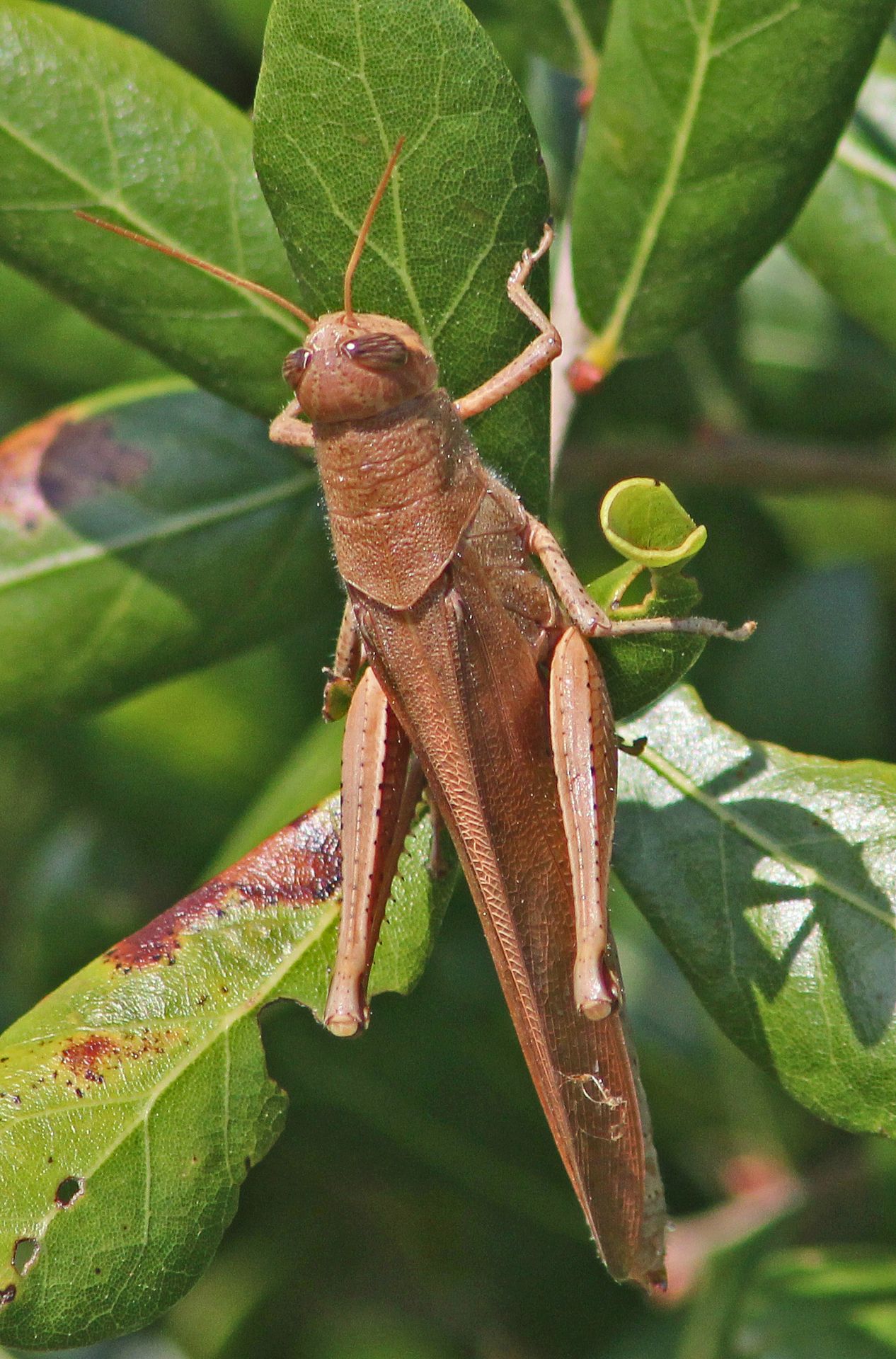
Schistocerca rubiginosa, commonly known as the rusty bird grasshopper, is a of bird grasshopper in the Acrididae. It belongs to the Schistocerca, which includes several large, migratory grasshopper species found in the Americas. The species was first described by Harris in 1862 under the basionym Acridium rubiginosum. Like other members of its genus, it is capable of long-distance and seasonal .
Pronunciation
How to pronounce Schistocerca rubiginosa: /ˌskɪstoʊˈsɜrkə ˌruːbɪdʒɪˈnoʊsə/
These audio files are automatically generated. While they are not always 100% accurate, they are a good starting point.
Images
Distribution
Found in North America and South America. Specific distribution records include: United States (Illinois, Indiana, New Mexico, South Carolina) and Venezuela.
Similar Taxa
- Schistocerca obscuraBoth are large bird grasshoppers in the same with similar body plans and capabilities; S. obscura is more widespread in the eastern and central United States and requires examination of male abdominal tip for definitive separation.
- Schistocerca alutaceaAnother member of the 'alutacea group' within Schistocerca; boundaries within this group remain subject to taxonomic revision and field identification can be challenging.
- Schistocerca shoshoneOverlaps in western North American range; both are large, alert grasshoppers quick to take when disturbed.
More Details
Taxonomic notes
The was originally described as Acridium rubiginosum by Harris in 1862 before being transferred to Schistocerca. The Schistocerca has undergone significant revision, with species and delineations still debated among .
Genus characteristics
Members of Schistocerca are known as 'bird grasshoppers' due to their large size, powerful , and alert . The includes the famous (S. gregaria) of the Old World, though S. rubiginosa and other New World are rarely populous enough to form destructive swarms.
Sources and further reading
- BugGuide
- Wikipedia
- GBIF taxonomy match
- iNaturalist taxon
- NCBI Taxonomy
- Catalogue of Life
- Grasshoppers of Colorado
- Grasshoppers of Colorado
- Grasshoppers of Colorado
- Field Guide Selected References
- Eaters of thistles: Thistle tortoise beetle, Cassida rubiginosa, and Canada thistle bud weevil, Larinus planus — Bug of the Week
- Bug Eric: The Obscure Bird Grasshopper