
Ischnura gemina
(Kennedy, 1917)
San Francisco Forktail
Ischnura gemina is a small to the San Francisco Bay Area of California, with a total range of less than 500 square miles. It is considered one of the rarest odonates in the United States. The inhabits coastal wetland and has been observed to have an unusually long lifespan for a damselfly, likely an to the region's foggy climate. have declined due to urbanization and destruction, though the species shows some to certain forms of habitat degradation.
Pronunciation
How to pronounce Ischnura gemina: /ˈɪsk.nʊə.rə ˈdʒɛm.ɪ.nə/
These audio files are automatically generated. While they are not always 100% accurate, they are a good starting point.
Identification
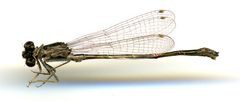
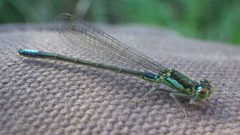
are approximately 2.5 cm in length. Males are mostly black with blue sides on the and blue dots toward the tip of the . Females have dull green coloration on the sides of the thorax. Distinguished from the similar Ischnura denticollis by the shape of the male genital appendages.
Images
Habitat
Coastal wetland of the San Francisco Bay Area, including seepages and ponds. Tolerates some disturbance such as channelization of waterways provided marshy vegetation cover remains. Larvae develop in the cover of aquatic plants.
Distribution
to the San Francisco Bay Area, California, United States. Occurs only in greater San Francisco and parts of San Mateo and Marin Counties. Total range less than 500 square miles.
Seasonality
Active between March and November. are known to live over 30 days, which is relatively long for .
Diet
feed on other wetland arthropods.
Human Relevance
Designated endangered on the IUCN Red List, later downgraded to vulnerable status. have been extirpated from some localities due to urbanization; reintroduction efforts at Glen Canyon Park in San Francisco initially succeeded but the population subsequently disappeared. The ' persistence at restored sites provides data about requirements.
Similar Taxa
- Ischnura denticollisVery similar in appearance; distinguished by shape of male genital appendages. The two are thought to hybridize.
Sources and further reading
- BugGuide
- Wikipedia
- GBIF taxonomy match
- iNaturalist taxon
- NCBI Taxonomy
- Catalogue of Life
- Bug Eric: Another Odonata Record
- Cerambycidae | Beetles In The Bush | Page 6
- Bug Eric: New Mexico Dragonfly Blitz - Day 2
- Bug Eric: Home Bioblitz, Ongoing
- Sometimes the best collecting… | Beetles In The Bush
- Hover Flies Identified: Researchers Tackle 20,000 Syrphid Specimens in Illinois Collection