Ischnura erratica
Calvert, 1895
Swift Forktail
Ischnura erratica, the swift forktail, is a robust native to the Pacific Northwest. are 30–35 mm long with a wingspan of 35–40 mm. Males display distinctive blue and black coloration with a forked tail on abdominal segment 10, while females occur in two color phases. It is one of the earliest damselflies to emerge each year and breeds in clear waters across diverse aquatic .
Pronunciation
How to pronounce Ischnura erratica: /ˈisk.nʊəɹ əˈrætɪkə/
These audio files are automatically generated. While they are not always 100% accurate, they are a good starting point.
Identification
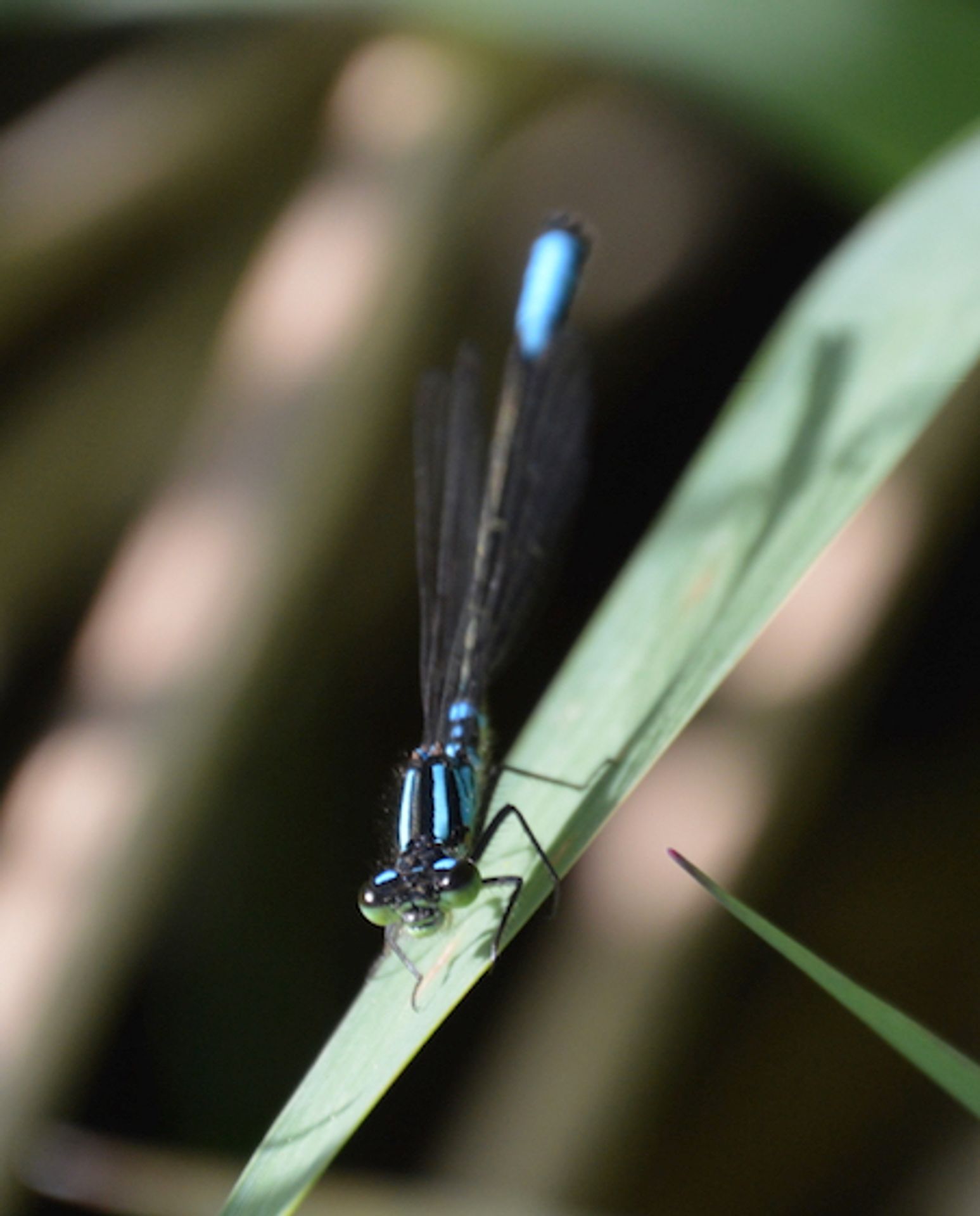
Distinguished from other forktails by the male's combination of green facial stripe, three blue forehead spots, and forked tail on segment 10. The large blue patch on abdominal segments 7–10 is distinctive. Females may be confused with other Ischnura but can be identified by association and, in the greenish phase, the specific pattern of green with black bearing narrow green rings.
Images
Appearance
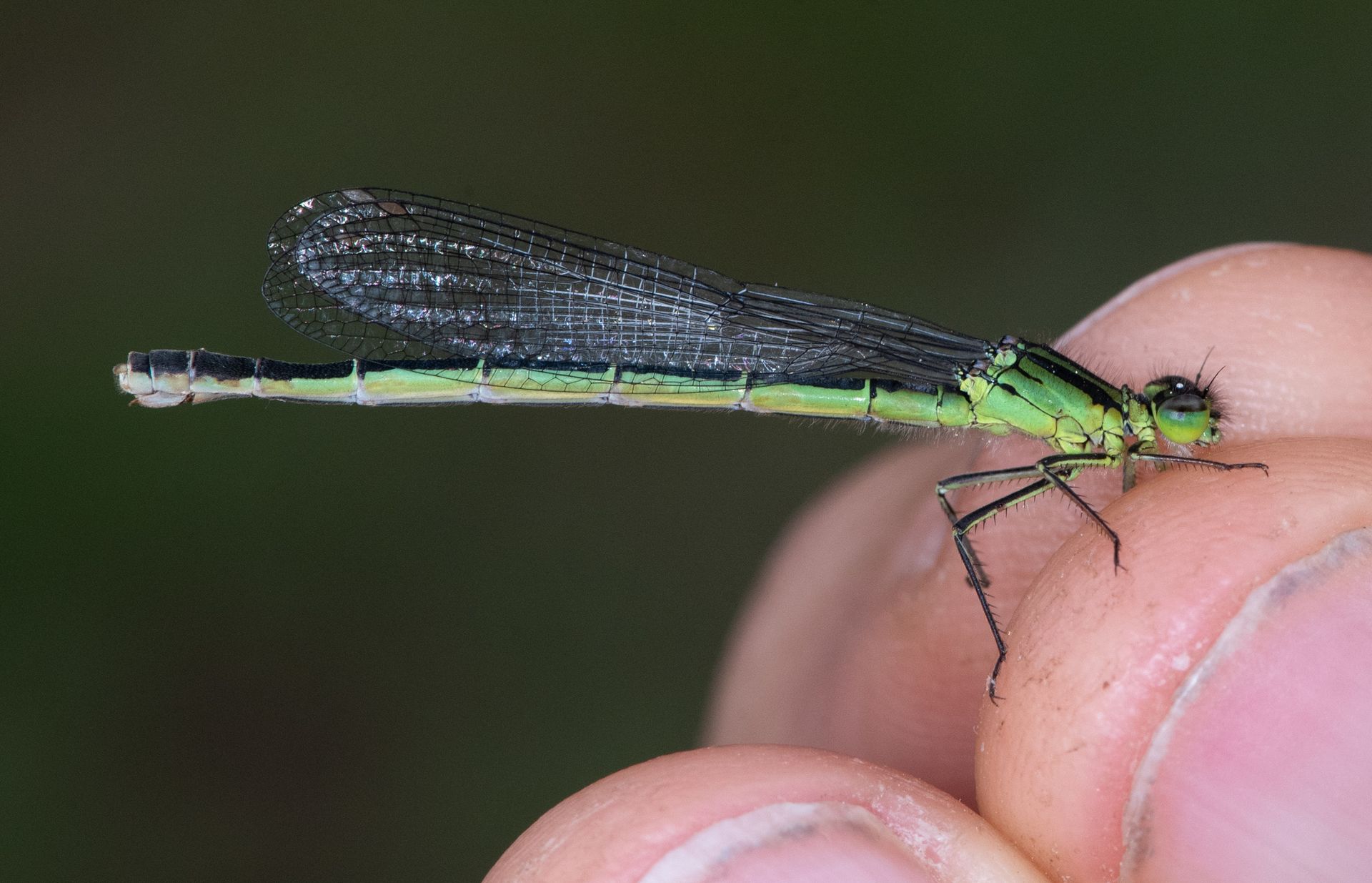
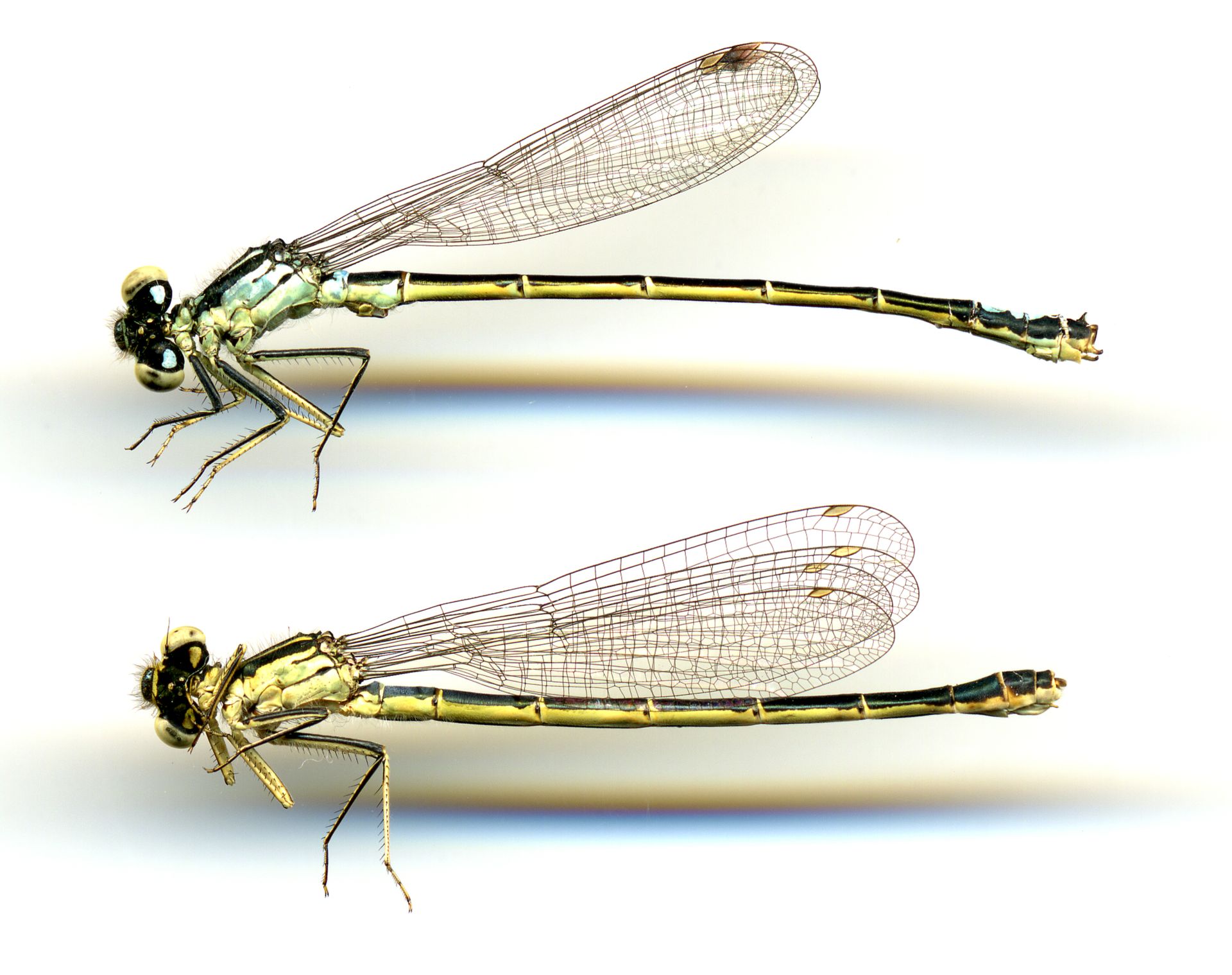
Robust , 30–35 mm in length, wingspan 35–40 mm. Male: black with green facial stripe and three blue spots on forehead; lower green. black dorsally, yellowish-green ventrally, with two lateral blue stripes. shiny black above, yellowish-green or yellowish-orange below; segments 1–2 with blue bands dorsally, segments 3–6 with narrow yellow rings; large blue patch on segments 7–10; segment 10 extended into upward-pointing forked tail. Female: two color phases—one similar to male but with duller eyes and greenish-blue replacing blue; other with pale head patches, greenish thorax, black abdomen with narrow green rings at base of some segments. females have dull orange patches on head and thorax.
Habitat
Breeds in clear waters including acid peat bogs, forest lakes, beaver dams, field ponds, ditches, and backwaters of cool streams. In British Columbia, often associated with drooping woodreed (Cinna latifolia), in whose submerged stems are laid. Perches on lily pads, rocks, logs, and ground with tip resting on surface.
Distribution
Pacific Northwest: British Columbia, Washington, Oregon, and northern California.
Seasonality
One of the earliest to emerge. British Columbia: late April to June or later. California: February to September.
Life Cycle
Larval stage aquatic; laid individually in submerged stems of water plants, sometimes with female's entire submerged. Larva described in scientific literature but specific developmental details not provided in available sources.
Behavior
Rapid low ; tip may be bent down in flight. Females sometimes found far from water. Males defend small territories at breeding sites, perching on emerging vegetation and engaging in aerial circling with intruding males without physical contact. Multiple males may hold overlapping territories. Males display by raising the blue tip of the abdomen. Copulation lasts an hour or more; pair separates before -laying. Eggs laid individually in submerged plant stems.
Similar Taxa
- Ischnura denticollisBlack-fronted forktail lacks pale markings on dorsum of and has blue on abdominal segments 8–9 restricted to spot rather than complete ring; I. erratica has green facial stripe and three blue forehead spots
- Ischnura demorsaMexican forktail has different color pattern and geographic range (southwestern US, Mexico); I. erratica is Pacific Northwest with distinctive forked tail
More Details
Larval description
The larva was formally described in a 1979 publication in The Canadian Entomologist, having been previously unknown.
Sources and further reading
- BugGuide
- Wikipedia
- GBIF taxonomy match
- iNaturalist taxon
- NCBI Taxonomy
- Catalogue of Life
- Bug Eric: Another Odonata Record
- Bug Eric: New Mexico Dragonfly Blitz - Day 2
- Bug Eric: My Kind of Fourth of July
- Bug Eric: Filigree Skimmers Are Back
- Gyrinidae | Beetles In The Bush
- Bug Eric: Wasp Wednesday: Another Puzzler
- DESCRIPTION OF THE LARVA OF ISCHNURA ERRATICA (ODONATA: COENAGRIIDAE) WITH NOTES ON THE SPECIES IN BRITISH COLUMBIA