
Ischnura demorsa
(Hagen, 1861)
Mexican Forktail
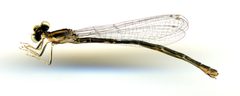
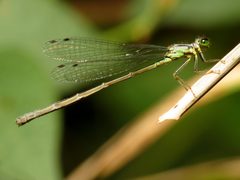
Ischnura demorsa, commonly known as the Mexican Forktail, is a in the Coenagrionidae. It is a small, slender found in freshwater across Central America and the southwestern United States. The species is classified as Least Concern by the IUCN, with a stable and no immediate threats to its survival. It is frequently observed in association with springs and rivers with emergent vegetation.
Pronunciation
How to pronounce Ischnura demorsa: /ˈɪsknʊrə dɪˈmɔrsə/
These audio files are automatically generated. While they are not always 100% accurate, they are a good starting point.
Images
Habitat
Inhabits freshwater environments including springs, both hot and cold, and slow-moving streams with emergent vegetation. Has been observed along river channels with overhanging vegetation and in backwater areas with shallow water.
Distribution
Native to Central America and North America. In the United States, occurs in the southwestern region including New Mexico and Arizona. Distribution extends southward through Mexico and Central America.
Similar Taxa
- Ischnura denticollis (Black-fronted Forktail)Both are forktails in the Ischnura found in southwestern North America. Males of I. denticollis lack pale markings on the dorsum of the and have blue restricted to a spot on abdominal segments 8-9, rather than a complete ring. I. denticollis has a more westerly distribution, ranging from Oregon and Idaho through California, Nevada, Utah, Arizona, and New Mexico, but does not overlap extensively with I. demorsa in the southern parts of its range.
More Details
Conservation Status
Classified as Least Concern () by the IUCN. The is considered stable with no immediate threats to the ' survival identified.