
Enallagma durum
(Hagen, 1861)
big bluet
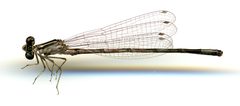
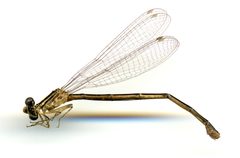
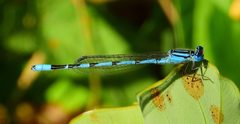
Enallagma durum, the big bluet, is a of in the Coenagrionidae. It occurs in northern Mexico and the southern and eastern United States. The IUCN lists it as Least Concern with a stable . As a member of the Enallagma, it shares characteristics with other bluet , though specific ecological details for this species remain limited in published sources.
Pronunciation
How to pronounce Enallagma durum: /ɛnˈæləɡmə ˈdʊrəm/
These audio files are automatically generated. While they are not always 100% accurate, they are a good starting point.
Identification
The "big bluet" suggests larger size relative to other bluet (Enallagma spp.), though specific diagnostic features distinguishing E. durum from such as E. civile (familiar bluet) are not detailed in available sources. Accurate identification likely requires examination of male appendages and female mesostigmal plates, standard for the .
Images
Distribution
Northern Mexico and southern and eastern United States. Distribution records include Vermont.
Similar Taxa
- Enallagma civileBoth are narrow-winged damselflies in the Enallagma with overlapping North American ranges; E. civile (familiar bluet) is a widespread that has been studied for climate change responses, while E. durum is distinguished by its larger size and more restricted distribution pattern.
More Details
Taxonomic authority
Originally described as Agrion durum by Hagen in 1861; later transferred to Enallagma.
Sources and further reading
- BugGuide
- Wikipedia
- GBIF taxonomy match
- iNaturalist taxon
- NCBI Taxonomy
- Catalogue of Life
- Dragonfly Enthusiasts, Unite! Open House Set Nov. 6 at Bohart Museum | Bug Squad
- Know Your Dragonflies! | Bug Squad
- Dragonflies! Who Isn't Fascinated by Dragonflies? | Bug Squad
- Bohart Museum Open House: Dragonflies Rule! | Bug Squad
- Hooray for the red, white, and blue! Milkweed longhorned beetle, Tetraopes tetraophthalmus; dogbane tiger moth, Cycnia tenera; and familiar bluet, Enallagma civile — Bug of the Week
- Rising Temperatures Could Stunt Growth, Threaten Survival of Common Damselfly