
Leucorrhinia
Brittinger, 1850
whitefaces
Species Guides
7- Leucorrhinia borealis(Boreal Whiteface)
- Leucorrhinia frigida(Frosted Whiteface)
- Leucorrhinia glacialis(crimson-ringed whiteface)
- Leucorrhinia hudsonica(Hudsonian Whiteface)
- Leucorrhinia intacta(Dot-tailed Whiteface)
- Leucorrhinia patricia(Canada Whiteface)
- Leucorrhinia proxima(Belted Whiteface)
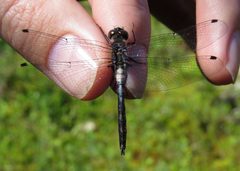
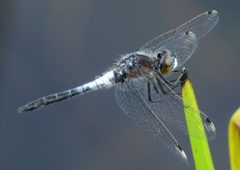
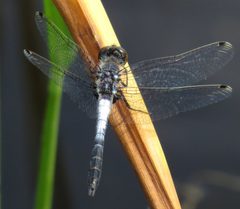
Leucorrhinia is a of in the Libellulidae, commonly known as whitefaces due to their distinctive pale . The genus name derives from Greek 'leuco' (white) and 'rhinus' (nose). within this genus are associated with wetland , particularly acidic bog pools with Sphagnum moss. Several species are of conservation concern due to specialized habitat requirements and vulnerability to habitat degradation.
Pronunciation
How to pronounce Leucorrhinia: //ˌlɛkəˈrɪniə//
These audio files are automatically generated. While they are not always 100% accurate, they are a good starting point.
Identification
Distinguished from other Libellulidae by the pale or white (), the characteristic that gives the group its . Males often display contrasting color patterns: for example, Leucorrhinia dubia males have red and black with burgundy , while females are yellow and black. Identification to level requires examination of abdominal patterning, eye color, and wing markings.
Images
Habitat
Associated with acidic wetland , particularly bog pools with floating Sphagnum mats. Some show incomplete habitat segregation, leading to overlapping distributions and interspecific interactions. Habitat specificity varies by species; some occupy disjunct at range margins with specialized requirements.
Distribution
Disjunct documented in the Appalachian Mountains for L. glacialis and L. hudsonica at southern range margins. Records from Denmark, Norway, and Sweden (GBIF). Leucorrhinia dubia occurs in Scottish Highlands and has been subject to conservation in Britain from 2010.
Diet
are aerial that capture flying insects. Larvae (naiads) are aquatic predators feeding on small .
Life Cycle
with three stages: , nymph (naiad), and . Eggs laid in aquatic vegetation or submerged debris in water. Nymph stage is entirely aquatic and can last from months to several years depending on . Adults emerge by climbing onto emergent vegetation, with splitting to allow soft, vulnerable adult to emerge.
Behavior
are territorial, with breeding males exhibiting site-fixed aggressive and establishing dominions. Larvae of L. dubia have been documented to lack antipredator behavior, with consequences for their distribution. Adults utilize both active pursuit and sit-and-wait predatory strategies.
Ecological Role
Predatory insects in both aquatic (larval) and terrestrial/aerial () . As larvae, they contribute to structure in bog pools.
Human Relevance
Subject to conservation in Britain due to loss and decline. Leucorrhinia dubia is Endangered in Scotland and has been reintroduced to sites from 2010. Peatland restoration efforts target habitat preservation for this and other bog .
Similar Taxa
- SympetrumBoth are Libellulidae with similar body plans, but Leucorrhinia is distinguished by the pale white ; Sympetrum (darters) lack this facial marking and often have different wing venation and perching .
- LibellulaBoth in Libellulidae with broad wings, but Leucorrhinia is smaller with distinctive pale and more specialized bog associations; Libellula typically have more patterned wings and broader habitat .
Sources and further reading
- BugGuide
- Wikipedia
- GBIF taxonomy match
- iNaturalist taxon
- NCBI Taxonomy
- Catalogue of Life
- An Introduction to Dragonflies and Spiders | Bug Squad
- Beauties in the Bog - Buglife Blog - Buglife
- Don't get bogged down with peat... - Buglife Blog - Buglife
- Conservation Translocations: It’s Not Just Beavers - Buglife Blog - Buglife
- Reproductive Costs Arising From Incomplete Habitat Segregation Among Three Species of Leucorrhinia Dragonflies
- The Absence of Antipredator Behaviour in the Larvae of Leucorrhinia dubia (Odonata) and the Consequences for Their Distribution
- Abundance and habitat associations of disjunct and regionally rare populations of Leucorrhinia glacialis and L. hudsonica in the Appalachian Mountains (Odonata: Libellulidae)
- Dominions and site-fixed aggressive behavior in breeding male Leucorrhinia intacta (Odonata: Libellulidae)