
Hylogomphus geminatus
(Carle, 1979)
Twin-striped Clubtail
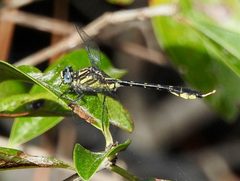
Hylogomphus geminatus, commonly known as the Twin-striped Clubtail, is a in the Gomphidae to the southeastern United States. The species was transferred from Gomphus to Hylogomphus in 2017 when Hylogomphus was elevated from subgenus to full genus rank. It exhibits pronounced ecomorphological variation in body length across its limited geographic range, with significant differences observed between on either side of the Apalachicola River in Florida. The species is listed as Least Concern by IUCN, though it was previously assessed as Near Threatened in 2007.
Pronunciation
How to pronounce Hylogomphus geminatus: //haɪloʊˈɡɒmfəs ˌdʒɛmɪˈneɪtəs//
These audio files are automatically generated. While they are not always 100% accurate, they are a good starting point.
Identification
The can be distinguished from similar clubtail by the presence of twin stripes, which give it its . It belongs to the Hylogomphus, separated from Gomphus in 2017 based on phylogenetic and morphological studies. Significant body length variation exists across its range, with individuals from different watersheds showing measurable size differences that may complicate identification based on size alone.
Images
Habitat
Inhabits small rivers and streams with sandy bottoms, primarily in the Florida panhandle and surrounding Gulf Coast areas. Associated with lotic (flowing water) and does not occur far from water sources. Streams in more urbanized or agricultural watersheds tend to support smaller-bodied individuals.
Distribution
to the southeastern United States with a limited geographic range centered on the Apalachicola River drainage system, spanning parts of Florida, Alabama, and Georgia across approximately 51,800 square kilometers. Documented from about 20 locations across four states. Listed as vulnerable in Florida, critically imperiled in Mississippi, imperiled in Alabama and Georgia.
Seasonality
timing varies geographically; anecdotal observations suggest smaller individuals west of the Apalachicola River tend to emerge earlier in the year than larger individuals east of the river.
Life Cycle
Semivoltine with nymphal development time varying based on temperature, water persistence, food availability, and other environmental factors. do not continue growing after from water.
Behavior
Not a strong disperser despite being vagile; remain near water sources from which they emerged. occurs but does not prevent watershed-associated ecomorphological patterns from developing.
Ecological Role
Serves as a bioindicator for aquatic health and environmental conditions. Ecomorphological variation in body size functions as an early warning signal for environmental alterations, with smaller body size associated with urban and agricultural land cover indicating potential stressors.
Human Relevance
Used as a study organism for understanding watershed- environmental impacts and land-cover change effects on aquatic . Previously assessed as Near Threatened by IUCN due to concerns, now listed as Least Concern with stable .
Similar Taxa
- Progomphus obscurusSympatric occurring in overlapping watersheds; used as comparison in ecomorphological studies to distinguish watershed-mediated variation from species-specific patterns.
- Hylogomphus species (formerly Gomphus)Formerly classified in Gomphus; separated in 2017 when Hylogomphus was elevated to genus rank, requiring updated identification references.
More Details
Taxonomic History
Originally described as Gomphus geminatus by Carle in 1979. Transferred to Hylogomphus in 2017 when molecular and morphological evidence supported elevation of Hylogomphus from subgenus to full genus rank.
Conservation Status History
IUCN status changed from Rare (1986-1994) to Lower Risk/Near Threatened (1996) to Near Threatened (2007) before current Least Concern assessment in 2018, reflecting improved understanding of stability.
Research Significance
One of few Odonata with documented watershed-mediated ecomorphological variation, making it valuable for studying how environmental factors drive morphological plasticity in aquatic insects.
Sources and further reading
- BugGuide
- Wikipedia
- GBIF taxonomy match
- iNaturalist taxon
- Catalogue of Life
- Cerambycidae | Beetles In The Bush | Page 6
- Hover Flies Identified: Researchers Tackle 20,000 Syrphid Specimens in Illinois Collection
- Watershed-Mediated Ecomorphological Variation: A Case Study with the Twin-Striped Clubtail Dragonfly (Hylogomphus geminatus)
- Watershed-Mediated Ecomorphological Variation: A Case Study with the Twin-Striped Clubtail Dragonfly (Hylogomphus geminatus)