
Progomphus obscurus
(Rambur, 1842)
Common Sanddragon
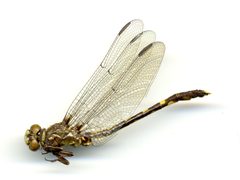
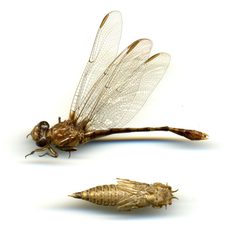
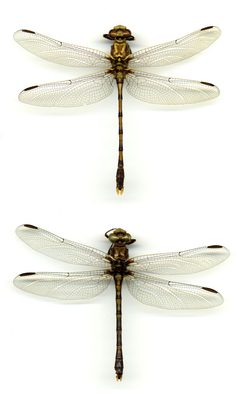
Progomphus obscurus, commonly known as the Common Sanddragon, is a of in the Gomphidae. It is one of the most abundant dragonfly species in parts of its range, particularly in South Carolina. The species is notable for its burrowing larval in sandy stream sediments. are found in eastern North America, ranging from southern Ontario through the eastern United States.
Pronunciation
How to pronounce Progomphus obscurus: /proʊˈɡɒmfəs əbˈskjʊərəs/
These audio files are automatically generated. While they are not always 100% accurate, they are a good starting point.
Images
Habitat
Larvae inhabit sandy-bottom streams, showing strongest association with fine sand sediments. Larval abundance correlates with mean silica concentrations and proportion of sandy-bottom sites at the stream . Within streams, larvae occur in fine sand, coarse sand, and pebble sediments, but are most frequently found in fine sand. Larval abundance is inversely correlated with mean particle size.
Distribution
Eastern United States and southern Ontario, Canada. Documented from the Enoree River and nine tributaries in South Carolina, and observed in downtown Leavenworth, Kansas.
Behavior
Larvae exhibit burrowing in sandy sediments. have been observed perching in urban environments, including downtown areas.
More Details
Larval Microhabitat
Research in South Carolina streams found that larval abundance at smaller spatial is inversely correlated with mean particle size, with highest presence in fine sand substrates. Mean larval size shows weak positive correlation with mean particle size and inverse correlation with larval abundance.
Sources and further reading
- BugGuide
- Wikipedia
- GBIF taxonomy match
- iNaturalist taxon
- NCBI Taxonomy
- Catalogue of Life
- Aphytis Project Final Report | Entomology Research Museum
- Bug Eric: Year-end Wrap-up
- The “obscure” Dicerca | Beetles In The Bush
- Larval habitat associations ofProgomphus obscurusat two spatial scales (Odonata: Gomphidae)