
Epitheca princeps
Hagen, 1861
Prince Baskettail
Epitheca princeps, commonly known as the prince baskettail, is a in the Corduliidae. It is one of the larger baskettail species in North America and is distinguished by its distinctive -laying , where females extrude eggs onto their subgenital plate before depositing them in gelatinous strings on water. The species has a relatively long season compared to other baskettails, extending into summer.
Pronunciation
How to pronounce Epitheca princeps: /ˌɛpɪˈθiːkə ˈprɪnsɛps/
These audio files are automatically generated. While they are not always 100% accurate, they are a good starting point.
Identification
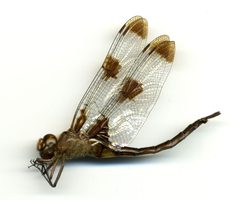
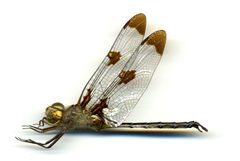
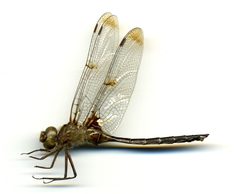
Distinguished from skimmers in Libellulidae by the longer, narrower and green . Separated from other baskettail (Epitheca spp.) by larger size and later season; most other baskettails fly primarily in spring and early summer, while E. princeps continues into summer. The Twelve-spotted Skimmer (Libellula pulchella) is superficially similar but has a broader abdomen and different wing pattern.
Images
Appearance
have brilliant green characteristic of emerald dragonflies. The body is robust with a notably long, narrow that distinguishes it from similar skimmer . Wings are clear with dark patches at the base and along the leading edge. The overall coloration is brownish with greenish thoracic markings.
Habitat
Found near lakes, ponds, and slow-moving streams with emergent vegetation. Favors areas with floating and emergent plant tangles where females deposit masses. include forested wetlands, prairie ponds, and edges with aquatic vegetation.
Distribution
North America, with records across the United States and southern Canada. Specific records include Vermont and the Midwest (Illinois, Missouri).
Seasonality
Active from spring through summer; has a longer season than most other baskettail , which typically fly only in spring and early summer.
Life Cycle
Females practice exophytic oviposition: they extrude onto the subgenital plate, forming a gelatinous mass, then fly over water dragging the to deposit eggs in long strings on or among aquatic vegetation. Eggs are suspended in gelatinous fluid that expands in water. Larval development is aquatic; timing varies by latitude.
Behavior
Females exhibit a distinctive rhythmic back-and-forth movement of the while extruding onto the subgenital plate prior to oviposition. During with egg masses, the abdomen tip is held aloft in a characteristic posture. Both sexes may be found perching vertically on vegetation near water.
Ecological Role
are aerial of small flying insects. Larvae are aquatic predators in freshwater . masses provide food source for aquatic .
Human Relevance
Subject of interest to enthusiasts and photographers due to distinctive oviposition . Serves as for healthy wetland .
Similar Taxa
- Epitheca canis (Common Baskettail)Smaller size, earlier season (spring-early summer), more widespread
- Epitheca semiaquea (Semiaquatic Baskettail)Smaller, more restricted preferences, earlier period
- Libellula pulchella (Twelve-spotted Skimmer)Similar wing pattern but broader , different (Libellulidae), lacks green
More Details
Subspecies
Two recognized: Epitheca princeps princeps Hagen, 1861 and Epitheca princeps regina (Hagen in Selys, 1871)
Conservation status
IUCN Red List status: Least Concern (), reviewed 2017. stable with no immediate threats identified.