
Libellula pulchella
Drury, 1773
Twelve-spotted Skimmer
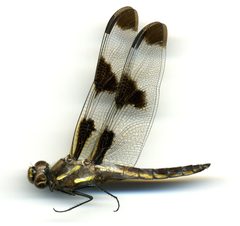
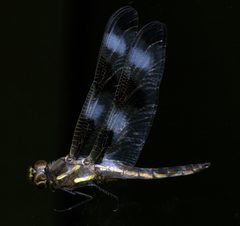
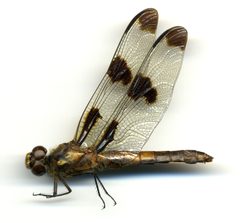
Libellula pulchella, commonly known as the Twelve-spotted Skimmer, is a widespread North American in the Libellulidae. Research has documented distinctive postcopulatory where males perform noncontact guarding of mates, though guarding is frequently abandoned when males pursue rivals. Females employ multiple behavioral tactics to minimize male harassment during oviposition, including rapid escape and repeated short-interval returns to water. A protozoan gut has been observed to cause metabolic effects in this , producing flight muscle changes functionally similar to obesity in vertebrates.
Pronunciation
How to pronounce Libellula pulchella: /lɪˈbɛl.ju.la pʊlˈkɛl.la/
These audio files are automatically generated. While they are not always 100% accurate, they are a good starting point.
Images
Habitat
Aquatic and riparian environments with water access required for oviposition. Associated with water bodies where females deposit .
Distribution
North America, including southern Canada and all 48 contiguous United States.
Host Associations
- Protozoan gut parasite - Causes metabolic phenotype with effects on muscle function resembling vertebrate obesity
Behavior
Males perform noncontact postcopulatory guarding of mates but frequently abandon guarding to chase other males. Females use rapid escape , repeated short-interval return visits to water, perching when severely harassed, and proceeding with mating when clasped to minimize male interference with oviposition. Flight muscle power output and optimal cycle frequency are reduced in individuals infected by gut .
More Details
Research significance
L. pulchella has been used as a model organism for studying metabolic effects in natural insect systems, with -induced changes in muscle providing comparative insights into vertebrate obesity physiology.
Sources and further reading
- BugGuide
- GBIF taxonomy match
- iNaturalist taxon
- NCBI Taxonomy
- Catalogue of Life
- Just Buggin' Ya | Bug Squad
- Dragonfly Enthusiasts, Unite! Open House Set Nov. 6 at Bohart Museum | Bug Squad
- Know Your Dragonflies! | Bug Squad
- Bohart Museum Open House: Dragonflies Rule! | Bug Squad
- The Wonder of Dragonflies | Bug Squad
- Bug Eric: How Baskettails Got Their Name
- Behavioral Ecology of the Dragonfly Libellula pulchella Drury (Odonata: Anisoptera)
- Postcopulatory Behavior in Libellula pulchella Drury (Odonata: Libellulidae) and Female Tactics for Avoiding Male Interference with Oviposition
- Parasitic gut infection causes functional and molecular resemblance of Libellula pulchella dragonfly flight muscle to skeletal muscle of obese vertebrates