
Epitheca
Charpentier, 1840
Baskettails
Species Guides
10- Epitheca canis(Beaverpond Baskettail)
- Epitheca costalis(Slender Baskettail)
- Epitheca cynosura(Common Baskettail)
- Epitheca petechialis(Dot-winged Baskettail)
- Epitheca princeps(Prince Baskettail)
- Epitheca semiaquea(Mantled Baskettail)
- Epitheca sepia(sepia baskettail)
- Epitheca spinigera(Spiny Baskettail)
- Epitheca spinosa(robust baskettail)
Epitheca is a of in the Corduliidae, commonly known as baskettails. The genus is distinguished by the unique reproductive of females, which carry masses in a specialized structure at the tip before depositing them during . Some taxonomic authorities have proposed splitting North American into separate genera (Epicordulia and Tetragoneuria), though this classification has not been widely adopted. The genus occurs in North America and parts of Europe.

Pronunciation
How to pronounce Epitheca: /ˌɛpɪˈθiːkə/
These audio files are automatically generated. While they are not always 100% accurate, they are a good starting point.
Identification
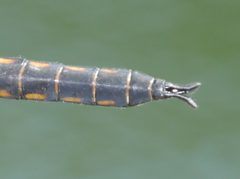
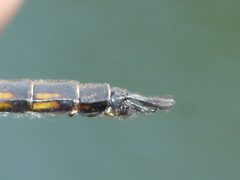
Baskettails can be confused with skimmer (Libellulidae), but have longer, narrower . possess brilliant green , a trait shared with other Corduliidae ('emeralds'). Females are distinguished by an upturned abdomen tip with a subgenital plate adapted to hold masses. In , egg-laden females hold the abdomen tip aloft in a distinctive posture. Males lack this abdominal modification.
Images
Habitat
Associated with freshwater systems including lakes, ponds, and wetlands with emergent vegetation. Favors areas with tangles of floating and emergent plant stems suitable for deposition.
Distribution
Recorded from North America (including Vermont, USA) and Europe (Denmark, Norway, Sweden).
Seasonality
Most active in spring and early summer; some exceptions such as Epitheca princeps (Prince Baskettail) fly later in the season.
Behavior
Females practice exophytic oviposition: rather than inserting singly into vegetation or sediment, they extrude eggs into a gelatinous mass held by the subgenital plate, then fly while dragging the through water to deposit a trailing rope of eggs several feet long. Prior to oviposition, females have been observed performing slow, rhythmic tail movements while perched vertically. Males patrol territories and engage in aerial pursuit.
Similar Taxa
- Libellulidae (skimmers)Similar overall appearance and , but skimmers have shorter, broader and lack the female baskettail's specialized -carrying abdominal structure.
- Other Corduliidae (emeralds)Share the brilliant green coloration, but differ in body proportions and lack the distinctive upturned female tip of baskettails.
More Details
Taxonomic controversy
Some authorities have proposed splitting North American baskettails into two separate , Epicordulia and Tetragoneuria, based on morphological differences. This reclassification has not gained widespread acceptance in major reference works, and most sources continue to place these under Epitheca.