
Glenurus gratus
(Say, 1839)
pleasing picture-winged antlion, doodlebug
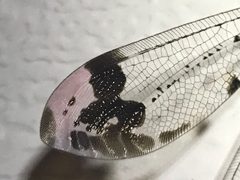
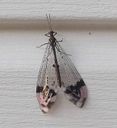
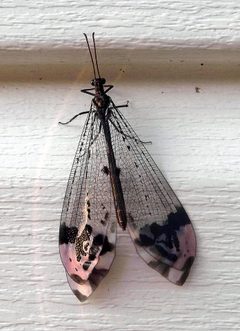
Glenurus gratus is a North American antlion in the Myrmeleontidae, commonly known as the pleasing picture-winged antlion. are recognized by distinctive black, white, and pink wing markings. Unlike pit-digging antlions in the Myrmeleon, larvae of Glenurus gratus bury themselves just below the soil surface to ambush prey rather than constructing conical traps.
Pronunciation
How to pronounce Glenurus gratus: /ˈɡlɛn.jʊr.əs ˈɡreɪ.təs/
These audio files are automatically generated. While they are not always 100% accurate, they are a good starting point.
Identification
distinguished from other antlion by bold black, white, and pink wingtip coloration. Clubbed separate from and (which have long, thread-like or bristle-like antennae). Larvae lack the pit-building of Myrmeleon; instead found buried just below soil surface with jaws exposed. Glenurus luniger is a with similar wing pattern but ranges in western North America.
Images
Habitat
Dry, sandy soils. Prime locations include areas with fine, powdery soil beneath rock overhangs, at bases of trees, under bridges, and in dirt floors of old barns and sheds. Requires perpetually dry conditions; rarely found in exposed, moist situations.
Distribution
North America. Recorded from Florida and throughout eastern and central United States. Western in Glenurus occur in Arizona and nearby states.
Seasonality
active during warmer months, frequently attracted to outdoor lights at night. Most often observed at dusk among tall grasses.
Life Cycle
Complete . laid in sandy soil. Larvae are subterranean . occurs in silken cocoon underground, with sand grains incorporated into cocoon structure. from pupal case.
Behavior
Larvae are ambush that bury themselves just below the soil surface with jaws agape, waiting for small ground-dwelling arthropods to pass within striking distance. Unlike Myrmeleon larvae, they do not construct conical pits. fly clumsily and are highly cryptic; when alighting on vegetation, they align their bodies to flatten against the substrate and become essentially invisible. Wings with dark spots and speckles break up their outline.
Ecological Role
Larval stage functions as of small ground-dwelling arthropods including ants and beetles. may consume soft-bodied insects and pollen, though feeding habits remain poorly documented.
Human Relevance
Larvae sometimes kept in captivity for observation by providing containers of fine sand and live prey. occasionally appear at porch lights and window screens, sometimes causing surprise due to their striking appearance. No economic importance documented.
Similar Taxa
- Myrmeleon spp.Larvae construct conical pits in sand to trap prey, whereas Glenurus gratus larvae bury themselves without building pits. lack the bold black, white, and pink wingtip pattern.
- Glenurus lunigerShares distinctive wingtip coloration pattern but occurs in western North America (Arizona, western states), while G. gratus is eastern/central in distribution.
- Scotoleon spp. males have long with bracket-like claspers similar to Glenurus, but lack the characteristic black, white, and pink wing markings.
Misconceptions
The "doodlebug" properly applies to antlion larvae generally, but specifically refers to pit-digging Myrmeleon larvae in North American usage. Glenurus gratus larvae do not make pits or create the "doodles" (random cursive trails) in sand associated with the name. are frequently mistaken for due to superficial similarity in body shape and wing posture, but the clubbed immediately distinguish antlions.
More Details
Sources and further reading
- BugGuide
- Wikipedia
- GBIF taxonomy match
- iNaturalist taxon
- NCBI Taxonomy
- Catalogue of Life
- Pits of despair for ground dwelling insects: Antlions, Family Myrmeleontidae — Bug of the Week
- Bug Eric: "Doodlebugs" (Antlions)
- Rare Cycad Moth Found in New Location in South Africa
- Antlion, Glenurus gratus (Say) (Insecta: Neuroptera: Myrmeleontidae)