
Scotoleon dissimilis
(Banks, 1903)
Scotoleon dissimilis is a of antlion in the Myrmeleontidae. It was first described by Banks in 1903, originally placed in the Brachynemurus before being transferred to Scotoleon. The species occurs in Central America and North America. As with other antlions, it undergoes complete with a predatory larval stage and an stage.
Pronunciation
How to pronounce Scotoleon dissimilis: /skoʊˈtoʊliːən dɪˈsɪmɪlɪs/
These audio files are automatically generated. While they are not always 100% accurate, they are a good starting point.
Identification
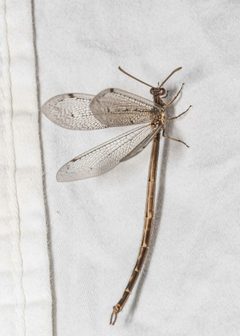
Scotoleon dissimilis can be distinguished from other antlion by features typical of the genus Scotoleon, including males with elongated tipped with bracket-like claspers. Adults have short, thick, clubbed that distinguish them from superficially similar (order Odonata). The original description by Banks (1903) established the based on morphological characteristics that differentiated it from related .
Images
Distribution
Central America and North America. GBIF records confirm presence in Middle America and North America.
Life Cycle
Antlions undergo complete with four stages: , larva, pupa, and . The larval stage is predatory. occurs inside a silken capsule spun underground, with grains of sand incorporated into the cocoon.
Similar Taxa
- Scotoleon nigrilabris in the same , sharing the characteristic elongated male with bracket-like claspers; both occur in North America
- Myrmeleon speciesRelated antlions in the same Myrmeleontidae; Myrmeleon larvae construct characteristic pit traps while Scotoleon larvae are sit-and-wait that bury themselves just below the soil surface without constructing pits
- Brachynemurus speciesRelated in Myrmeleontidae; Scotoleon dissimilis was originally described as Brachynemurus dissimilis before generic reassignment