
Scotoleon nigrilabris
(Hagen, 1888)
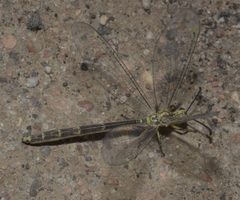
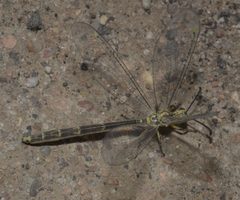
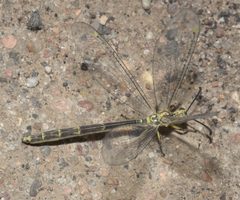
Scotoleon nigrilabris is a of antlion in the Myrmeleontidae, distributed across Central America and North America. Like other antlions, it undergoes complete from a predatory larva to a delicate, lacy-winged . The Scotoleon is distinguished by adult males having a notably elongated with bracket-like claspers. Adults are cryptic and frequently observed among tall grasses at dusk.
Pronunciation
How to pronounce Scotoleon nigrilabris: /skɔ.toʊˈliː.ən ˌnaɪ.ɡrɪˈlæb.rɪs/
These audio files are automatically generated. While they are not always 100% accurate, they are a good starting point.
Identification
distinguished from damselflies by short, clubbed (damselflies have long, thread-like antennae). Within antlions, Scotoleon males identified by elongated with bracket-like claspers. Dark wing patterning and cryptic resting posture aid in field recognition. Larval identification to level requires expert examination.
Images
Habitat
frequently observed among tall grasses. Larval not specifically documented for this , though related antlion larvae typically occur in dry, powdery soils.
Distribution
Central America and North America. Specific countries not documented in available sources.
Seasonality
most frequently observed at dusk. Detailed seasonal activity patterns not documented.
Life Cycle
Complete with four stages: , larva, pupa, . Larva pupates inside a silken capsule spun underground, incorporating sand grains into the cocoon. Specific details for this not documented.
Behavior
fly clumsily and are strongly cryptic; when alighting on vegetation, they align themselves to flatten against the substrate and become essentially invisible. Most active at dusk. Adults frequently attracted to lights at night.
Ecological Role
are ; specific prey not documented. As with other antlions, larvae are sit-and-wait predators of small .
Similar Taxa
- Myrmeleon species Myrmeleon lack the elongated male with bracket-like claspers characteristic of Scotoleon; larval Myrmeleon construct funnel-shaped pits, whereas Scotoleon larvae likely bury themselves just below the surface like most non-Myrmeleon antlions.
- Damselflies (Zygoptera) antlions resemble damselflies superficially but have short, clubbed versus long, thread-like antennae in damselflies; antlions also rest with wings folded roof-like over body rather than together above body.
More Details
Etymology
Specific epithet 'nigrilabris' derives from Latin 'niger' (black) and '' (lip), likely referring to dark mouthpart coloration.
Observational notes
has 345 iNaturalist observations as of source date, indicating moderate documentation but limited published natural history detail.