
Megalopyge pyxidifera
Smith & Abbot, 1797
Yellow Flannel Moth
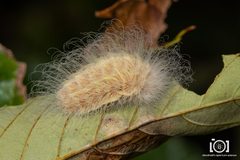
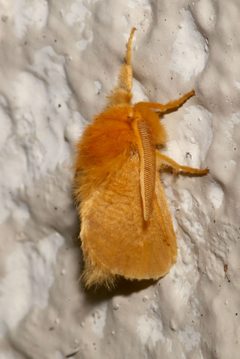
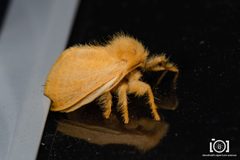
Megalopyge pyxidifera, commonly known as the Yellow Flannel , is a of flannel moth in the Megalopygidae. Described from the southern United States in 1797, this species belongs to a whose caterpillars are known for their dense, hair-like setae that conceal venomous urticating spines. The larvae of related Megalopyge species are among the most venomous caterpillars in North America, capable of delivering painful stings.
Pronunciation
How to pronounce Megalopyge pyxidifera: /ˌmɛɡəloʊˈpaɪdʒiː pɪkˈsɪdɪfɪərə/
These audio files are automatically generated. While they are not always 100% accurate, they are a good starting point.
Identification
Megalopyge pyxidifera can be distinguished from the more widely known M. opercularis (puss caterpillar/southern flannel moth) by geographic distribution and subtle morphological differences. M. pyxidifera has been described from the southern United States, while specific range overlap details are not well documented. of Megalopyge generally require close examination of genitalia or wing pattern details for definitive identification. The caterpillars of all Megalopyge species share the characteristic dense, hair-like covering that conceals stinging spines, making them hazardous to handle.
Images
Habitat
Based on related and characteristics, Megalopyge pyxidifera likely inhabits areas with its plants, which may include various woody plants such as oaks, hickories, and other trees. The type locality and specific preferences are not well documented in available sources.
Distribution
Described from the southern United States. Specific range boundaries and detailed distribution records are sparse in available literature.
Behavior
are presumably , as is typical for the . Larval specific to M. pyxidifera is not documented separately from . Caterpillars of related are generally solitary feeders on foliage.
Ecological Role
As a herbivore in its larval stage, this contributes to nutrient cycling and serves as potential prey for various . The venomous spines of the larvae provide defense against . Specific ecological interactions of M. pyxidifera are not documented.
Human Relevance
Caterpillars of Megalopyge , including likely M. pyxidifera, pose a medical concern due to their venomous urticating spines. Contact can cause immediate burning pain, localized swelling, redness, and blistering. allergic reactions may occur in sensitive individuals. Medical attention should be sought for or mucous exposure. The attractive, fuzzy appearance of the caterpillars can lead to accidental handling, particularly by children.
Similar Taxa
- Megalopyge opercularisThe southern flannel moth or puss caterpillar is the most well-known , sharing the dense hair-like covering and venomous spines. M. opercularis is more extensively documented and has a broader recognition, but the two may overlap in range and require careful examination for separation.
- Megalopyge crispataThe black-waved flannel is another with similar larval —early instars appear as white fluffy caterpillars with venomous hairs. differ in wing pattern, with M. crispata showing distinctive black wavy lines across the wings.
More Details
Taxonomic Note
The was described by James Edward Smith and John Abbot in 1797, making it one of the earlier described species in the . The epithet has occasionally been misspelled or confused in literature.
Venomous Larvae
While specific documentation for M. pyxidifera is limited, all Megalopyge caterpillars should be treated as potentially dangerous due to the 's characteristic urticating spines concealed beneath dense hair-like setae. The venom can cause significant pain and medical complications.
Sources and further reading
- BugGuide
- iNaturalist taxon
- Look but do not touch: puss caterpillar, Megalopyge opercularis; White flannel moth, Norape ovina; Io moth, Automeris io; buck moth Hemileuca spp.; and hag moth, Phobetron pithecium — Bug of the Week
- Megalopygidae | Beetles In The Bush
- Bug Eric: A Potential New Host Record for Calliephialtes grapholithae (Hymenoptera: Ichneumonidae) from a Paper Wasp nest (Hymenoptera: Vespidae: Polistes metricus)